

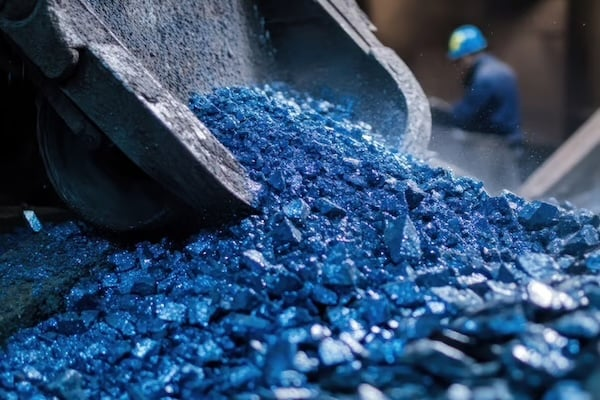
The Democratic Republic of Congo will suspend all cobalt exports from November 30th, 2026, until further notice, in a renewed effort to reverse a sharp slide in prices for the battery metal, with the country’s strategic minerals regulator, ARECOMS, saying the ban will cover all cobalt produced in Congo, from industrial mines to artisanal operations.
The move marks the second time in less than two years that the world’s largest cobalt producer has cut off supply to support prices, with the first ban, imposed in February 2025, having more than doubled hydroxide prices within three months, from $5.70 to $11.75 a pound, before a quota system replaced it in October 2025 and prices reached nearly $58,000 a tonne in the first quarter of 2026. The new ban will remain in place until ARECOMS formally lifts it, with a review planned after four months and any resumption requiring a separate announcement.
Benchmark cobalt was worth nearly $58,000 per tonne in the first quarter of 2026, around $56,300 on July 1st, and then $33,525 on November 20th, representing a 30.98 per cent drop year-on-year, with cobalt hydroxide delivered to China having lost 39.6 per cent between its April 2026 peak and September 18th, falling to $15.70 per pound. The decline reflects concerns about global demand and rising recycled supplies, with cobalt hydroxide having fallen from $23.75 a pound at the end of July to $12.50 in mid-November, and Platts having assessed it at an intra-year low of $10.50 on October 29th.
The announcement immediately lifted Chinese cobalt futures, with the December contract jumping 10.97 per cent to 316 yuan ($47.42) per kilogram, the highest level since August 18th, as traders anticipated tighter supply of the metal used in electric-vehicle batteries. Cobalt was trading at about $33,000 a tonne on the London Metal Exchange on Tuesday, with the ban having stoked concerns over global supply for the battery metal.
The ban represents a significant gamble for the DRC, which holds the world’s largest reserves of cobalt and accounts for about 70 per cent of global supply, with the country seeking to address oversupply, weak prices and rising inventories. The government has been reviewing its quota system, with the ban set to remain in place while it assesses the effectiveness of its interventions, and the country’s ability to influence global prices having been demonstrated by the first ban’s impact.
The success of the latest intervention will depend on the ability of the DRC to enforce the ban and on the response of global buyers and producers, with the country’s leverage over the market having been strengthened by its dominant position in global supply. The challenge now is to ensure that the ban delivers a sustained recovery in prices without prompting buyers to accelerate substitution or recycling efforts, with the outcome of the intervention likely to shape the direction of the global cobalt market in the years ahead.
Africa Presents is a Pan-African digital magazine and monthly publication covering politics, business, economy, culture, tech, and the stories shaping Africa and its diaspora. Visit africapresents.com and follow @AfricaPresents for daily coverage and monthly themed magazine editions.






Leave a comment