

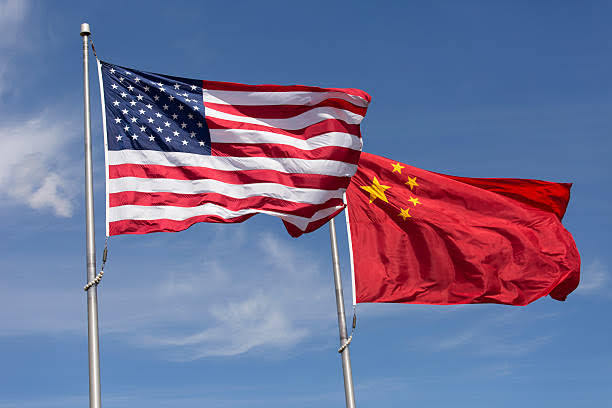
The United States is stepping up efforts to challenge China’s dominance in Africa’s telecommunications sector, with a nearly $100 million loan to Africell, the continent’s only American-owned mobile network operator.The Export-Import Bank of the United States (EXIM) approved a $99.6 million loan to Africell to help it invest in mobile network technology from American and allied suppliers. The move is part of Washington’s broader push to reduce reliance on Chinese telecom equipment, particularly Huawei, across African markets.
Huawei is the world’s largest supplier of telecom network equipment and is estimated to have supplied more than half of Africa’s 4G and 5G infrastructure. The company holds roughly 52 per cent of the 5G mobile data market in Africa, giving it a significant foothold in the continent’s digital backbone.
The US has long raised national security concerns about Huawei, accusing the company of stealing technology and committing fraud. Washington has lobbied allies to avoid Huawei products in high-speed wireless networks, while Chinese officials have rejected the allegations as politically motivated.
The Africell loan is designed to enable the operator to upgrade its networks in Angola and other markets using equipment from US and allied suppliers. By financing the switch away from Huawei, Washington hopes to open African markets to American technology and reduce dependency on Chinese suppliers.
The financing follows a 2025 executive order by President Donald Trump directing US agencies to promote American technology abroad in areas including artificial intelligence, cloud services, data-centre storage and networking. It extends the “Clean Network” initiative launched during Trump’s first term to exclude Chinese technologies and operators from US and allied infrastructure.
Africa’s telecom market is a key battleground in the US-China technology rivalry. Chinese firms have built strong relationships across the continent through affordable equipment, financing and long-term partnerships, making it difficult for US companies to compete on price and scale.
For African governments and operators, the competition offers potential benefits: more options for equipment, financing and technology partnerships. But it also raises questions about how countries will balance cost, quality, security and sovereignty in building their digital infrastructure.
Despite the Africell loan, the US faces an uphill battle in loosening Huawei’s grip on African networks. Huawei’s scale, pricing and established relationships give it a strong advantage, and many African countries have continued to work with Chinese suppliers despite US pressure.
The Africell financing is a significant signal of US intent, but its impact will depend on whether it can catalyse broader investment in American and allied telecom technology across the continent. For now, China remains the dominant player in Africa’s telecom infrastructure, and the US is working to change that.
Africa Presents is a Pan-African digital magazine and monthly publication covering politics, business, economy, culture, tech, and the stories shaping Africa and its diaspora. Visit africapresents.com and follow @AfricaPresents for daily coverage and monthly themed magazine editions.






Leave a comment