

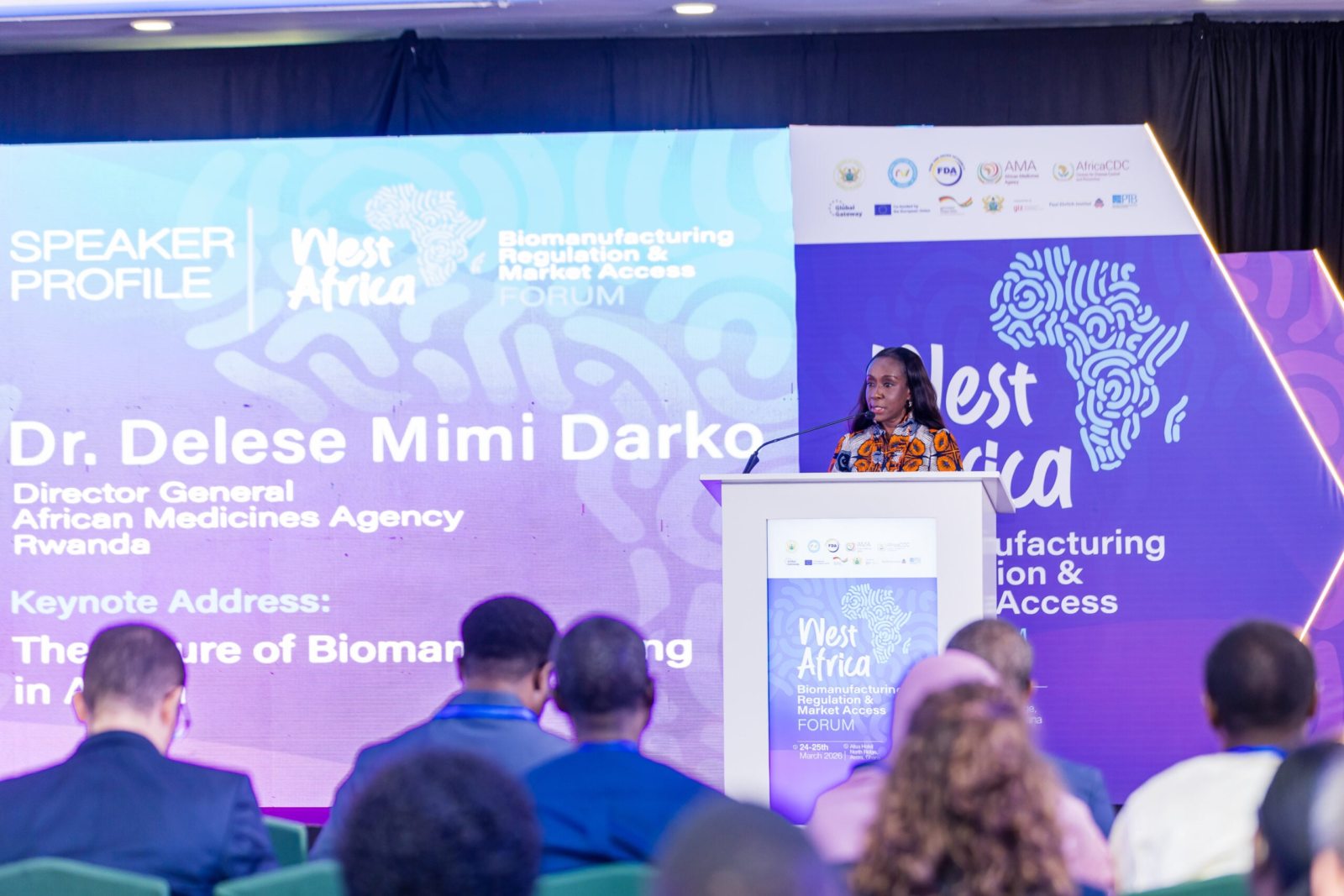
The African Medicines Agency (AMA) is calling for a harmonised regulatory system across the continent to support Africa’s medical innovation, reduce duplication and accelerate access to quality-assured health products.
Through joint reviews involving technical experts from across the continent, countries can draw on shared scientific assessments, reduce duplication and support more efficient access to quality-assured medical products, according to Dr Delese Mimi Darko, Director-General of the AMA. The agency is also strengthening the capacity of national regulatory authorities through its Capacity Strengthening Hub and developing digital platforms, harmonised technical guidance and training programmes.
AMA has created the Regulatory Innovation and Manufacturing Readiness Hub to establish mechanisms that support product development and manufacturing for manufacturers while ensuring appropriate regulatory and quality standards are maintained. By promoting harmonised requirements, coordinated reviews and robust quality assurance systems, AMA aims to create a more predictable regulatory environment for African manufacturers, supporting the growth of local production while ensuring products meet quality, safety and regulatory standards.
The push for harmonisation comes as Africa’s pharmaceutical sector remains constrained by fragmented regulatory frameworks, inadequate clinical trial regulation and slow access to novel medicines. In January 2026, the African Medicines Regulatory Harmonisation (AMRH) Initiative was formally handed over from AUDA-NEPAD to AMA, signalling the agency’s transition to full institutional authority.
In May 2026, WHO and AMA signed a Framework Agreement for Collaboration to advance regulatory harmonisation, convergence and reliance across the continent, with joint operational plans over the next three to five years. The agreement aims to streamline regulatory processes, reduce duplication and enable faster approval of medical products, improving efficiency, lowering costs and creating a more predictable environment for investment.
In July, African health ministers adopted the Regional Strategy on Regulation of Medical Products in the African Region (2026–2035), which sets out a roadmap to consolidate achievements, accelerate regulatory convergence and strengthen systems to maturity levels that ensure access to quality-assured, locally manufactured and imported medical products. The strategy aims to increase the number of authorities reaching WHO Maturity Level 3 and scale the use of digital regulatory systems.
AUC Commissioner Amma Twum-Amoah has welcomed the establishment of the AMA SME and Innovation Office, encouraging national regulatory authorities to work closely with the agency to ensure regulation acts as an enabler of innovation while upholding the highest standards of quality, safety and efficacy. “There can be no effective single market for health products under the AfCFTA without regulatory convergence,” she said.
The ambition, according to AMA, is not to make standards easier but to make the pathway clearer, more predictable and more efficient while maintaining rigorous standards, with the agency positioning itself as “Africa’s front door” for innovators and manufacturers to engage with regulatory expertise during product development, clinical development, technology transfer and manufacturing readiness.
Africa Presents is a Pan-African digital magazine and monthly publication covering politics, business, economy, culture, tech, and the stories shaping Africa and its diaspora. Visit africapresents.com and follow @AfricaPresents for daily coverage and monthly themed magazine editions.







Leave a comment