

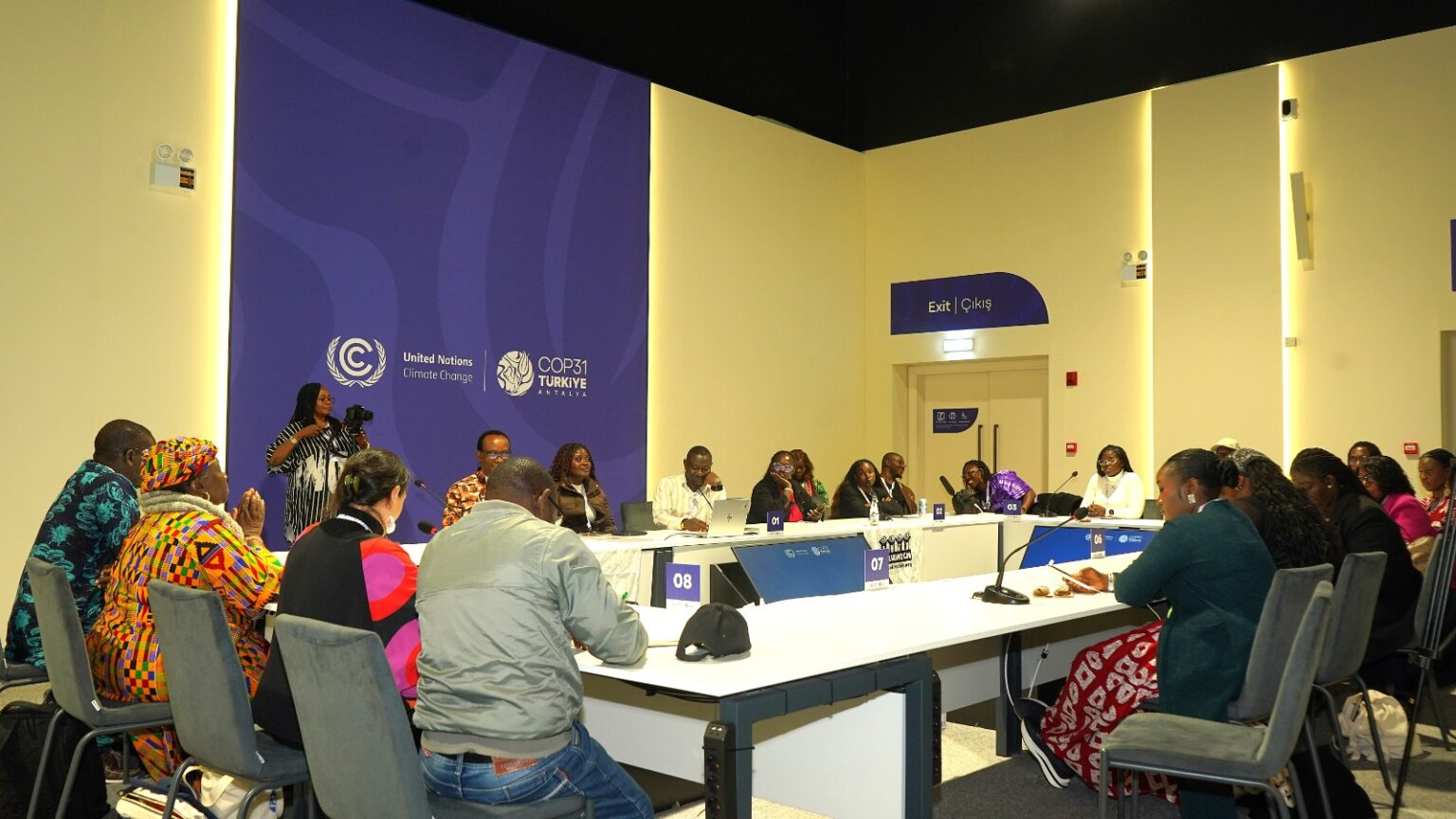
African countries are actively seeking more grant-based and highly concessional financing from developed nations to support climate adaptation and implement a just energy transition, with the African Group of Negotiators (AGN) chair Nana Antwi-Boasiako Amoah stressing that adequate financing, technology and capacity-building support are essential to forge ahead with climate action.
Africa wants a transition that is equitable, responds to the continent’s development needs and is supported by dedicated financing arrangements, with the continent’s priorities at COP31 including stronger adaptation finance, meaningful consideration of the relationship between climate measures and trade, and sufficient funding for developing countries to implement climate action. Africa wants climate finance from developed countries to be provided primarily through grants or highly concessional instruments rather than loans that would add to countries’ debt burdens, with finance being central to Africa’s position on a just transition.
Africa needs an estimated $277 billion annually to implement its nationally determined contributions through 2030, but current climate finance flows meet only about 11 per cent of that requirement, with the continent receiving only about $52 billion a year in climate finance in 2022, against needs estimated at $190 billion, barely 27 per cent of what the continent requires. Much of it arrives as loans, adding to already strained public budgets, with African nations calling for finance that is predictable, adequate, accessible and non-debt-creating, and urging developed countries to meet the obligations they hold under the Convention and the Paris Agreement.
The African Group of Negotiators is pressing for substantive talks on Article 9.1 of the Paris Agreement, which states that developed countries “shall provide” financial resources to developing countries, alongside a clear signal on replenishing the Green Climate Fund, with the bloc also calling for the Fund for Responding to Loss and Damage to be fully capitalised, and for adaptation and loss and damage support that does not deepen the debt burdens of vulnerable economies. Africa received only about 2 per cent of global climate finance, which is around $30 billion a year, against an estimated $277 billion needed to implement the national climate plans, with most of it arriving as loans that push vulnerable nations closer to debt distress.
Africa is pushing for a dedicated negotiating agenda item to lock in at least $120 billion a year in public, grant-based adaptation finance, paired with the Belém-to-Addis Vision to track every dollar, with the African Group of Negotiators seeking a clear baseline and funding trajectory for implementing the COP30 goal of at least tripling adaptation finance by 2035. Ghana’s Minister for Environment, Science and Technology, Dr Zanetor Agyeman-Rawlings, called for a clear funding and accountability framework to ensure the delivery of at least $120 billion in annual climate adaptation finance by 2035, stressing that previous climate finance commitments must translate into actual funding for vulnerable countries, rather than remain political declarations without clear implementation plans.
The three conditions the continent must uphold at COP31 are: no reversal of the Belém commitment to triple adaptation finance, no additional climate obligations without the necessary funding, and no double-counting of climate finance or excessive reliance on loans, with the Minister also calling for credible replenishment of the Green Climate Fund, increased contributions to the Fund for Responding to Loss and Damage, and the establishment of a country-led, grant-based Just Transition Mechanism to support Africa’s energy access, industrial development and skills training. The outcome of the Antalya conference must establish a clear pathway for converting existing climate finance commitments into resources that strengthen adaptation and resilience across Africa, with the ability of African countries to maintain a united position likely to play a critical role in determining the initiative’s impact.
Africa Presents is a Pan-African digital magazine and monthly publication covering politics, business, economy, culture, tech, and the stories shaping Africa and its diaspora. Visit africapresents.com and follow @AfricaPresents for daily coverage and monthly themed magazine editions.





Leave a comment