

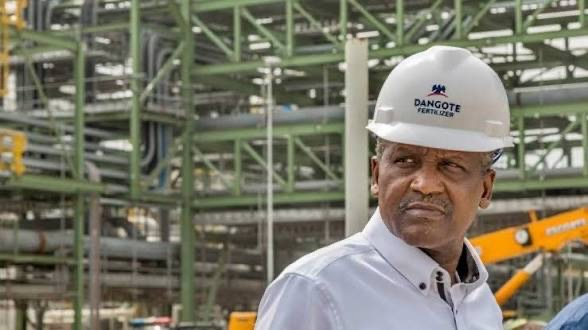
The Dangote Group president travelled to Gode, in Ethiopia’s Somali region, where Prime Minister Abiy Ahmed personally received him and walked the construction site of a fertiliser plant already taking shape in the ground. What followed was one of the most significant agricultural investment announcements on the continent this year.
Dangote revealed that the Group’s investment in Ethiopia has risen from $2.5 billion to over $4 billion, making it the second-largest destination for Dangote Group’s continental investment, accounting for nearly nine per cent of its total outlay between now and 2030. The expanded scope is not just a bigger fertiliser plant. It includes a 110-kilometre pipeline, a 120MW power plant, a polypropylene packaging facility, and a two-million-tonne NPK blending plant, an entire industrial ecosystem built around putting food on African tables.
The Problem This Is Solving
The scale of the investment only makes sense when you understand what it is up against. The food-insecure population on the African continent has increased by 60 percent over the past decade, driven by climate shocks, supply chain disruptions, currency pressures, and the shortage of agricultural inputs that could have prevented much of it.

Africa currently imports over six million metric tonnes of fertiliser annually. That is six million metric tonnes of money leaving the continent every year to solve a problem the continent has every resource to solve itself. It is a dependency loop that keeps African farmers underpowered and African governments exposed to global price shocks they cannot control.
Dangote has named it plainly. “Africa holds immense agricultural potential, yet continues to grapple with food insecurity due to limited access to fertiliser,” he said in Gode. The fertiliser plants are his answer,not aid, not policy papers, but production capacity in the ground.
Ethiopia as a Strategic Bet
The choice of Ethiopia is deliberate. Prime Minister Abiy Ahmed described Dangote as a trusted partner and said the fertiliser project aligns with Ethiopia’s broader development priorities like boosting domestic production, reducing import dependency, and providing direct support to millions of Ethiopian farmers. For a country of over 120 million people, the majority of whom depend on agriculture, access to affordable fertiliser is not a business opportunity. It is a lifeline.
Abiy framed it as a model: “This type of large-scale investment demonstrates the power of strong collaboration between government and the private sector. Expanding such partnerships will accelerate economic growth, attract further investment, and improve the livelihoods of our people.”
The Bigger Ambition
Ethiopia is one piece of a continental play. Dangote has stated publicly that within 40 months, Africa will not need to import fertiliser from anywhere — a bold target anchored by his flagship plant outside Lagos and the growing network of production facilities across the continent. The UN has taken notice. The UN Deputy Secretary-General Amina Mohammed visited Dangote’s industrial complex in Lagos and called on international partners to collaborate with Dangote Industries, describing its work as one of the most credible interventions in Africa’s food security crisis.
The ambition, as Dangote put it in Gode, is not complicated. “Africa has the capacity to feed itself and even export to the rest of the world. Our fertiliser investments across the continent are designed to unlock that potential and secure a prosperous future for our people.”
What separates that statement from rhetoric is the $4 billion now sitting in Ethiopian soil. The construction is underway. The grass is being planted, quite literally.
Africa Presents is a Pan-African digital magazine and monthly publication covering politics, business, economy, culture, and the stories shaping the continent and its diaspora. For more reporting like this, visit us at africapresents.com. Follow us on social media @AfricaPresents for daily updates, and watch out for our monthly magazine editions — each built around a theme that goes deeper into the issues that matter most to Africa and its people.





Leave a comment