

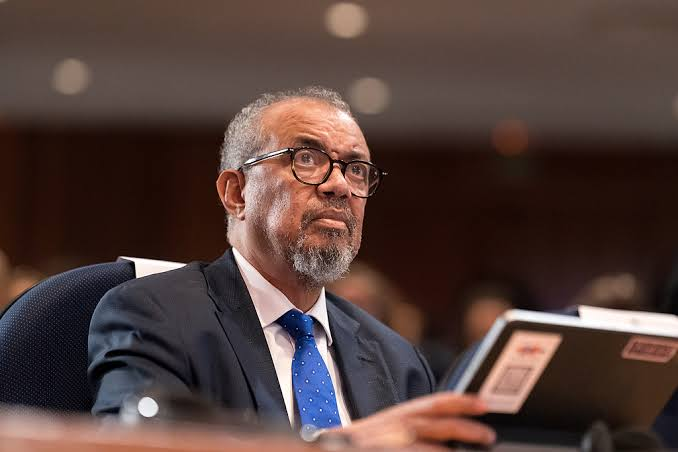
The World Health Organization has recalled the urgent need to finalise the Pandemic Agreement as Africa’s latest Ebola outbreak kills more than 5,300 people, with the vast majority of deaths in the Democratic Republic of Congo (DRC).WHO Director-General Tedros Adhanom Ghebreyesus made the call at the ninth meeting of the Intergovernmental Working Group on the WHO Pandemic Agreement in Geneva on November 2nd, pointing to the Ebola epidemic and a hantavirus outbreak earlier this year as reminders of the threat. “A pathogen threat anywhere can become a threat everywhere, to people of every country,” he said, urging countries to “finish the job” on the treaty.
Africa’s latest Ebola outbreak has killed 5,376 people, with 5,372 deaths in the DRC and two each in Kenya and Uganda, according to data from the Africa Centres for Disease Control and Prevention. The outbreak, which began in the DRC in May 2026, has infected more than 10,000 people, with a fatality rate of over 50 per cent, making it the fastest-growing and most widespread Ebola epidemic on record.
The outbreak is caused by the Bundibugyo strain of the Ebola virus, which spreads through contact with bodily fluids and causes haemorrhagic fever. The DRC declared its 17th Ebola outbreak in mid-May, and the epidemic has since spread to other countries on the continent, prompting the WHO to declare it a public health emergency of international concern.
When countries adopted the Pandemic Agreement in May 2025, they left out the tricky issue of how its key mechanism would operate to get the deal over the line. The agreement’s Pathogen Access and Benefit-Sharing (PABS) system governs how pathogens with pandemic potential can be obtained, and how products derived from them, such as vaccines, tests and treatments, are distributed.
“PABS is the last remaining piece of our puzzle,” Tedros said, stressing that completing the final piece of the pandemic treaty is “the key that will unlock the door to a safer future.” Wealthy countries and developing nations remain at odds over how the agreement, adopted as a framework to handle future COVID-like pandemics, will work in practice.
Tedros stressed that the world must learn the overarching lesson of the COVID-19 pandemic: “no country can protect itself from pandemics by acting alone.” He noted that during COVID-19, vaccine inequity cost lives, prolonged the pandemic and increased the risk of new variants emerging.
The WHO worked with CEPI to accelerate the development of vaccines for the current Ebola outbreak, and in 2024, member states adopted changes to the International Health Regulations, with the Pandemic Agreement adopted the following year. The challenge now is for countries to complete the PABS annex, which would bring all the other pieces into an operational whole and enable the agreement to enter into force.
Africa Presents is a Pan-African digital magazine and monthly publication covering politics, business, economy, culture, tech, and the stories shaping Africa and its diaspora. Visit africapresents.com and follow @AfricaPresents for daily coverage and monthly themed magazine editions.







Leave a comment