
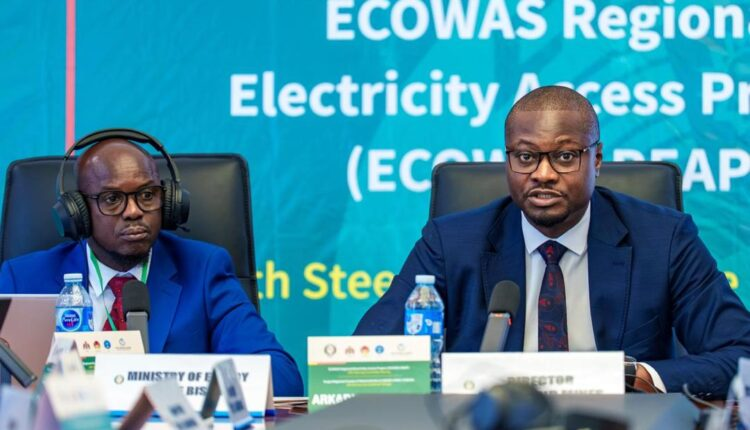
A $225 million World Bank-funded electricity project coordinated by the Economic Community of West African States (ECOWAS) has connected 490 localities and nearly 500,000 people to electricity across The Gambia, Guinea-Bissau and Mali, with the six-year initiative set to close on December 31st, 2026.The ECOWAS Regional Electricity Access Project (ECOWAS-REAP) held its 10th and final Steering Committee meeting in Abuja on November 2, bringing together national power utilities and energy ministries from the three beneficiary countries, the Regional Coordination Unit and national project implementation units to take stock of six years of implementation and secure an orderly closure. The project advances regional access to electricity and ECOWAS Vision 2050, with the final report of the meeting adopted on November 3rd, 2026.In The Gambia, around 43,090 households were connected across 400 electrified localities, providing 344,720 people with new or improved access to electricity, while Guinea-Bissau completed more than 20,788 household connections across 90 localities, providing around 145,000 people with access to electricity. The project’s reach of 490 localities and nearly 500,000 people represents a significant expansion of electricity access in underserved communities across the three countries. The initiative is designed to expand electricity access in underserved communities as part of broader regional integration and development objectives, with the World Bank financing the project to the tune of $225 million and ECOWAS coordinating it at the regional level. The project contributes to deepening regional energy integration and improving living conditions in West Africa.
Mali called for an extension to enable it to complete its outstanding work, underscoring the need to address implementation gaps before the project’s final closure, with the country’s energy ministry and national utility EDM-SA participating in the final steering committee meeting. The two-day meeting also addressed measures to sustain the results beyond the project’s closure, particularly in communities where continued access will depend on effective operation, maintenance and reliable electricity supply.
The Commission’s statement did not provide details of the specific arrangements agreed at the meeting for sustaining the connections, nor did it disclose the distribution of the $225 million among the three countries, with the conclusions consolidated in the report of the meeting adopted on November 3rd, 2026. The challenge now is to ensure that the infrastructure and services delivered under the initiative are maintained after the project ends, particularly in communities where continued access will depend on effective operation, maintenance and reliable electricity supply.
The ECOWAS-REAP is part of a broader set of regional energy initiatives aimed at achieving universal electricity access by 2030, including the Côte d’Ivoire-Liberia-Sierra Leone-Guinea Interconnector project (CLSG), the North Core Interconnector project, the Senegal River Basin Development Organization’s Transmission Expansion project (OMVS), and The Gambia River Basin Development Organization Interconnection project (OMVG). These initiatives have collectively facilitated cross-border electricity trade and delivered affordable, renewable and abundant electricity to millions of people across West Africa.
The project’s closure on December 31st, 2026 will mark the end of a six-year effort to expand electricity access in The Gambia, Guinea-Bissau and Mali, with the final steering committee meeting serving as a critical checkpoint for consolidating results and securing lasting benefits for households across the region.
Africa Presents is a Pan-African digital magazine and monthly publication covering politics, business, economy, culture, tech, and the stories shaping Africa and its diaspora. Visit africapresents.com and follow @AfricaPresents for daily coverage and monthly themed magazine editions.




Leave a comment