

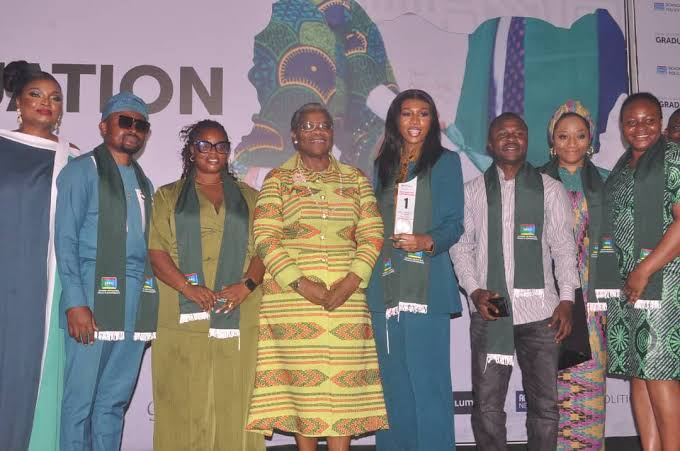
African leaders need both the competence to address development challenges and the character to serve the public, Côte d’Ivoire’s National Assembly President Patrick Achi and former Malawian President Joyce Banda have said.
They made the call on the 10th of October at the 2026 graduation ceremony of the School of Politics, Policy and Governance (SPPG) in Abuja. Held under the theme “Breaking the Monopoly: Building Nigeria’s New Political Leadership Pipeline,” the ceremony brought together emerging political leaders and graduates from across the continent.
Achi said African countries need leaders with character, competence and capacity to turn the continent’s natural and human resources into better living conditions. He argued that leadership development is essential to stronger governance and sustainable development, and urged graduates to treat public office as a responsibility to serve people and advance the common good.
He also commended the SPPG for equipping aspiring leaders with the knowledge to understand governance challenges and develop practical solutions. Achi said effective leadership and active citizen participation are vital if Africa is to address persistent development problems despite its abundant resources.
Banda called for more women to participate in political leadership and governance, warning that Africa cannot build its future while excluding half of its talent. She urged women to seek leadership positions and take part in decision-making rather than wait to be invited into political spaces.
She said women are often mobilised to support political movements but excluded when influential positions are allocated. Banda called for political systems that make room for women, young people, professionals and reformers, regardless of their political backgrounds.
SPPG founder and former Nigerian Education Minister Oby Ezekwesili challenged graduates to apply their training to improve political leadership and governance. She said the school was created to address two persistent shortcomings: a lack of character in public leadership and insufficient policy competence.
Ezekwesili said the institution had graduated more than 1,000 students across Nigeria, Senegal and Kenya since it was established in 2021. The school, she added, would continue to monitor graduates and could revoke certificates if they failed to uphold its values and standards.
The speakers’ remarks linked leadership development with broader questions of representation and accountability. Achi focused on preparing leaders who can turn resources into public benefit, while Banda stressed that political institutions must open decision-making to groups often kept at the margins.
For the SPPG graduates, the challenge now is to put those principles into practice: build the skills to shape effective policies, serve the public interest and widen access to leadership across Africa.
Africa Presents is a Pan-African digital magazine and monthly publication covering politics, business, economy, culture, tech, and the stories shaping Africa and its diaspora. Visit africapresents.com and follow @AfricaPresents for daily coverage and monthly themed magazine editions.







Leave a comment