

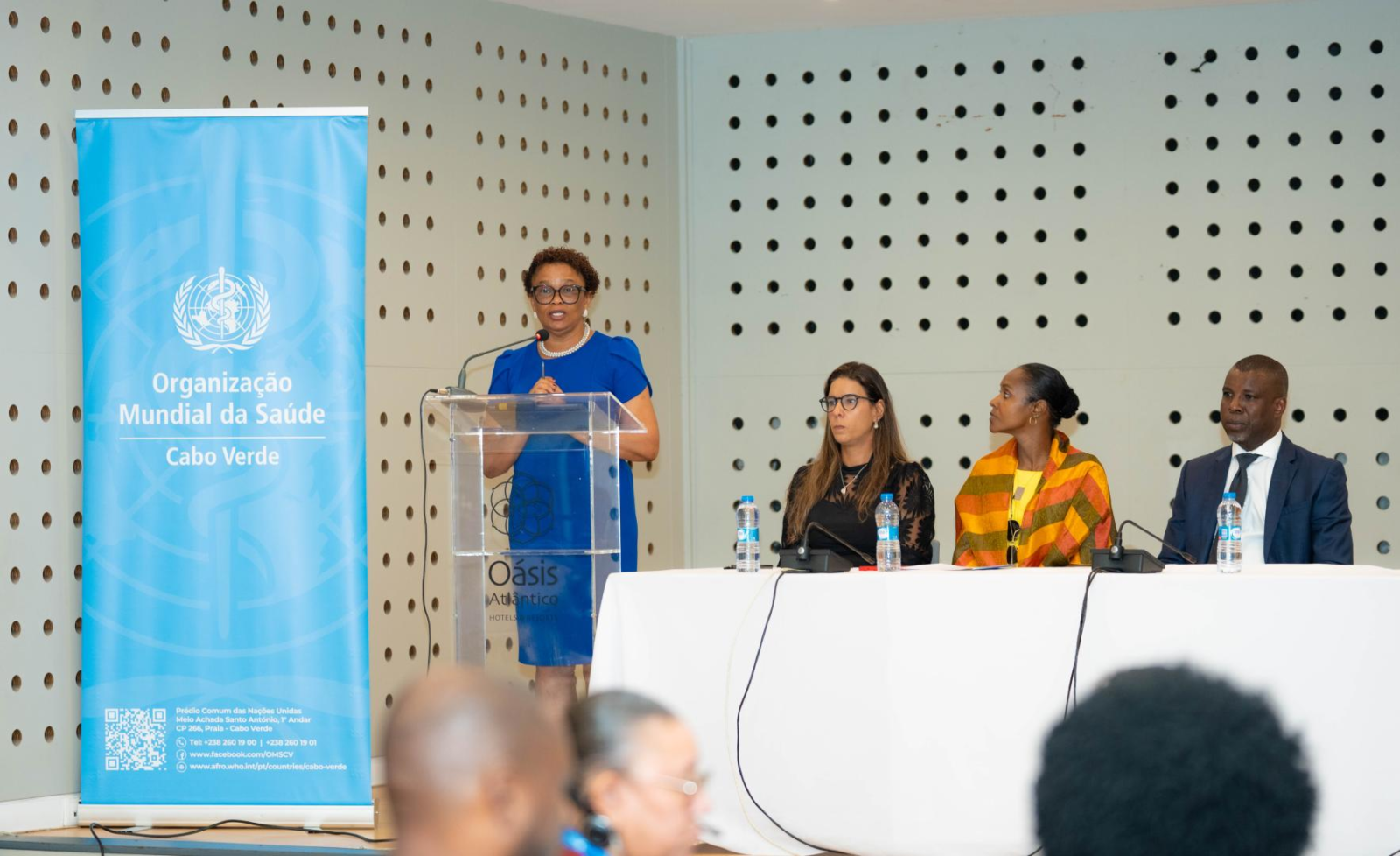
A regional training of trainers opened in Praia, Cabo Verde, on November 9th to strengthen public health emergency management and humanitarian health coordination in Angola, Cabo Verde, Guinea-Bissau, Mozambique and São Tomé and Príncipe, bringing together 34 participants from the five countries.The course, running from November 9th to 20th, 2026, is part of AVoHC-SURGE, a joint initiative by the World Health Organization (WHO) and the Africa Centres for Disease Control and Prevention (Africa CDC) to help countries develop emergency response teams, with funding support from the United Kingdom’s Foreign, Commonwealth and Development Office (FCDO) and GAVI, the Vaccine Alliance. The initiative aims to build a roster of more than 50 government-nominated AVoHC-SURGE responders in each country, bringing together specialists from different sectors and disciplines who can deploy rapidly.
Limited access to specialised training in Portuguese has made it harder for the five countries to train more responders and for their personnel to take part in regional deployments, with a limited pool of Portuguese-speaking responders increasing reliance on international support during major emergencies. The regional training gives teams an opportunity to exchange lessons on responding to different threats, including infectious disease outbreaks and climate-related disasters, with the course delivered in Portuguese by ProEpi, a partner in the Global Outbreak Alert and Response Network.
The training brings together health ministry representatives from the Ministry of Defence, Agriculture and Environment, Internal Affairs including the National Public Health Institute and Hospitals, and the Red Cross, to develop the skills they need to train national emergency responders in their countries. Participants will learn how to lead emergency response, coordinate with humanitarian partners and manage Public Health Emergencies Operations Centres (PHEOCs), which are hubs that enable health authorities to bring together information and coordinate the people and resources needed for a response.
In simulations, country teams will practise assigning responsibilities, making decisions and mobilising personnel and resources, with participants also leading practical sessions and receiving feedback, while the course will strengthen collaboration among Portuguese-speaking African countries, helping them share technical expertise and provide operational support across borders during health emergencies. In Cabo Verde, coordinating emergency operations across islands requires particular attention, with Flavia Semedo, Health Emergency Officer on behalf of Dr Ann Lindstrand, WHO Representative in Cabo Verde, noting that the country’s geographical characteristics reinforce the need for strong national coordination, trained personnel and the ability to mobilise response capacities rapidly across different islands.
Following the course, the Ministry of Health in collaboration with other relevant sectors will identify potential national responders for formal government nomination, with the trained participants then cascading the training in their respective countries, building a multidisciplinary pool of national responders who are prepared and ready for rapid deployment when emergencies occur. The course builds on earlier work in September 2026, when representatives from the five countries developed national roadmaps to establish and strengthen emergency medical teams capable of rapid deployment during disease outbreaks, disasters and other health emergencies.
The training is part of a broader push to strengthen health security across Africa, with WHO’s Regional Office for Africa also hosting the first Emergency Medical Team Global Meeting in Africa in early November, advancing commitments to sustainable national teams. The Cabo Verde training represents a significant step in addressing the longstanding gap in access to specialised emergency preparedness and response capacity-building opportunities tailored to the Portuguese-speaking context in Africa.
The challenge now is to ensure that the trained participants translate their skills into effective national response capacity, with the cascading of training across the five countries expected to build a pool of responders ready for rapid deployment when emergencies occur.
Africa Presents is a Pan-African digital magazine and monthly publication covering politics, business, economy, culture, tech, and the stories shaping Africa and its diaspora. Visit africapresents.com and follow @AfricaPresents for daily coverage and monthly themed magazine editions.







Leave a comment