

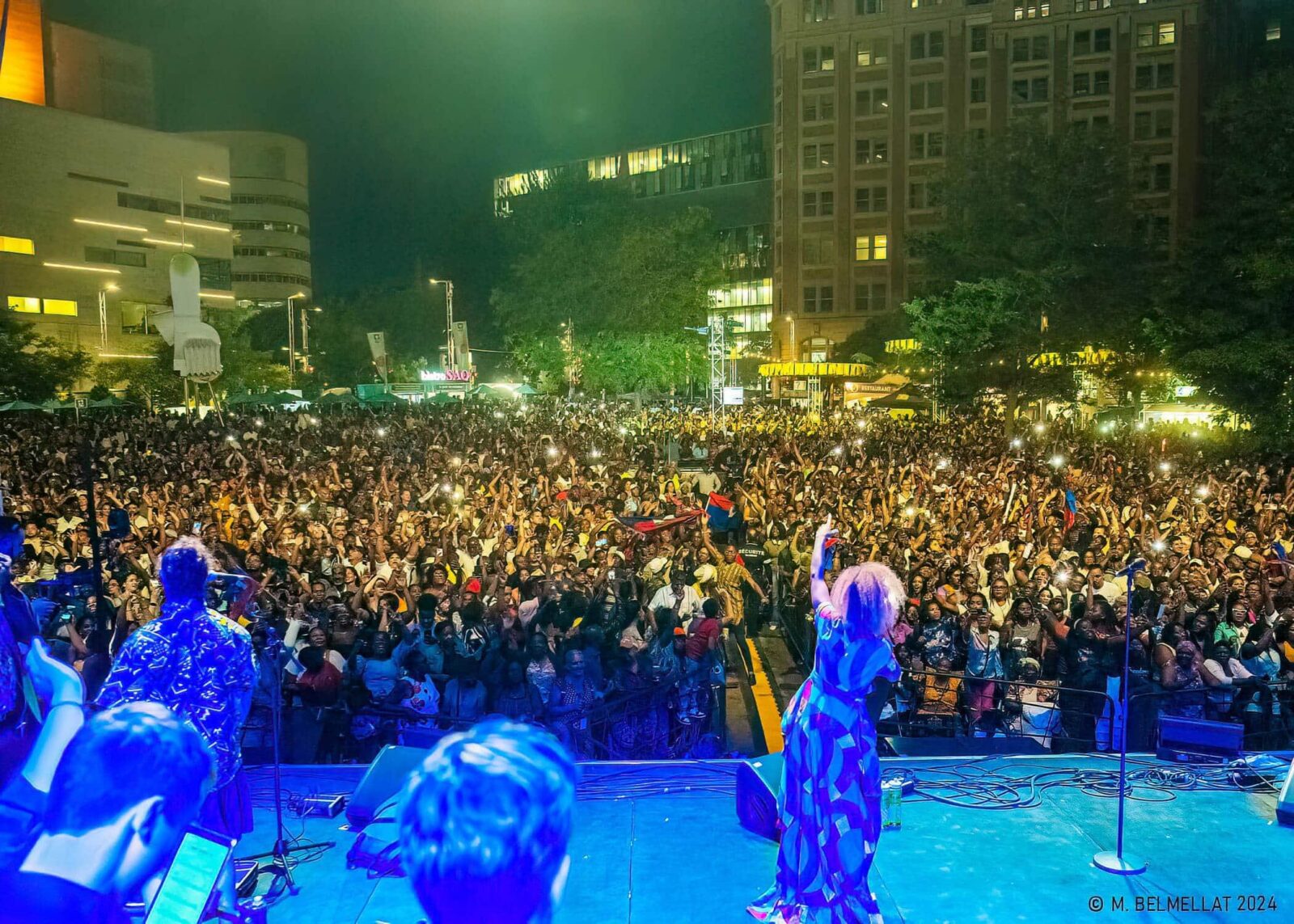
The Festival International Nuits d’Afrique concluded its 40th edition in Montreal yesterday the 19th of July, closing 13 days (7th to 19th) of music, culture, and celebration that brought together more than 700 artists from 30 countries across six concert venues and a free outdoor site in the city’s Quartier des spectacles. As the largest event of its kind in North America, the festival delivered approximately 130 shows and activities, with 80 of the outdoor performances free to the public.
The emotional centrepiece of the anniversary was a special tribute night at Le MTelus on 11 July: Guinea paying homage to the Baobab of Montreal, a soirée dedicated to Lamine Touré, the Guinean founder of the festival, whose vision four decades ago built what is now one of the most respected cultural institutions in the African diaspora.
Among the highlights was a large-scale African circus performance telling the story of West Africa through acrobatics, djembes, and kora from Yamoussa Bangoura, and a headline set from Kizaba, a pioneer of Afro-pop who blends Congolese electro, Afrobeats, and pop while singing in French, English, Kikongo, and Lingala. The festival’s Tombouctou Market and Promenade des Saveurs food vendors extended the experience beyond the stage, turning Montreal’s Place des Festivals into a continental crossroads for over a week.
Festival director Suzanne Rousseau reflected on what makes the event endure: “We travel not just on stage but also with the festival goers. It’s a meeting place that’s really important for everybody, and it just shows the richness of a meeting of cultures. For this 40th edition, there are artists who were discovered by Nuits d’Afrique years ago who have a very strong connection with us and have grown with us throughout the years.”
For the African diaspora in North America, Nuits d’Afrique has always been more than a music festival. It is a point of convergence, where Malian families, Algerian communities, Haitian culture, and Colombian rhythm share the same square in the heart of a Canadian city, united by a musical tradition that began on one continent and now belongs to the world. That this institution has not only endured for 40 years but continued to grow says something important about the appetite for African culture in the diaspora, and about what happens when that culture is given the space to speak entirely for itself.
Africa Presents is a Pan-African digital magazine and monthly publication covering politics, business, economy, culture, tech, and the stories shaping Africa and its diaspora. Visit africapresents.com and follow @AfricaPresents for daily coverage and monthly themed magazine editions.







Leave a comment