

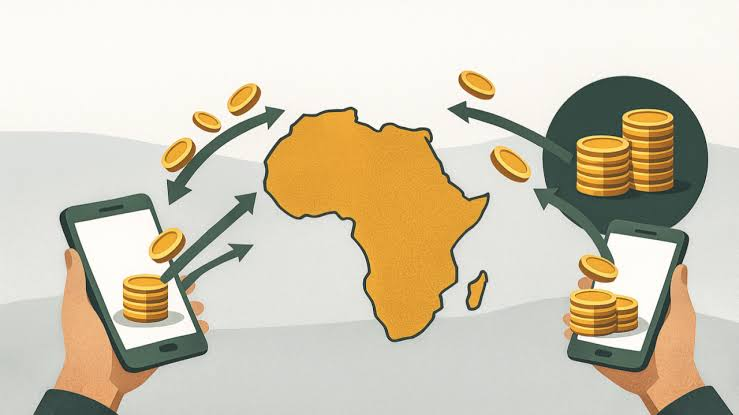
While governments negotiate at summits and multilateral institutions deliberate over reform, millions of ordinary Africans abroad are quietly doing something more immediate — sending money home. In 2025, Sub-Saharan Africa received $21.8 billion in diaspora remittances, a figure that held steady despite a global economic environment designed to make it harder.
That resilience is the story.
Bigger Than Aid. Bigger Than FDI.
In 2023, African nations received an estimated $90.2 billion in remittances — roughly double the volume of overseas development assistance. The continent’s diaspora, in other words, is already doing more for Africa than the entire international aid architecture. And while the headline figures fluctuate by region and corridor, the structural reality is consistent: remittances are now the most reliable external financial flow the continent has.
Across Africa, remittances sent by migrants working abroad have become a vital economic lifeline, often outstripping both Foreign Direct Investment and Official Development Assistance. For countries like Comoros, The Gambia, Lesotho, Cape Verde, and Liberia, formal remittances alone account for over 10 per cent of GDP. This is not supplementary income. It is the backbone.
Nigeria’s Record and What Drove It
Nigeria continues to anchor Sub-Saharan Africa’s remittance story. In 2025, remittance inflows to Nigeria reached $23 billion (the highest level recorded in five years) highlighting the sustained resilience of the Nigerian diaspora despite global inflation and macroeconomic pressures.
What changed was not just the volume, but the channel. The Central Bank of Nigeria reported that monthly formal remittance inflows rose from approximately $200 million to $600 million in recent months, driven by improved policy clarity and greater trust in regulated transfer channels. For years, a significant share of diaspora transfers moved through informal routes — hand-carried cash, unregistered brokers, parallel exchange networks — because the official system made it harder and more expensive to send money home legitimately. Policy reform is starting to close that gap.
President Tinubu noted that Nigeria’s official remittances were four times the value of the country’s Foreign Direct Investment for the same period, a comparison that reframes the entire conversation about what drives Nigeria’s economy and who its most important investors really are.
The Cost Problem That Won’t Go Away
The numbers would be significantly larger if sending money home did not cost so much. The World Bank estimates that remittances to Africa could reach $500 billion by 2035 — if transfer costs are reduced. That conditional clause carries enormous weight. Africa remains the most expensive region in the world to send money to, with average transfer fees consistently above the UN’s Sustainable Development Goal target of three percent.

A substantial share of Africa’s remittance flows continues to move through informal channels — hand-carried cash or unregistered transfer systems — particularly in the DRC, Libya, Zimbabwe, Somalia, and Nigeria. This persistent reliance on unregulated intermediaries undermines financial inclusion, masks the full scale of diaspora contributions, and weakens data for policymaking. Every dollar that moves through an informal channel is a dollar that doesn’t strengthen foreign reserves, doesn’t get counted in GDP, and doesn’t reach its recipient at full value.
From Consumption to Investment
The bigger question, and the one that will define the next decade of remittance policy across Africa is whether these flows can shift from household support to productive investment. Right now, the majority of remittances go toward food, healthcare, school fees, and rent. That is not a failure. Keeping families alive and children in school is exactly what the money should do. But the potential goes further.
Closing the gap between remittances’ potential and their current use requires action on three fronts: lowering costs and formalising flows, integrating them into national financial systems, and creating incentives for diaspora investment. Countries like Senegal are already moving in this direction — actively harnessing remittance inflows through initiatives like a diaspora bank that encourages investment in tourism, agriculture, and housing.
If robust financial reforms are pursued, Africa’s net remittances could reach approximately $168.2 billion by 2043, compared to $137.2 billion under the baseline trajectory. The difference between those two numbers — $31 billion — is the cost of inaction.
The People Behind the Numbers
It is easy to discuss remittances as an economic variable. It is worth remembering what they actually are: a nurse in London covering her mother’s hospital bill in Lagos; an engineer in Houston paying school fees in Accra; a cleaner in Dubai keeping the lights on in Dakar. These inflows have become a financial lifeline, driving development from the ground up.
The $21.8 billion that held steady in 2025 did not come from policy documents or summit declarations. It came from millions of individual decisions, made every month, by Africans who never stopped investing in home — even when the world made it harder to do so. That is a story the continent should tell more loudly.
Africa Presents is a Pan-African digital magazine and monthly publication covering politics, business, economy, culture, and the stories shaping the continent and its diaspora. For more reporting like this, visit us at africapresents.com. Follow us on social media @AfricaPresents for daily updates, and watch out for our monthly magazine editions — each built around a theme that goes deeper into the issues that matter most to Africa and its people.







Leave a comment