

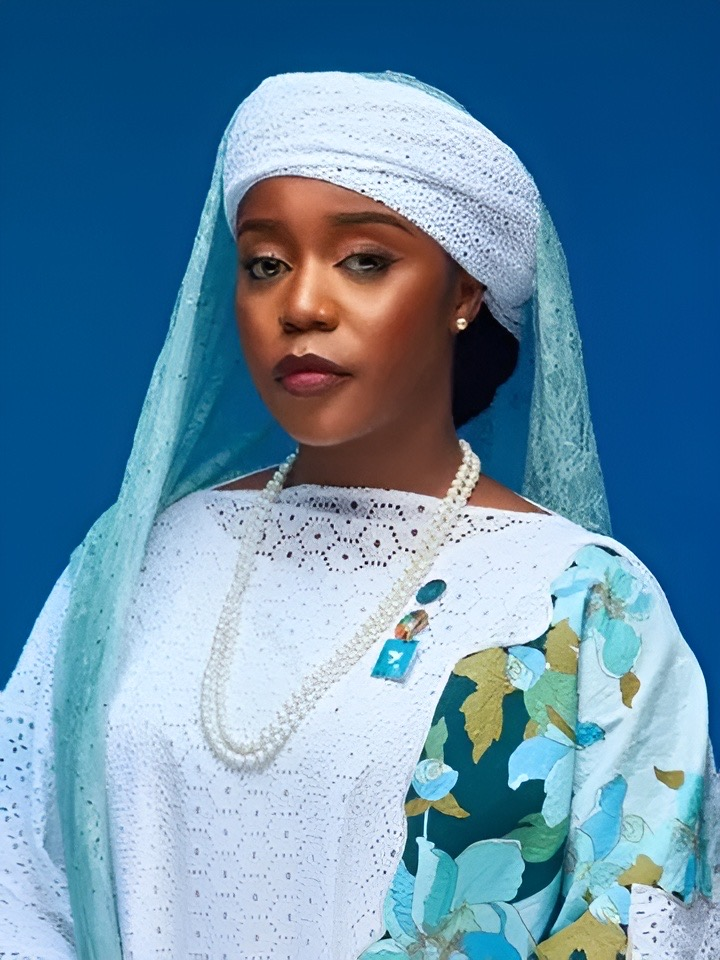
Pan-African voices found a proud moment on the global stage as Maryam Bukar Hassan, a poet and UN peace advocate from Nigeria, became the first Nigerian to carry the Olympic flag during the opening ceremony of the Milano Cortina 2026 Winter Olympics.
Held on 6 February 2026 at San Siro Stadium in Milan, the ceremony introduced a special group described by organisers as “Flag Bearers of Peace”, individuals chosen not for athletic competition, but for embodying the Olympic ideals of unity, dialogue and shared humanity.
Hassan stood alongside globally recognised figures such as Kenyan marathon legend Eliud Kipchoge, Brazilian gymnast Rebeca Andrade, and Tongan humanitarian Pita Taufatofua, reflecting a cross-continental message that peacebuilding is a collective responsibility.
The Olympic flag — the white banner marked by five interlocking rings is traditionally carried by individuals whose work reflects the values of solidarity and coexistence. Hassan’s inclusion placed African storytelling, art, and advocacy at the centre of one of the Games’ most symbolic moments.
Sharing her reflections afterwards, she described the experience as a reminder that peace is not a one-off declaration but a continuous act expressed through everyday choices — listening, collaborating and creating spaces where dignity is upheld. Her message resonated strongly with wider African realities, where community, dialogue, and resilience remain essential tools for navigating social and political complexity.
Known in literary circles for blending spoken word with social commentary, Hassan was appointed a Global Advocate for Peace by the United Nations in 2025, recognising years of work promoting inclusion, youth engagement, and cultural dialogue.
Although she did not compete in the Games, her ceremonial role amplified an African perspective within a global arena often defined by athletic performance alone. It highlighted how culture, creativity and advocacy are increasingly seen as vital to shaping the legacy of international sporting events.
Organisers framed the opening night as both a sporting and cultural spectacle, with appearances from artists including Mariah Carey, Laura Pausini and Andrea Bocelli, alongside Italian actors Pierfrancesco Favino and Sabrina Impacciatore, known internationally for The White Lotus.
The ceremony, produced by Balich Wonder Studio, was designed to extend beyond the stadium into surrounding communities, with satellite celebrations planned across Olympic host territories — an effort to connect the spectacle to everyday public life.
While some qualification events began ahead of the ceremony for logistical reasons, organisers emphasised that the traditional rituals including the Parade of Nations and the lighting of the Olympic cauldron remained the formal start of the Games.
For many observers across Africa, Hassan’s presence symbolised more than representation. It underscored how African voices continue to shape global conversations not only through sport, but through culture, diplomacy and ideas.







Leave a comment