

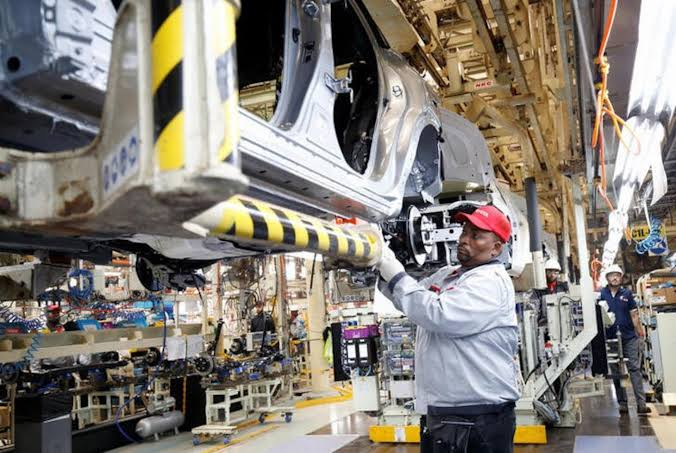
Africa’s automotive sector holds vast growth potential, but unlocking it requires turning AfCFTA trade frameworks into integrated regional value chains, local manufacturing hubs and a workforce capable of supporting a modern industrial economy.The opportunity now lies in strengthening regional integration and value chains to unlock this potential at scale, with the African Continental Free Trade Agreement (AfCFTA) providing a framework for doing so but its success depending on what governments and industry build together. Few industries connect as many parts of an economy as automotive manufacturing, with a vehicle plant creating demand for components, metals, plastics, glass, textiles, electronics, logistics, energy, finance, training and retail infrastructure.
For automotive, that means a hub-and-spoke model, where one hub might assemble vehicles while suppliers elsewhere produce wiring harnesses, upholstery, tyres, glass, batteries or plastic components, with the proposed automotive pact between the Southern African Customs Union and Egypt, outlined at Alamein, illustrating this approach. The emphasis on complementary production and supplier development offers a way to connect industrial capabilities across regions, with agreed rules of origin now an important foundation that must be implemented consistently, alongside aligned standards, efficient borders and predictable industrial policies.
To unlock lasting economic value, manufacturing investments must go beyond vehicle assembly, with deep localisation essential, meaning designing products adapted to local needs, building competitive supplier ecosystems and developing local talent capable of supporting a modern automotive industry. Together, these elements create resilient industrial ecosystems that generate jobs, strengthen capabilities and integrate African manufacturing into regional and global value chains.
Africa still relies heavily on imports for essential commodities, including foodstuffs, pharmaceuticals, machinery, fertilisers, refined petroleum products, chemicals and automobiles, with the continent’s import basket estimated at $230 billion on basic products like fuel, food, plastics, steel and fertiliser, meaning Africa has no shock absorption capacity and keeps importing inflation and exporting jobs. The challenge is not simply to create more jobs but to build more productive economies, with Africa’s industrial transformation continuing to progress at a slow pace, with manufacturing value-added increasing from $285 billion in 2020 to $351 billion in 2025 but the continent still accounting for less than 2 per cent of global manufacturing output and only 1.4 per cent of global manufacturing exports.
The AfCFTA provides a strong economic rationale for shifting the focus from national self-sufficiency to continental self-reliance, with Africa not needing every country to produce everything, but instead allowing countries to specialise in different products and stages of production while trading with one another, enabling raw materials, intermediate goods and finished products to circulate more easily across the continent. Developing robust regional value chains enhances the global competitiveness of African industries, with the continental market exceeding 1.5 billion people and projected to reach 2.5 billion by 2050 providing the demand needed to achieve economies of scale and foster domestic manufacturing.
Import policy must balance industrial development with affordable mobility, with the priority being to phase out non-compliant imports and prevent customs fraud through appropriate roadworthiness and emissions standards, accurate valuations and effective enforcement, while governments must provide coherent industrial policies and manufacturers must invest for the long term. The African Development Bank’s approach increasingly relies on partnership between public and private capital, between African institutions themselves, between domestic and international investors, and between Africa and its global partners, with the Bank’s focus on infrastructure, regional integration, digital connectivity, skills, long-term financing, industrial clusters and value chains linked to Africa’s transformation.
The challenge now is to translate the AfCFTA framework into investment, production and employment, with the opportunity clear but the next step being to build the capacity, partnerships and markets that make it real, ensuring that Africa’s automotive sector becomes a practical test of the AfCFTA’s promise to enable African countries to manufacture, trade and create value together.
Africa Presents is a Pan-African digital magazine and monthly publication covering politics, business, economy, culture, tech, and the stories shaping Africa and its diaspora. Visit africapresents.com and follow @AfricaPresents for daily coverage and monthly themed magazine editions.







Leave a comment