

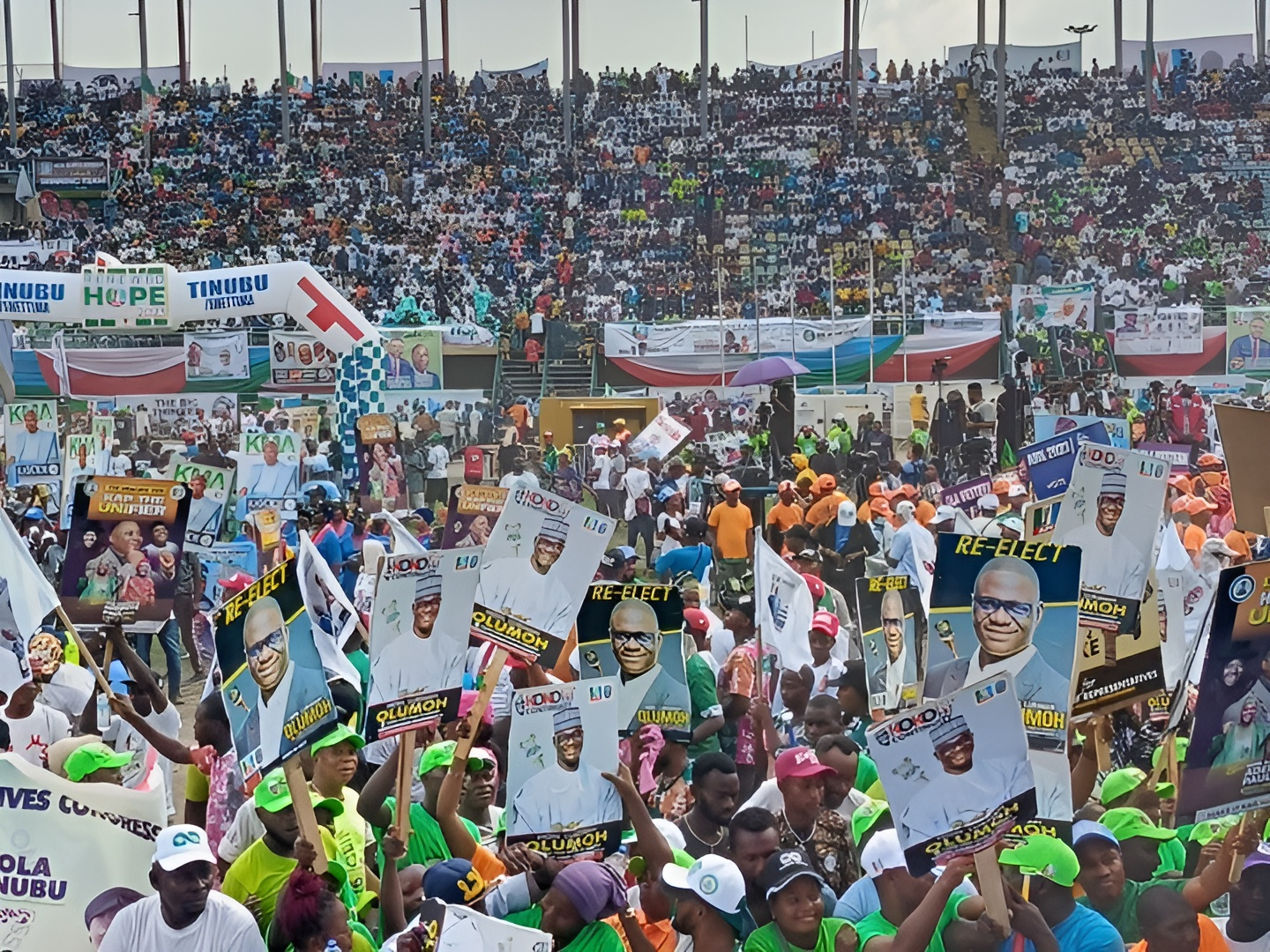
There was a time when political rallies did not trend, were not live-streamed, and did not depend on hashtags to exist. Yet, they were powerful. Crowds gathered not because a post went viral, but because a message travelled slowly and deliberately, from street to street, from mouth to mouth, from town to town, church to church, mosque to mosque. Political mobilisation was physical, visible, and deeply communal.
In Nigeria, political rallies were civic events as much as they were campaign strategies. Streets would be cordoned off, stages erected in open fields or stadiums, and supporters arrived hours before speeches began. There were no drone shots or trending clips, only the human eye and memory to carry the moment forward. Attendance itself was proof of popularity. If the crowd was thin, everyone knew. If it overflowed, it spoke louder than any online metric. When rice, yams and other food staples were parts of party packages.
The speeches were long, passionate, and often repetitive, but they mattered. Leaders spoke directly to people, not through screens. Promises were shouted into microphones that crackled, sometimes failing mid-sentence, yet the message still found its way through. According to political communication studies from the International IDEA, pre-digital rallies played a central role in shaping voter perception because they allowed citizens to see, hear, and judge candidates in real time, without filters or edits.
Then came the digital shift. By the late 2000s, social media platforms began reshaping political participation globally. National news brief by the likes of Rufai Oseni and Seun Okinbaloye, a heated argument that gain the hearts of Nigerians. Campaigns moved online. Mobilisation became faster, broader, and less dependent on physical presence. Today, a rally can be “successful” even when attended by few, so long as it performs well online.
Yet, something has been lost in that speed. Political rallies without social media carried a kind of sincerity that could not be manufactured. They required effort, patience, and genuine connection. You had to show up. You had to stand in the sun. You had to listen. Remembering those rallies is remembering when politics was a shared physical experience, when civic duty involved movement, waiting, and collective presence. It is a reminder that before likes and shares, democracy was built on faces in crowds, voices in the air, and belief strong enough to leave home and gather.







Leave a comment