

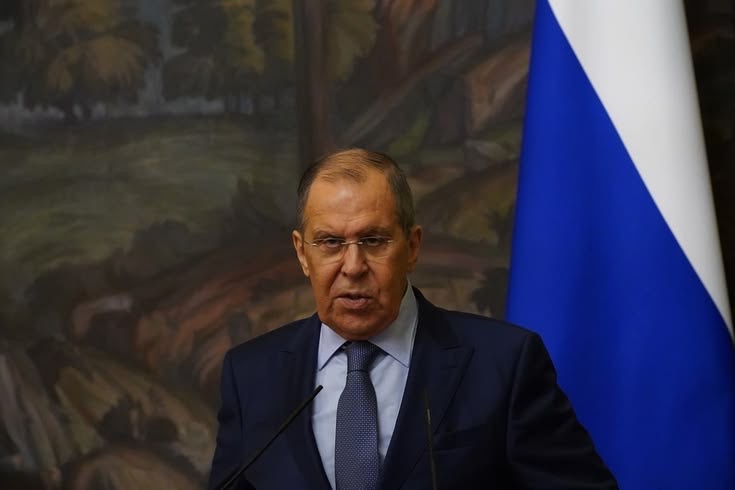
Russian Foreign Minister Sergey Lavrov landed in Addis Ababa on July 6, opening a new African tour with Ethiopia as its first stop. He began the trip by meeting Mahamoud Ali Youssouf, chairperson of the African Union Commission, but he has not yet said which other countries he’ll visit next.
Warm welcome and talk commencement.
Lavrov’s arrival came with a notable protocol change — he wasn’t greeted by his Ethiopian counterpart, Gedion Timotheos, but by a mid-level ambassador instead, raising eyebrows among observers.
Prime Minister Abiy Ahmed personally received Lavrov’s delegation on July 7 for talks on bilateral relations and new cooperation, while Lavrov and Timotheos separately discussed trade, investment, technology transfer, and coordination on regional and global issues.
The Question is, Why now?
The relationship has deepened since Lavrov’s last Addis Ababa visit in 2022, with Ethiopia now a full BRICS member following its participation in the bloc’s Kazan summit.
Russian officials describe the two countries’ foreign-policy positions as largely aligned or fully coinciding, and the visit is widely seen as an effort to “consolidate gains” ahead of the next Russia-Africa summit.
At the AU headquarters, Lavrov held a one-on-one with Youssouf before wider delegation talks and Russia said it hopes Youssouf will personally attend the third Russia-Africa summit in Moscow on October 28-29, whose agenda will center on material cooperation between Russia and the African Union.
The messaging
Lavrov used this stop to press familiar themes, saying former colonial powers have continued to profit from Africa’s natural resources and warning on European rearmament that countries willing to fight Russia directly could still emerge, calling claims of non-involvement “disingenuous.”
The real prize: nuclear energy
The most concrete thread is atomic energy cooperation. Russian state media said Lavrov would discuss building a large-scale nuclear plant in Ethiopia as part of a partnership sealed in September 2025, when Ethiopia and Rosatom signed an action plan witnessed by Abiy Ahmed and Vladimir Putin, covering feasibility studies, infrastructure, and workforce training toward Ethiopia’s first nuclear plant. Addis Ababa aiming to run two 1,200 MW reactors by 2032–2034.
Progress has continued into 2026.
Ethiopia’s ambassador to Moscow said in April that preparations remain on schedule, following a March 31st action plan signed between Rosatom and Ethiopia’s nuclear energy commission and Ethiopian officials have toured Russia’s operational Kalinin plant to study its technology and operations.
Analysts caution the deal carries real risk alongside prestige. Rosatom typically finances such projects through state-backed loans or “build-own-operate” models, but Ethiopia’s financing structure remains undisclosed — notable given its debt-to-GDP ratio topped 50% in 2024 and critics argue the same capital could instead scale Ethiopia’s abundant solar, wind, and geothermal resources rather than take on a technically demanding, decades-long nuclear build.





Leave a comment