

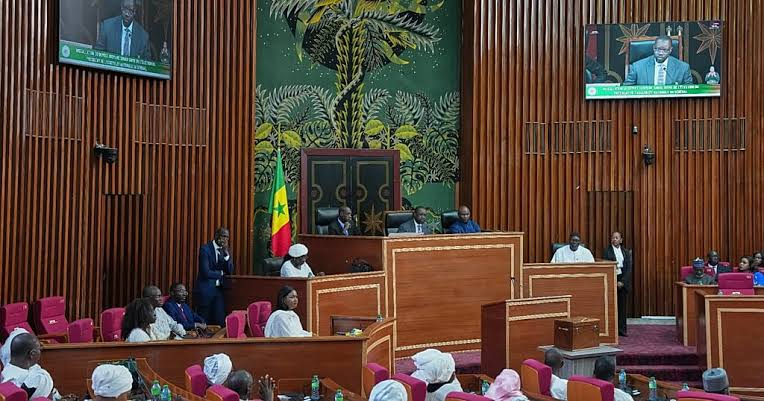
Senegal’s National Assembly has become the centre of political tension over a new $2.2 billion IMF agreement, with lawmakers pushing back against Prime Minister Mahammadou Mame Aliou Lo’s handling of the deal and demanding greater transparency and parliamentary oversight.The staff-level agreement, announced on the 1st of September 2026, sets out a three-year Extended Credit Facility programme that requires Senegal to seek debt treatment under the G20 Common Framework and implement fiscal reforms to restore debt sustainability after the discovery of billions in hidden debt under the previous administration.
During parliamentary debates in early September, MPs opposed to President Bassirou Diomaye Faye’s Kiiray party challenged the government’s approach. Some Pastef-aligned lawmakers accused the executive of undermining national sovereignty, with MP Guy Marius Sagna declaring that “Diomaye and Kiiraay do not represent a sovereign Senegal, but a subjugated Senegal.”National Assembly President Ousmane Sonko, who was sacked as prime minister in May 2026 before being elected speaker, has been particularly vocal. He has called for the full publication of the economic and financial policy memorandum negotiated with the IMF, arguing that citizens and lawmakers must know the exact terms of Senegal’s commitments before the IMF Executive Board gives final approval.Sonko has warned that any commitments arising from the IMF deal will ultimately need to be debated in the National Assembly, where his Pastef party holds a majority, when they are incorporated into forthcoming finance legislation. He previously described IMF-led debt restructuring as a “disgrace” for the country, though he now says the focus should be on transparency and democratic scrutiny rather than outright rejection.
Prime Minister Lo has defended the agreement as necessary to resolve Senegal’s debt crisis, which includes around $3.5 billion in payment arrears. He says the IMF programme will allow the country to reprofile its debt by extending maturities and renegotiating terms, while unlocking fresh financing to support reforms and restore macroeconomic stability.The government argues that without the IMF deal, Senegal risks prolonged exclusion from international capital markets and deeper fiscal strain. Officials say the programme is designed to protect social spending while putting public finances on a sustainable path.
The dispute highlights the political sensitivity of debt management in Senegal following the 2024 revelation of hidden liabilities that pushed public debt above 130% of GDP. It also underscores the delicate balance between the executive’s need to secure emergency financing and the legislature’s demand for a say in decisions that will shape the country’s economic trajectory for years.How the government navigates this tension—between IMF conditionality, parliamentary oversight and public expectations of sovereignty—will likely define Senegal’s economic and political landscape heading into the 2027 budget.
Africa Presents is a Pan-African digital magazine and monthly publication covering politics, business, economy, culture, tech, and the stories shaping Africa and its diaspora. Visit africapresents.com and follow @AfricaPresents for daily coverage and monthly themed magazine editions.





Leave a comment