

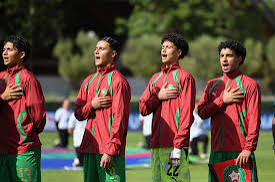
The TotalEnergies CAF Under-17 Africa Cup of Nations Morocco 2026 revealed something crucial: the future of African football is already here, and Morocco is building it. Ten African nations gathered at the Mohammed VI Football Complex for CAF’s first festival-style tournament, where all matches except the opening match, semi-finals, and final were played at one integrated venue, making it easier for teams to focus on performance rather than logistics.
Morocco has established itself as the central hub for African football, hosting this upcoming Women’s AFCON for the third consecutive time, plus the Women’s Champions League in 2022 and 2024, last year’s U-17 Cup, the U-23 AFCON, various futsal AFCONs, and the recent men’s senior AFCON. Morocco are the 2025 AFCON champions (after Senegal were stripped of the title), won the 2025 Women’s Africa Cup of Nations, reached the 2025 FIFA Club World Cup semi-finals, and rank among Africa’s top 3 in FIFA rankings.

The U-17 tournament introduced CAF’s festival-style format for better operational efficiency and long-term player development. The eight quarter-finalists qualified for FIFA U-17 World Cup Qatar 2026, with two play-off spots for third-place teams.
Group A featured Morocco, Tunisia, Egypt, and Ethiopia; Group B had Côte d’Ivoire, Cameroon, Uganda, and DR Congo; Group C included Mali, Angola, Tanzania, and Mozambique; and Group D brought together Senegal, South Africa, Algeria, and Ghana.
Morocco’s rise isn’t accidental. The kingdom invested heavily in football infrastructure, from the Mohammed VI Football Complex to stadiums across Rabat and Casablanca. The “Morocco, Capital of African Football” initiative brought seven African national teams plus Palestine together in March 2026 for friendly competitions.
CAF has reassured Morocco remains the WAFCON 2026 host, expanded to 16 teams including Nigeria, South Africa, Ghana, and debutants Kenya.
For decades, African football was definfed by exports—talented players leaving for Europe, federations struggling with infrastructure, tournaments cancelled last minute. Morocco’s model flips this script. The festival-style format reduces costs, centralized venues improve security and logistics, world-class facilities attract investment, and consistent hosting builds institutional memory.
Morocco’s success proves African football doesn’t need external validation to thrive. The continent has the talent, infrastructure, and organizational capacity, it just needs sustained investment and strategic vision.
From youth development to tournament hosting to professional league building, Morocco is building a football ecosystem that rivals any in the world.
The future of African football isn’t coming. It’s already taking shape in Morocco.
Africa Presents is a Pan-African digital magazine and monthly publication covering politics, business, economy, culture, tech, and the stories shaping Africa and its diaspora. Visit africapresents.com and follow @AfricaPresents for daily coverage and monthly themed magazine editions.





Leave a comment