

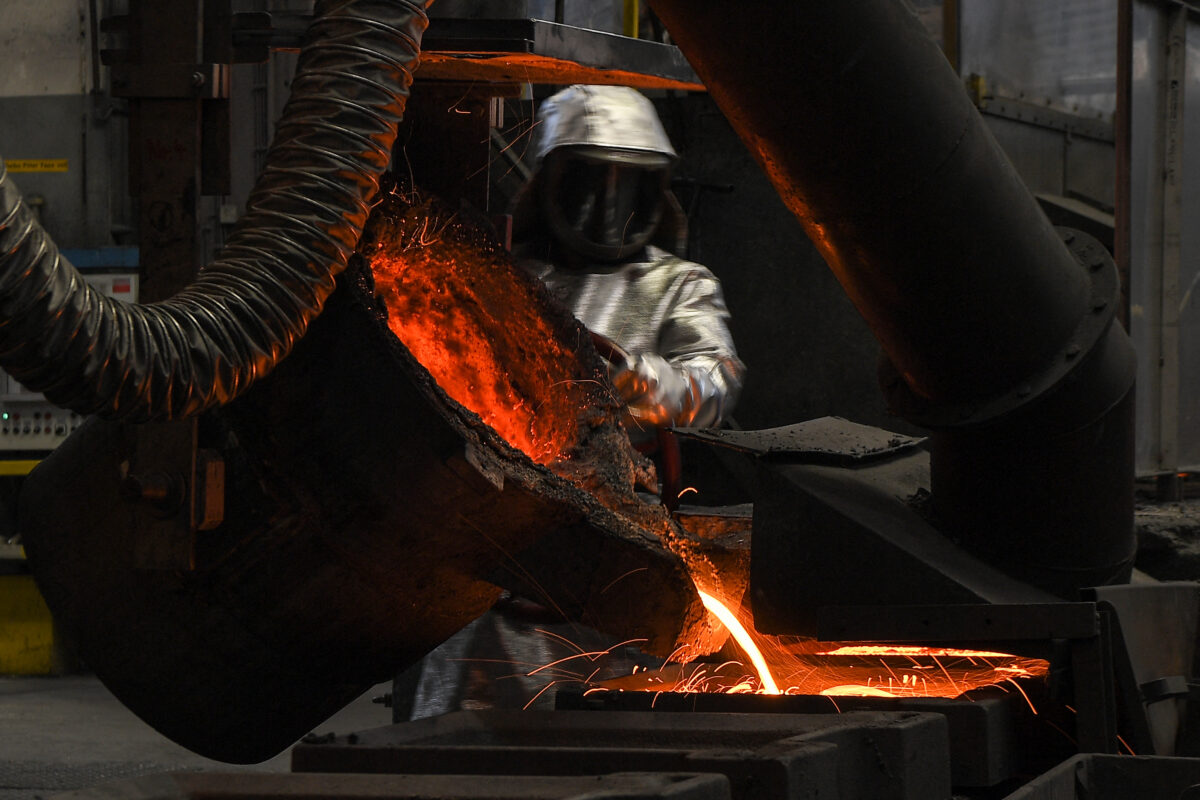
African countries are pushing mining companies to build refineries and smelters at home, but government and industry officials warn that a lack of cheap, reliable electricity could limit the investments needed to turn mineral wealth into industrial growth.
The push for local mineral processing is gaining traction across the continent, driven by a desire to capture more value from Africa’s vast mineral resources. However, insufficient electricity poses a major threat to these ambitions, with refineries, smelters and chemical plants requiring continuous, affordable power to operate competitively.
For refined copper, the International Energy Agency estimates that energy costs in Africa are 25 per cent higher than in Latin America and account for 44 per cent of production costs, reflecting expensive electricity, unreliable grids and dependence on off-grid diesel. The decline of South Africa’s ferrochrome and steel processing industries highlights the risks when power is expensive or unreliable, with dozens of smelters shutting in recent years largely due to a roughly tenfold increase in power costs since 2008.
In Guinea, officials have estimated the country needs between 5,000 and 10,000 megawatts to support its industrialisation, including aluminium smelters. The gap between mineral wealth and industrial capacity is stark, with sub-Saharan Africa still carrying roughly 85 per cent of the world’s electricity-access deficit.
Africa’s ambitions for industrialisation, manufacturing, minerals beneficiation, digital transformation, expanded trade and job creation all depend on one fundamental requirement: access to sufficient, reliable and affordable energy. Approximately 600 million Africans still live without access to electricity, constraining economic participation, industrial development, education, healthcare and the creation of new businesses.
Energy-intensive activities such as refining, processing and beneficiation cannot operate competitively if they depend on fragile grids or costly diesel generation. The challenge is not only whether electricity is available, but whether it is stable, affordable and predictable.
The cycle breaks only when processing capacity, stable rules and reliable power are built together, and when demand is secured regionally rather than staked on a single foreign buyer. For South Africa and Namibia, the path towards beneficiation remains challenged by structural energy constraints, legislative uncertainty and geopolitical volatility.
For African policymakers, the message is clear: mineral processing ambitions must be matched with serious investment in power infrastructure. Without affordable, reliable electricity, the continent risks remaining an exporter of raw materials rather than becoming a centre of processing and manufacturing.
Africa Presents is a Pan-African digital magazine and monthly publication covering politics, business, economy, culture, tech, and the stories shaping Africa and its diaspora. Visit africapresents.com and follow @AfricaPresents for daily coverage and monthly themed magazine editions.







Leave a comment