

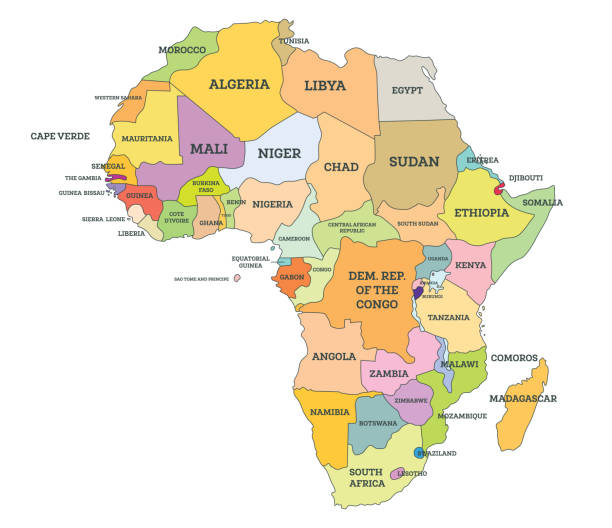
Experts are calling for the development of AI systems that understand African languages, warning that the continent’s linguistic diversity is being left behind as global AI models are trained predominantly on English, Chinese and European languages, leaving African users underserved by mainstream tools.The African continent is home to more than 2,000 languages, yet a 2025 study of large language models found support for only 41 African languages and 23 available public data sets, with just four languages—Amharic, Swahili, Afrikaans and Malagasy—always handled, while over 98 per cent of African languages went unsupported. In Nigeria, ChatGPT is among the most prevalent AI tools used for learning, yet the application only recognises 20 per cent of written Hausa sentences, even though more than 80 million people in the country speak the language.
AI-based technologies trained on content available in dominant languages appear to be less effective when it comes to producing output in Hausa or Zulu, with the challenge extending beyond translation to include speech recognition, cultural context and the ability to generate culturally relevant responses. A study of large language models found that current models face major challenges: they are unable to process speech in African languages, they lack cultural context, and they struggle to generate culturally relevant responses, rather than merely recognising them.
The consequences are significant, with AI tools prone to hallucinations, fabricated translations, and failure to adequately interpret some concepts because indigenous languages have not been sufficiently incorporated into the training of AI systems, a challenge not unique to Ghana, as even well-intentioned AI initiatives like “Abstracts into Indigenous Voices” in South Africa struggled with limited indigenous language data. The problem is particularly acute for oral languages, with large language models based mostly on text leaving out most of the world’s oral languages and dialects, including the aural nuances that are vital to communication.
African researchers and organisations are working to close the gap, with the African Next Voices project, backed by a $2.2 million Gates Foundation grant, releasing what is described as the largest AI-ready speech dataset for African languages ever assembled, covering 9,000 hours across 18 languages including Kikuyu, Dholuo, Hausa and Yoruba. In February 2026, Google launched WAXAL, an open dataset spanning 21 African languages, while the Masakhane research community, a pan-African natural language processing (NLP) network, has published translation tools for over 48 African languages.
Computational linguist Ife Adebara is working to incorporate African languages into large language models, having helped collect some 2,500 hours of speech across five African languages to understand the role of tone in computer language models, with her broader goal to make technology accessible to Africans in their indigenous languages by supporting all African languages across both speech and text. Nigerian startup Intron recently expanded its flagship voice AI model, Sahara, to support 57 languages, including 23 African languages and more than 500 regional accents, trained on over 14 million audio clips representing more than 40,000 speakers across 30 African countries.
Ghana’s Minister for Communication, Digital Technology and Innovation, Sam George, has called for the development of national language models to preserve African languages as AI becomes increasingly influential in the digital world, warning that Africa’s participation in the global technology revolution must go beyond adopting new tools and include the development of systems that recognise the continent’s languages, cultures and social realities. The Whose Knowledge? and DAIR initiative is developing “sovereign” language technologies for East African languages, using community-centered design and governance practices that help communities create and adapt content for online knowledge repositories.
The challenge now is to ensure that African languages, cultures and lived experiences are meaningfully represented in AI training datasets and systems, with experts calling for meaningful local representation in training datasets, particularly for applications in sensitive sectors such as healthcare, and for African-language technologies, including tools accessible in Pidgin, as a means of widening participation.
Africa Presents is a Pan-African digital magazine and monthly publication covering politics, business, economy, culture, tech, and the stories shaping Africa and its diaspora. Visit africapresents.com and follow @AfricaPresents for daily coverage and monthly themed magazine editions.






Leave a comment