

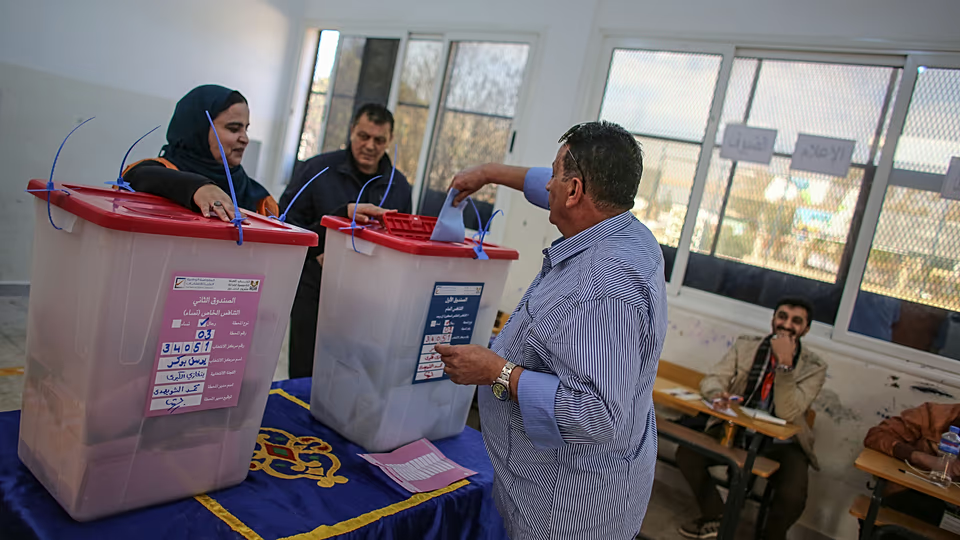
The United Nations has welcomed a breakthrough agreement between Libya’s rival political blocs that sets a roadmap for holding long-delayed presidential and parliamentary elections within two years, calling it a crucial step toward ending more than a decade of political division.
The UN Security Council issued a press statement on Tuesday, 8th of September, 2026, praising the 30th of August deal reached by Libyan parties in what is known as the “Smaller Convening”, a negotiating track brokered by the UN Support Mission in Libya (UNSMIL). The agreement reconstitutes the board of Libya’s High National Elections Commission and amends the legal framework for parliamentary and presidential elections, to be held within 24 months under a single, unified government.
Under the agreement, presidential and legislative elections will be conducted on the basis of Law 28 (2023) for the presidency and Law 10 (2014) for parliament, with both votes to take place “under a single executive authority and unified national institutions”. The deal also permits military personnel and dual nationals to run for president, resolving one of the most contentious issues that had stalled previous electoral attempts.
The House of Representatives in the East and the High Council of State in the West have one month to approve the framework, after which technical preparations for the vote can begin. UNSMIL has described the accord as a de facto political agreement between the Government of National Unity in Tripoli and the Libyan National Army command in Benghazi, aimed at ending parallel institutions and restoring a unified state.
Security Council members said the agreement “represents an important step toward delivering free, fair, transparent and inclusive national elections and advancing the unification of Libya’s institutions to fulfil the aspirations of the Libyan people”. They urged all parties to move quickly from paper to practice, implement the roadmap in good faith and refrain from any actions that could undermine the process.
The United States also hailed the deal, with the US Mission to the UN calling it a significant move toward breaking Libya’s prolonged political deadlock. UN spokesperson Stephane Dujarric said the agreement marks an important step in advancing Libya toward national elections and ending the transitional period.
While the deal is being welcomed as progress, significant challenges remain. Libya has been split between rival administrations since 2014, with previous election plans collapsing over disputes about candidates, electoral laws and the role of armed groups. Implementation will require sustained political will, security guarantees and continued UN mediation to ensure that the 24-month timeline is met and that the vote is credible and inclusive.
For now, the UN and international partners are urging Libyans to seize the momentum, translate commitments into concrete action and finally deliver the national elections that have been promised for more than a decade.
Africa Presents is a Pan-African digital magazine and monthly publication covering politics, business, economy, culture, tech, and the stories shaping Africa and its diaspora. Visit africapresents.com and follow @AfricaPresents for daily coverage and monthly themed magazine editions.





Leave a comment