

The currencies of Ghana and Zambia are expected to weaken against the US dollar over the next week to Thursday, while those of Kenya, Nigeria and Uganda may be little changed, with traders citing sustained corporate demand for dollars that continues to outweigh supply on the interbank market.
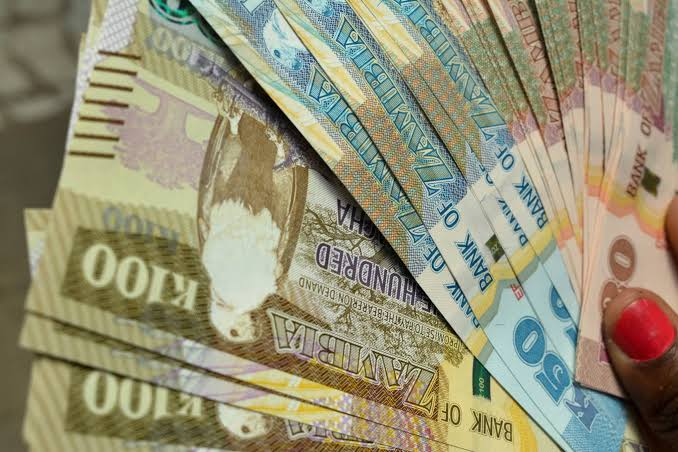
Ghana’s cedi traded at 11.70 to the dollar on November 12th, compared with 11.65 a week earlier, with Andrews Akoto, head of trading at Absa Bank Ghana, noting that the cedi is expected to remain under pressure next week, driven by persistent foreign exchange demand from the services and commerce sectors. Zambia’s kwacha was quoted at 20.74 to the dollar on Thursday, compared with 20.62 a week earlier, with the currency expected to continue gradually depreciating, also weighed down by hard-currency appetite.
The cedi’s weakness reflects a broader pattern of corporate dollar demand from the services and commerce sectors that has consistently outweighed available foreign exchange supply on the interbank market, with the currency having already depreciated by 9.5 per cent against the US dollar between January and September 2026, after recording a 40.7 per cent appreciation in 2025. Bank of Ghana Governor Dr Johnson Pandit Asiama attributed the decline to higher energy-related import payments, dividend repatriation and global risk aversion associated with the Middle East conflict, while noting that volatility during the first half was lower than in the corresponding period of each of the previous four years, with market conditions remaining orderly despite global shocks and rising demand for dollars.
Despite the near-term pressure, Databank Research projects the cedi could strengthen toward GH¢11.41 to the dollar over the next fortnight on a planned $1.2 billion November forex supply, with $800 million earmarked for commercial bank auctions from the November 2026 gross intermediation, expected to support sustained dollar liquidity and near-term exchange rate stability. The firm attributed the currency’s firmer performance in recent weeks to GoldBod’s foreign exchange inflows and spot market interventions, with the Ghana Gold Board (GoldBod) selling foreign exchange directly to commercial banks via its platform, helping to balance dollar demand and supply.
Zambia’s kwacha faces continued pressure from sustained demand for hard currency to pay for energy and agricultural imports, with the country’s reliance on copper exports providing some offset but not fully eliminating the demand created by fuel, machinery and agricultural imports, with reduced hydropower generation during periods of drought increasing the importance of alternative energy supplies and exposing the economy to additional import costs. The kwacha’s depreciation of 2.71 per cent in October 2026 reflects the broader pressure facing African currencies from dollar demand, global financial conditions and domestic economic vulnerabilities, with the currency’s performance closely tied to copper prices, which remain volatile over the near term.
The kwacha’s outlook is complicated by the country’s energy challenges, with reduced hydropower generation during drought periods increasing the need for alternative energy supplies and exposing the economy to additional import costs, while copper, the country’s main foreign exchange earner, remains subject to price volatility that can quickly reverse any gains from improved export receipts. The balance between export receipts and import payments remains central to currency stability, with the kwacha’s gradual depreciation expected to continue as long as hard-currency demand from importers outpaces the supply generated by copper exports.
The divergence between Ghana and Zambia on one hand and Kenya, Nigeria and Uganda on the other reflects the varying drivers of currency performance across the continent, with Uganda’s shilling recording the steepest depreciation among 17 African currencies tracked in October, weakening by 8.74 per cent against the US dollar, while Egypt’s pound followed at 6.90 per cent and Zambia’s kwacha lost 2.71 per cent. Ghana’s cedi fell 0.42 per cent during October, marking a reversal from the rally that made it Africa’s best-performing currency in 2025, though the decline was considerably smaller than the losses recorded by Egypt and Uganda.
The challenge for Ghana and Zambia will be to manage the near-term pressure on their currencies while addressing the underlying structural factors driving dollar demand, with Ghana’s reliance on GoldBod intermediation and Zambia’s dependence on copper exports creating vulnerabilities that could be exposed by shifts in global commodity prices or changes in domestic economic conditions. The outcome of the coming week will likely depend on the balance between corporate dollar demand and available foreign exchange supply, with central bank interventions and commodity price movements playing a critical role in determining whether the cedi and kwacha can stabilise or continue to weaken.
Africa Presents is a Pan-African digital magazine and monthly publication covering politics, business, economy, culture, tech, and the stories shaping Africa and its diaspora. Visit africapresents.com and follow @AfricaPresents for daily coverage and monthly themed magazine editions.







Leave a comment