

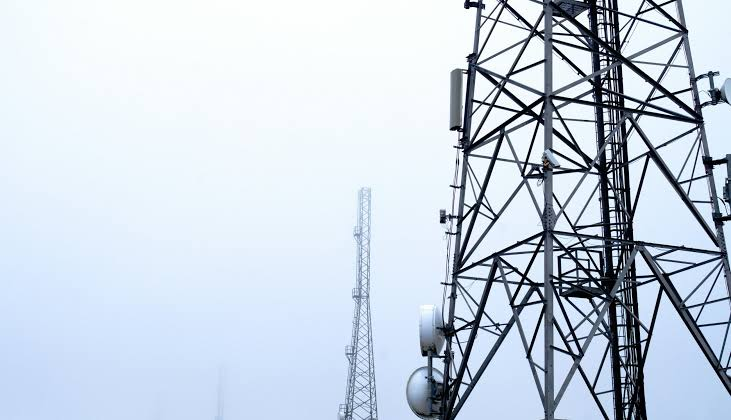
The United States wants to wire West Africa. The question is whether the wire comes with strings attached.
The US Trade and Development Agency has announced support for a major telecommunications expansion project aimed at connecting underserved and off-grid communities in Nigeria, Benin, Côte d’Ivoire, and Ghana — funding a feasibility study for the installation of approximately 1,500 turnkey mobile communications base stations using US-made technology developed by Vanu Inc.
On its face, the initiative addresses a real need. Across the four target countries, millions of people still rely on outdated 2G and 3G networks or have no connectivity at all. But Washington has been direct about the fact that development is not the only motivation here.
The China Factor
The initiative reflects a broader US effort to reposition itself in Africa’s digital infrastructure market, where Chinese state-backed vendors have built a dominant footprint over the past decade through large-scale network rollouts and integrated vendor-state financing packages.
USTDA Deputy Director Thomas Hardy framed it plainly: “USTDA is bringing private sector solutions to unlock widespread, affordable, trusted internet access in off-grid communities across West Africa” (Indico) with “trusted” doing considerable geopolitical work in that sentence.
Chinese firms Huawei and ZTE currently play a major role in telecoms infrastructure across many African countries, and the US has repeatedly raised concerns over security risks associated with their technology.
What It Means for the Region
Vanu already operates in parts of West Africa, with prior deployments in Edo and Delta states in Nigeria, as well as in Benin, Ghana, and Côte d’Ivoire. If the feasibility study confirms commercial viability, the 1,500 base stations are a starting point, not a ceiling.
The larger question for West African governments is how to navigate two global powers competing for influence over their digital infrastructure. Neither offer is purely altruistic — and Africa’s governments are sophisticated enough to know it. The opportunity is to use that competition strategically: extract the best terms, the deepest technology transfer, and the most durable infrastructure — regardless of which flag is flying over the base station.
Connectivity is the prize. Who delivers it is a negotiation.
Africa Presents is a Pan-African digital magazine and monthly publication covering politics, business, economy, culture, and the stories shaping the continent and its diaspora. For more reporting like this, visit us at africapresents.com. Follow us on social media @AfricaPresents for daily updates, and watch out for our monthly magazine editions — each built around a theme that goes deeper into the issues that matter most to Africa and its people.







Leave a comment