

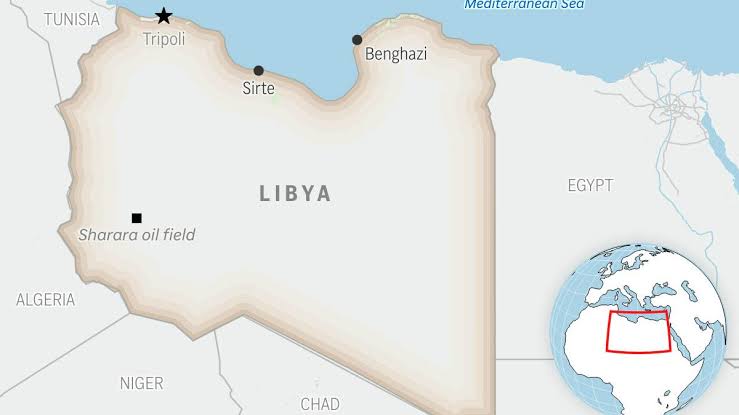
Libya’s eastern-based government banned the entry of nationals from four African countries, a decision a government source said was due to a “reorganization of foreign nationals’ entry to Libya.” “Citizens of Sudan, Eritrea, Ethiopia and Somalia are prohibited from entering Libyan territory through all land, sea, and air ports,” according to a decree by the parallel government in Benghazi, Libya’s second-largest city.
The Benghazi-based government of Osama Hamad is allied to military commander Khalifa Haftar, who controls the east and large areas of southern Libya. The internationally recognized government of Abdulhamid Dbeibah, who came to power through a UN-backed process in 2021, is based in Tripoli.
An eastern-based government source told Reuters that the decision is aimed at “reorganizing foreign nationals’ entry to Libya.” The decree exempts members of accredited diplomatic and consular missions and their family members from the four countries. It also exempts workers in the education, medical and allied health professions, provided they obtain the necessary approvals and valid work contracts from relevant authorities.
A Different Policy Just Months Earlier
The ban follows a markedly different approach the eastern administration had taken toward Sudanese nationals only months earlier. In December 2025, Abdelhadi Al-Huwaij, the east-based foreign minister, chaired the inaugural meeting of a committee in Benghazi tasked with regularizing the legal status of Sudanese nationals in eastern Libya. UN agencies and Libyan ministries held technical consultations on the Libya chapter of the 2026 Sudan Regional Refugee Response Plan in February, as conflict in Sudan continued to push more people toward Libya.
That earlier cooperative approach makes the timing of Tuesday’s reversal notable, arriving without detailed public justification beyond the stated administrative reorganization.
Why This Decree Carries So Much Weight
Libya has become a transit route for migrants fleeing conflict and poverty toward Europe across the Mediterranean since the fall of Muammar Qaddafi in 2011, with factional conflict splitting the country since 2014. The International Organization for Migration estimated 936,134 migrants were present in Libya in January and February 2026. The United Nations High Commissioner for Refugees (UNHCR) counted 6,987 people held in official detention centres across the country at the end of April, including 2,722 potentially in need of international protection. Around 1,000 deaths have been recorded in the Mediterranean since the start of 2026, with most departures originating from Libya.
For families, workers, and travellers from the four affected countries, the decree could disrupt movement across a country where access already depends on fragile local arrangements.
The decision adds to a difficult year for African migrants navigating North African transit states. Tunisia has faced sustained criticism over its treatment of sub-Saharan African migrants, and protests outside the UNHCR’s Tripoli office in early June, captured in images of demonstrators demanding the agency’s departure, point to a region where the politics of migration are growing more volatile, not less.
Africa Presents is a Pan-African digital magazine and monthly publication covering politics, business, economy, culture, tech, and the stories shaping Africa and its diaspora. Visit africapresents.com and follow @AfricaPresents for daily coverage and monthly themed magazine editions.







Leave a comment