

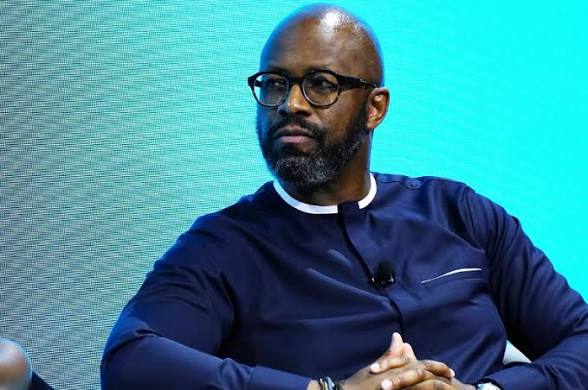
MTN Group Chief Executive Officer Ralph Mupita has called for the dismantling of xenophobic barriers across Africa, arguing that the continent’s long-term prosperity depends on greater integration, the free movement of people, and cross-border trade. The timing of his remarks was deliberate. Speaking at the Kgalema Motlanthe Foundation Winter Seminar in South Africa, Mupita addressed a country in the middle of a migrant crisis, where anti-foreigner protests had turned violent, thousands of migrants had been repatriated, and the government had deployed security forces ahead of a self-declared 30th June deadline for undocumented foreigners to leave.
“The future of Africa will not be determined by the borders that separate us, but by the economic opportunities that connect us. Governments must set predictable policy and regulations. Businesses will follow and allocate resources and capital. Together, we can build a continent where opportunity is more evenly shared and prosperity is more widely created.”
A Continent Seemingly Divided by Borders but Connected by Opportunity
Mupita revealed that MTN makes 82% of its revenue outside South Africa, underscoring the value that comes from operating as a pan-African organisation across more than 300 million customers. The disclosure was not merely a corporate statistic. It was an argument: a business built on the logic of African integration cannot afford the fragmentation that xenophobia produces, and neither can the continent.
“The future of Africa depends on greater social solidarity, increasing economic integration and the observance of the rule of law,” he stated, emphasising that many large African corporations have evolved beyond their countries of origin to operate as truly pan-African enterprises.
Mupita argued that for Africa to fully realise the benefits of the AfCFTA, countries must first overcome the psychological and social barriers that continue to divide the continent. “The digital economy we’re fast moving to knows no borders,” he warned, saying that protectionist attitudes and xenophobia are outdated and undermine Africa’s ability to compete in an increasingly interconnected global economy.
What Governments Must Get Right
Mupita was direct about the government’s role: businesses are more willing to commit capital where policies are clear and consistent. Predictable regulatory environments are not just good governance. They are what determines whether capital flows toward the continent or away from it.
“MTN was born in South Africa and has grown alongside the continent. Our prosperity is inseparable from Africa’s prosperity,” he said, adding that digital infrastructure connects people not only to each other, but to education, entrepreneurship, financial services, and markets.
The argument Mupita made in Johannesburg is one that transcends any single company or any single crisis. A continent with 54 borders, 309 million hungry people, and the world’s youngest population cannot afford to treat migration as a threat and integration as an aspiration. The case for a borderless Africa is not ideological. As Mupita made plain, it is commercial, demographic, and existential. The digital economy knows no borders. Neither, ultimately, can Africa.
Africa Presents is a Pan-African digital magazine and monthly publication covering politics, business, economy, culture, tech, and the stories shaping Africa and its diaspora. Visit africapresents.com and follow @AfricaPresents for daily coverage and monthly themed magazine editions.






Leave a comment