

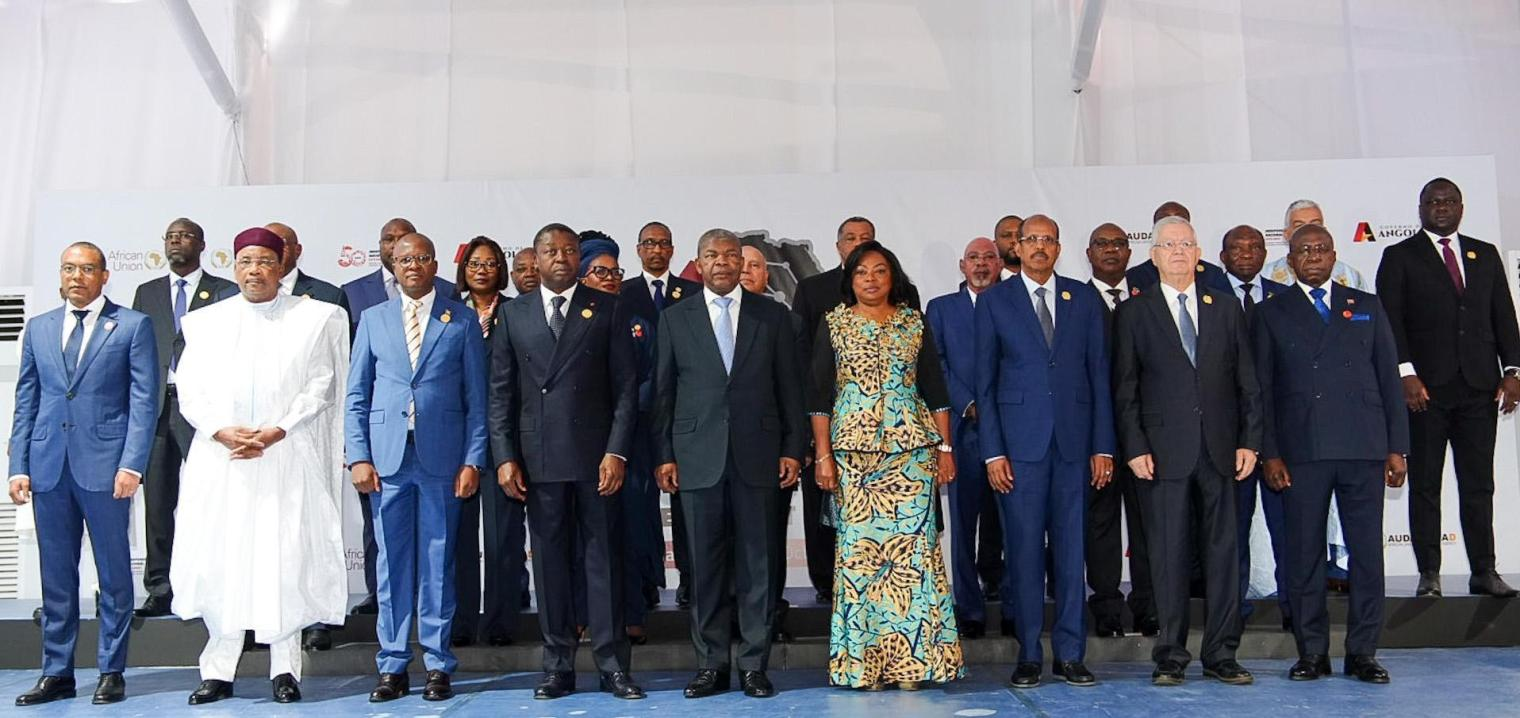
The 2026 Africa Financial Industry Summit (AFIS) is set to deepen financial integration across the continent and sharpen the focus on mobilising domestic capital to fund jobs, infrastructure and growth, organisers say.Held for the first time in Southern Africa and in a Lusophone country, AFIS 2026 will take place in Luanda, Angola, on the 3rd to the 4th of November. The summit is expected to bring together more than 1,250 senior financial leaders, including central bankers, bank CEOs, institutional investors, regulators, development finance institutions and fintech founders, under the theme “Making Capital Count: Unlocking Jobs and Growth through African Finance.”
After five editions focused on strengthening Africa’s financial sector and mobilising funds, AFIS 2026 marks a strategic shift: from raising capital to ensuring it reaches the real economy. Hicham Al Marabet, director of AFIS, said the summit will concentrate on channelling the continent’s large pools of savings and institutional assets into infrastructure, agriculture, manufacturing and other productive sectors that create jobs.
This year’s programme is built around six strategic priorities: financing the real economy; scaling with purpose; technology on African terms; turning African savings into African investment; integration that enables scale; and governance and regulation. The aim is to move beyond fragmented initiatives and build a more coherent architecture for African finance.
AFIS 2026 is closely aligned with the emerging New African Financial Architecture (NAFAD), a framework endorsed by African Union heads of state and consolidated through the Abidjan Consensus in April 2026. NAFAD seeks to mobilise capital at scale and narrow a development finance gap estimated at around $400 billion a year.
The Luanda summit will examine how a reconfigured financial system can better support AfCFTA-driven intra-African trade, expand local-currency financing, and de-risk investments in energy, transport and industry. Development finance institutions, including the International Finance Corporation (IFC), African Development Bank, BOAD and BIDC-EBID, are expected to play a central role in blending public and private capital to crowd in commercial funding.
A key feature of this year’s summit is the AFIS 11, a set of 11 measurable targets designed to strengthen Africa’s financial industry by 2030–2035. Chaired by former central bank governor Patrick Njoroge, the AFIS Supervisory Council has shaped the framework to track progress across regulatory alignment, domestic capital mobilisation, intra-African trade finance, financial inclusion and private-sector participation.
The targets provide a common scorecard for policymakers, regulators and market participants, helping to align national reforms with continental objectives. By tying discussions in Luanda to concrete metrics, organisers hope to convert high-level commitments into implementable roadmaps.
Holding AFIS in Luanda is a deliberate signal. Angola is reforming its banking sector, diversifying away from oil and seeking to position itself as a regional financial hub. The city’s selection underscores the summit’s push for broader geographic representation and deeper integration across Anglophone, Francophone and Lusophone Africa.
Previous editions were hosted in Lomé and Casablanca; the move to Southern Africa extends AFIS’s continental footprint and creates new opportunities for regional collaboration on cross-border payments, capital market development and risk-sharing mechanisms.
Access to finance for small and medium-sized enterprises (SMEs) and the agricultural sector is expected to feature prominently. Despite Africa’s record $70 billion in foreign direct investment in 2025, only 14 countries have issued local-currency corporate debt since 2000, highlighting the continent’s continued reliance on foreign currency and external investors.
AFIS 2026 will explore ways to expand local-currency bond markets, strengthen pension and insurance pools, and deploy guarantees and blended finance to lower borrowing costs for businesses. The summit will also address how digital infrastructure and fintech can be leveraged “on African terms” to deepen inclusion without replicating external models.
For African policymakers and financial leaders, AFIS 2026 represents a pivot from ambition to delivery. The combination of a clear action framework (AFIS 11), strong backing from development finance institutions and a focus on tangible sectors positions the summit as a potential turning point in how Africa funds its own development.
If Luanda succeeds in aligning regulators, banks, investors and DFIs around practical solutions, the outcome could be a more integrated, resilient and self-financing African financial system—one better equipped to support industrialisation, job creation and sustainable growth.
Africa Presents is a Pan-African digital magazine and monthly publication covering politics, business, economy, culture, tech, and the stories shaping Africa and its diaspora. Visit africapresents.com and follow @AfricaPresents for daily coverage and monthly themed magazine editions.






Leave a comment