

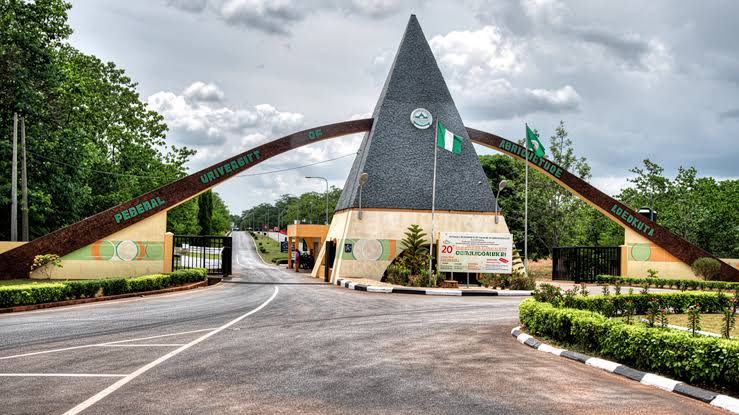
Monica Geingos, former First Lady of Namibia, founder of the One Economy Foundation, and Chancellor of Kepler College in Kigali, has called on African universities to take a leading role in transforming the continent’s rapidly expanding population into a globally competitive workforce, delivering the challenge directly to the Federal University of Agriculture, Abeokuta during a Strategic Courtesy Visit on Wednesday, the 3rd of June, 2026.
Addressing university leaders, academics, policymakers, and students, Geingos framed the continent’s demographic trajectory not as an automatic advantage but as a conditional one. She stressed the urgency of investing in education, innovation, and leadership development as Africa positions itself for a future in which one in every four people on the planet will be African by 2050, warning that population expansion without commensurate investment in human capital development would represent a missed generational opportunity rather than a dividend.

The stakes she described are well supported by the data. Tertiary enrolment across the continent remains around 9 percent, far below the global average of 38 percent. Despite growth in university enrolment, higher education capacity is still struggling to keep pace with demographic demand. The gap between the number of young Africans ready for higher education and the number of places available to receive them is widening, not narrowing, in several key markets.
FUNAAB Vice-Chancellor Professor Babatunde Kehinde welcomed the visit as a reflection of the university’s growing relevance in shaping cross-border conversations about Africa’s educational and developmental future.
The visit sits within a broader continental conversation about what African universities owe the generation they are meant to serve. Geingos’ own career as a lawyer, private equity specialist, governance expert, and development leader gives her argument a particular authority: she is not speaking as a ceremonial figure, but as someone who has built institutions, chaired advisory councils, and worked directly on the economic policy challenges that make a skilled African workforce not merely desirable, but urgent.
Namibia itself has moved decisively on this front. President Netumbo Nandi-Ndaitwah announced in her State of the Nation address that tertiary education would become 100% subsidised by the government commencing 2026, removing tuition and registration fees at universities and colleges across the country. It is this kind of structural commitment that Geingos’ challenge implicitly calls on other African nations and institutions to match.
Africa’s universities have the talent in front of them. The question Geingos posed in Abeokuta was whether they have the urgency to match it.
Africa Presents is a Pan-African digital magazine and monthly publication covering politics, business, economy, culture, tech, and the stories shaping Africa and its diaspora. Visit africapresents.com and follow @AfricaPresents for daily coverage and monthly themed magazine editions.







Leave a comment