

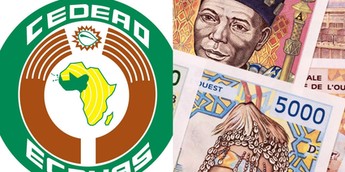
Guinea has become the first ECOWAS member state to formally opt out of the planned West African single currency, the ECO, announcing it will retain its national currency, the Guinean franc, ahead of the bloc’s scheduled July 2027 monetary union launch.
Guinea’s presidential administration said the decision reflected the country’s commitment to economic and monetary sovereignty, framing the franc not simply as a currency but as an instrument of independent economic policy. “The strength of a nation is measured not only by its institutions or natural resources. It is also measured by its ability to determine its own economic future and preserve the instruments underlying its independence,” the administration said.
Officials cited Guinea’s weak domestic production base and the fact that about 80 per cent of its exports are destined for Asian markets as key reasons for declining to participate in the 2027 launch. Economist Mohamed Camara told RFI that by tying its currency to neighbouring states, Conakry risks losing certain levers of monetary influence over an economy whose primary trade relationships lie outside West Africa.
Guinea’s decision lands at an awkward moment for ECOWAS. Last month the bloc confirmed a phased rollout approach, with only countries meeting convergence criteria on inflation, debt, and monetary stability joining first. Guinea is the first country to go further and publicly declare it will not participate at any stage of the 2027 launch.
ECOWAS is set to meet again in December to resolve outstanding issues, including the list of countries eligible for the first phase and the governance structure of the proposed central bank. Guinea’s decision is expected to feature prominently at that summit.
The opt-out does not end the ECO project, but it sharpens a question the currency union has always faced: how meaningful is a monetary union that excludes a resource-rich member with significant continental influence? Guinea is one of the world’s largest producers of bauxite, the key mineral in aluminium production, and its growing economic profile gives its absence from the ECO zone real structural weight, not just symbolic significance.
Africa Presents is a Pan-African digital magazine and monthly publication covering politics, business, economy, culture, tech, and the stories shaping Africa and its diaspora. Visit africapresents.com and follow @AfricaPresents for daily coverage and monthly themed magazine editions.







Leave a comment