

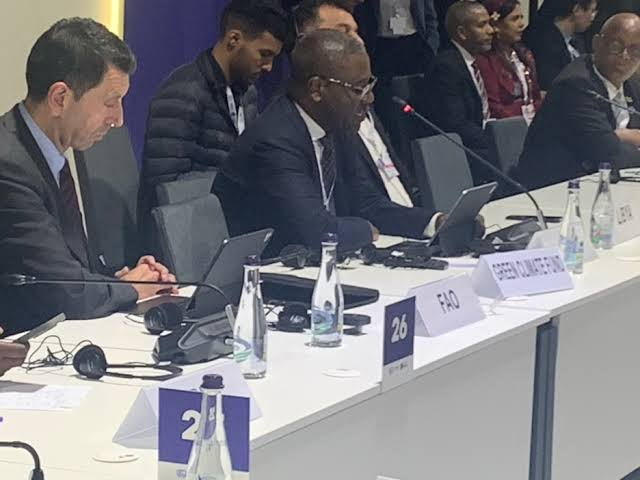
More than 42 million people across Africa are now better protected against extreme weather thanks to early warning systems backed by the African Development Bank Group, with Ms Marie-Laure Akin-Olugbade, the Bank’s Senior Vice President, telling world leaders at COP31 that closing the remaining coverage gap could save lives, as countries with full warning systems record disaster fatality rates 6.1 times lower than those with limited or moderate coverage.Akin-Olugbade presented the figure at a high-level leaders’ session convened by UN Secretary-General António Guterres at the COP31 climate talks in Antalya, which run until November 20, 2026, with the Bank’s Climate Action Window’s initial 41-project portfolio, valued at $321.75 million, set to extend early-warning coverage from six countries to 12 and rehabilitate 344 weather, climate and hydrological stations. The Bank’s work on early warning systems is part of a broader effort to strengthen Africa’s resilience to climate change, with the continent’s vulnerability to extreme weather events making early warning systems a critical tool for protecting lives and livelihoods.
The Bank’s early warning systems are supported by three key programmes, including the ClimDev-Africa programme, which during its first phase from 2011 to 2023 supported 18 projects across 17 countries, including five regional climate centres serving more than 42 million people, with the programme having improved forecast accuracy by up to 20 per cent. The second programme, the Fonds spécial ClimDev, managed by the Bank, is the financial arm of the ClimDev-Africa programme, conducted jointly with the Commission of the African Union and the Economic Commission for Africa of the United Nations, while the third, the Programme de financement des risques de catastrophes en Afrique (ADRiFi), implemented in collaboration with African Risk Capacity, allows governments to organise in advance the financing of risks so that pre-arranged liquidity is available before a crisis worsens.
Despite these gains, only about 40 per cent of African countries are currently equipped with early warning systems, with the Bank’s efforts to close this gap reflecting a recognition that early warning systems are a critical tool for protecting lives and livelihoods in a continent increasingly vulnerable to climate change. The Bank’s Climate Action Window’s initial 41-project portfolio, valued at $321.75 million, will extend early-warning coverage from six countries to 12 and rehabilitate 344 weather, climate and hydrological stations, with the investment representing a significant step towards universal early warning coverage across the continent.
Akin-Olugbade stressed that early warnings must be accompanied by early financing so that every alert can trigger timely action that saves lives and preserves livelihoods, with the Bank’s approach to early warning systems reflecting a broader recognition that preparedness is as important as response in addressing the impacts of climate change. The Bank’s work on early warning systems is part of a wider effort to strengthen Africa’s climate resilience, with the continent’s vulnerability to extreme weather events making early warning systems a critical tool for protecting lives and livelihoods.
The success of the Bank’s early warning systems will depend on the ability of African governments and institutions to translate the systems’ capabilities into tangible improvements in disaster preparedness and response, with the outcome of the Bank’s investments likely to shape the direction of climate resilience across the continent. The challenge now is to ensure that the early warning systems deliver measurable improvements in the ability of African countries to prepare for and respond to extreme weather events, with the ability of the systems to trigger timely action likely to play a critical role in determining the initiative’s impact.
Africa Presents is a Pan-African digital magazine and monthly publication covering politics, business, economy, culture, tech, and the stories shaping Africa and its diaspora. Visit africapresents.com and follow @AfricaPresents for daily coverage and monthly themed magazine editions.





Leave a comment