

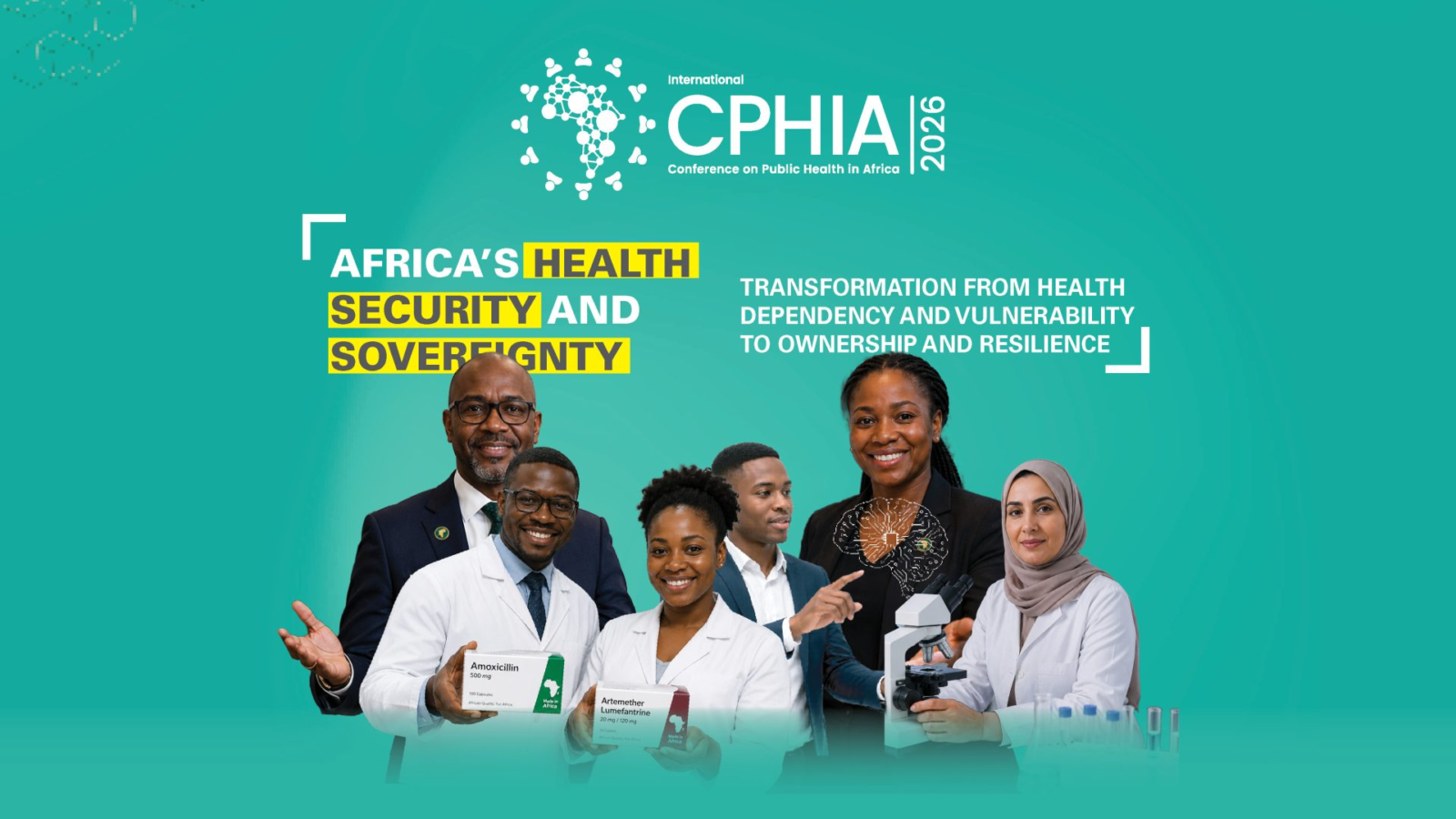
Africa’s largest public health gathering, the 5th International Conference on Public Health in Africa (CPHIA 2026), will convene in Addis Ababa from November 23rd to 27th, 2026, under the theme “Africa’s Health Security and Sovereignty: Transformation from Health Dependency and Vulnerability to Ownership and Resilience,” with more than 30,000 participants expected to attend in person and virtually.
Co-hosted by the Africa Centres for Disease Control and Prevention (Africa CDC) and the Government of the Federal Democratic Republic of Ethiopia, the conference will bring together African political leaders, policymakers, scientists, health professionals, innovators and partners to examine progress against continental health priorities, identify remaining gaps and advance practical solutions, with the event taking place at the Addis International Convention Center. CPHIA, a flagship conference of Africa CDC and African Union Member States, is a unique annual event that connects political leaders, policy makers, private sector and community actors with scientists and programme implementers, having grown into a gathering of thousands since its inception in 2021.
A Response to Shrinking Aid and Rising Threats
The conference comes at a moment when external health aid to Africa is projected to fall by about 70 per cent between 2021 and 2025, while African countries were expected to spend $81 billion on debt service in 2025 alone, with only three countries—Botswana, Cabo Verde and Rwanda—having achieved the Abuja Declaration target of allocating 15 per cent of national budgets to health, and 30 African Union Member States allocating less than 10 per cent. Public health emergencies on the continent rose by 41 per cent, from 152 in 2022 to 213 in 2024, creating a situation where Africa faces more frequent threats with less external funding and constrained domestic budgets.
The challenge of moving from dependency to sovereignty is central to the conference’s agenda, with the 2025 edition in Durban having closed with the Durban Promise, an outcome document that set five catalytic priorities: an African manufacturing revolution, innovative health financing, primary healthcare transformation, pandemic preparedness and response, and data ownership and governance. CPHIA 2026 should be judged by whether it turns those priorities into delivery, with the conference organised around six scientific tracks, each corresponding to a decision that African governments, institutions and partners must make in the next few years.
The six scientific tracks cover elevating Africa as a leader in a reformed and inclusive global health architecture, institutionalisation of pandemic prevention preparedness and response in Africa, African stakeholders’ empowerment and alignment to predictable, innovative and blended financing, primary health care, digital transformation and AI-enabled health systems, unlocking opportunities for local manufacturing in Africa, and climate, health security, and African resilience. The programme includes 161 sessions across 19 halls over five days, with the opening day featuring the official ceremony, the high-level launch of the AU Champions’ Roadmap on Reproductive, Maternal, Newborn, Child and Adolescent Health (RMNCAH) 2026-2030, and two Heads of State panels on leadership and financing for Africa’s health sovereignty.
Plenary sessions will explore digital health, artificial intelligence, data sovereignty and the implications of climate change for Africa’s health security, with additional discussions addressing early warning systems, outbreak preparedness and community-centred public health institutions, while the final day will feature discussions on African-led research and development, global health security and the future of primary health care, followed by the official closing ceremony. The conference represents a critical opportunity for Africa to consolidate its position as a leader in global health, with the success of CPHIA 2026 depending on the ability of African governments and institutions to translate their commitments into tangible improvements in health outcomes for the continent’s population.
Africa’s largest public health gathering, the 5th International Conference on Public Health in Africa (CPHIA 2026), will convene in Addis Ababa from November 23rd to 27th, 2026, under the theme “Africa’s Health Security and Sovereignty: Transformation from Health Dependency and Vulnerability to Ownership and Resilience,” with more than 30,000 participants expected to attend in person and virtually.
Co-hosted by the Africa Centres for Disease Control and Prevention (Africa CDC) and the Government of the Federal Democratic Republic of Ethiopia, the conference will bring together African political leaders, policymakers, scientists, health professionals, innovators and partners to examine progress against continental health priorities, identify remaining gaps and advance practical solutions, with the event taking place at the Addis International Convention Center. CPHIA, a flagship conference of Africa CDC and African Union Member States, is a unique annual event that connects political leaders, policy makers, private sector and community actors with scientists and programme implementers, having grown into a gathering of thousands since its inception in 2021.
The conference comes at a moment when external health aid to Africa is projected to fall by about 70 per cent between 2021 and 2025, while African countries were expected to spend $81 billion on debt service in 2025 alone, with only three countries—Botswana, Cabo Verde and Rwanda—having achieved the Abuja Declaration target of allocating 15 per cent of national budgets to health, and 30 African Union Member States allocating less than 10 per cent. Public health emergencies on the continent rose by 41 per cent, from 152 in 2022 to 213 in 2024, creating a situation where Africa faces more frequent threats with less external funding and constrained domestic budgets.
The challenge of moving from dependency to sovereignty is central to the conference’s agenda, with the 2025 edition in Durban having closed with the Durban Promise, an outcome document that set five catalytic priorities: an African manufacturing revolution, innovative health financing, primary healthcare transformation, pandemic preparedness and response, and data ownership and governance. CPHIA 2026 should be judged by whether it turns those priorities into delivery, with the conference organised around six scientific tracks, each corresponding to a decision that African governments, institutions and partners must make in the next few years.
The six scientific tracks cover elevating Africa as a leader in a reformed and inclusive global health architecture, institutionalisation of pandemic prevention preparedness and response in Africa, African stakeholders’ empowerment and alignment to predictable, innovative and blended financing, primary health care, digital transformation and AI-enabled health systems, unlocking opportunities for local manufacturing in Africa, and climate, health security, and African resilience. The programme includes 161 sessions across 19 halls over five days, with the opening day featuring the official ceremony, the high-level launch of the AU Champions’ Roadmap on Reproductive, Maternal, Newborn, Child and Adolescent Health (RMNCAH) 2026-2030, and two Heads of State panels on leadership and financing for Africa’s health sovereignty.
Plenary sessions will explore digital health, artificial intelligence, data sovereignty and the implications of climate change for Africa’s health security, with additional discussions addressing early warning systems, outbreak preparedness and community-centred public health institutions, while the final day will feature discussions on African-led research and development, global health security and the future of primary health care, followed by the official closing ceremony. The conference represents a critical opportunity for Africa to consolidate its position as a leader in global health, with the success of CPHIA 2026 depending on the ability of African governments and institutions to translate their commitments into tangible improvements in health outcomes for the continent’s population.
Africa Presents is a Pan-African digital magazine and monthly publication covering politics, business, economy, culture, tech, and the stories shaping Africa and its diaspora. Visit africapresents.com and follow @AfricaPresents for daily coverage and monthly themed magazine editions.





Leave a comment