

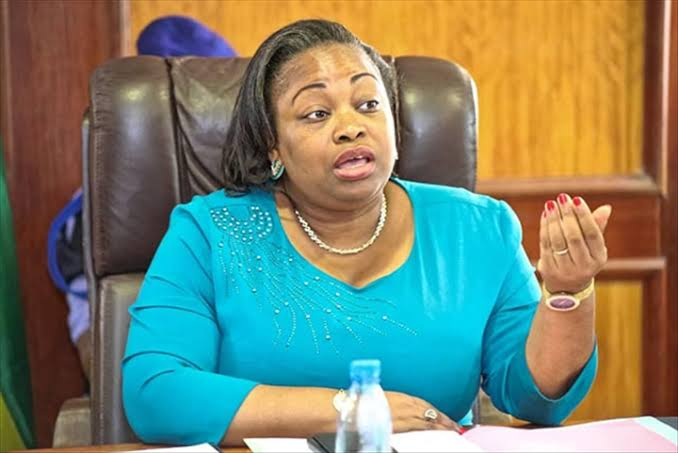
Gabon’s Minister of State for National Education, Civic Instruction and Professional Training, Camélia Ntoutoume Leclercq, has described education as the first pillar of African sovereignty, arguing that no nation can achieve genuine political or economic independence without control over its knowledge systems.
In a wide-ranging interview and public engagements in 2026, Leclercq laid out Gabon’s ambitious education reform agenda, positioning the country’s schools, technical institutions and vocational training centres as the foundation for economic diversification, social cohesion and international competitiveness. Her message is clear: transforming education is not merely an administrative exercise but a strategic imperative for national and continental self-determination.
Leclercq’s vision aligns with a growing continental consensus that intellectual sovereignty is the bedrock of political and economic independence. As the UN Office of the Special Adviser on Africa noted in its 2025 academic journal, the 21st-century African state must be intellectually sovereign if it is to become politically, economically and institutionally sovereign, since “there is no sovereignty without scholarship.”
For Gabon, this means building an education system that is locally relevant, future-oriented and capable of producing the skills needed to drive the country’s economic transformation. Leclercq has emphasised that schools, technical and vocational education, and training must work in synergy to strengthen human capital, improve youth employability and meet the needs of a diversifying economy.
In July 2026, Gabon approved its interim education sector plan for 2026–2030, a blueprint endorsed by government authorities, UNESCO, UNICEF and civil society representatives. The plan commits the country to improving access, quality and inclusion across the education system, with a focus on preparing young people for the jobs of tomorrow.
Key reforms include the launch of the first Higher Technician Certificate (BTS) programmes in several institutions, the opening of new technical secondary schools, and the expansion of the Competency-Based Approach to the final year of lower secondary school. The government is also rolling out the Zen School programme to combat school violence and the Sporting Generation initiative in primary schools, alongside the gradual opening of new educational complexes from the second term of the 2026–2027 school year.
A central pillar of the reform is the professionalisation of the teaching workforce. Leclercq announced the establishment of teacher training institutes and the adoption of a new special status for the education sector, alongside the continued development of new upper secondary school textbooks.
In response to concerns from teacher unions, the ministry has also unveiled a strategy for inclusive and tailored teacher reclassification, guided by the principle of “leaving no one behind.” This approach aims to address longstanding grievances while ensuring that reforms are implemented fairly and sustainably.
Leclercq has made technical and vocational education a priority, positioning it as a pathway of excellence rather than a second-tier option. By expanding BTS programmes and technical secondary schools, Gabon aims to align training with the evolving demands of businesses and support the country’s broader economic diversification strategy.
This focus reflects a wider African trend, as countries across the continent seek to build the industrial and technical capacity needed to reduce dependence on raw material exports and create jobs for growing youth populations. For Leclercq, education is not just about individual opportunity but about equipping a generation to shape Gabon’s and Africa’s future.
Leclercq’s message resonates beyond Gabon, speaking to a continental challenge: how to build education systems that are locally grounded, globally competitive and capable of driving genuine sovereignty. Her emphasis on technical education, teacher training and inclusive reform offers a practical template for other African countries pursuing similar transformations.
As Gabon implements its 2026–2030 plan, the world will be watching to see whether this vision of education as the first pillar of sovereignty translates into measurable gains in learning outcomes, employability and economic resilience. For Leclercq, the stakes could not be higher: the future of Gabon—and by extension, Africa’s place in the world—depends on getting education right.
Africa Presents is a Pan-African digital magazine and monthly publication covering politics, business, economy, culture, tech, and the stories shaping Africa and its diaspora. Visit africapresents.com and follow @AfricaPresents for daily coverage and monthly themed magazine editions.





Leave a comment