

Kenya has become the first country in Africa, and the second in the world (first being Vanuatu), to secure technical assistance from the Santiago Network on Loss and Damage, receiving $700,000 to conduct a comprehensive national assessment of climate-related loss and damage experienced across the country over the past decade. The achievement was announced on the margins of the UNFCCC Subsidiary Bodies SB64 Climate Meeting in Bonn, Germany, by Principal Secretary for Environment and Climate Change Dr Festus Ng’eno, who described it as a major milestone in advancing climate resilience.
The funding marks more than a financial win. It signals a growing recognition that climate change is not only an environmental crisis but a mounting economic burden whose true costs have largely remained invisible, with losses from drought, flooding, displacement, and destroyed livelihoods going undocumented despite their long-term consequences for communities across the continent.
What the Money Will Do
The assessment will document the human, environmental, and economic costs of climate-related disasters across Kenya over the past decade, including prolonged droughts, floods, and extreme weather events that have increasingly affected communities nationwide.
It will also develop projections of future climate-related losses through 2035, generating evidence to guide policy decisions, strengthen climate planning, and support efforts to mobilise further funding for vulnerable communities.
The Santiago Network, established under the UNFCCC in 2019, connects vulnerable developing countries with technical experts and institutions capable of helping them assess and respond to climate-related losses and damages. Its role has become increasingly important since the establishment of the Loss and Damage Fund at COP28 in Dubai in 2023, as robust technical assessments are often necessary to support future financing requests.
What It Means for the Continent
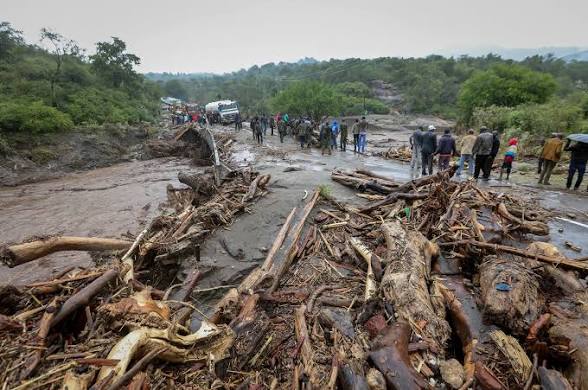
Kenya’s March 2026 flooding alone killed at least 110 people and displaced 34,700 across the country. The broader pattern of climate disruption, droughts, crop failures, and infrastructure destruction, has accumulated over years into losses that have never been fully quantified or compensated.
Fred Njehu, Pan-African Political Strategist at Greenpeace Africa, put it directly: “The move to pioneer Kenya as the first country in Africa to document losses and damages signifies positive progress on climate action. Kenya is among African countries that continue to experience losses and damages, floods destroying critical infrastructure, communities getting displaced, cultures lost, livelihoods disrupted, while economic gains get rolled back significantly.”
Baboucarr Nyang of the Climate Action Network described the funding as “proof that when the architecture of climate finance works as intended, it can deliver for Africa, and now it must deliver faster and for all.”
Africa contributes less than 4 percent of global greenhouse gas emissions yet bears a disproportionate share of climate change’s most severe consequences. Kenya has taken the first formal step toward making the cost of that injustice measurable and fundable. The rest of the continent will be watching what follows.
Africa Presents is a Pan-African digital magazine and monthly publication covering politics, business, economy, culture, tech, and the stories shaping Africa and its diaspora. Visit africapresents.com and follow @AfricaPresents for daily coverage and monthly themed magazine editions.







Leave a comment