

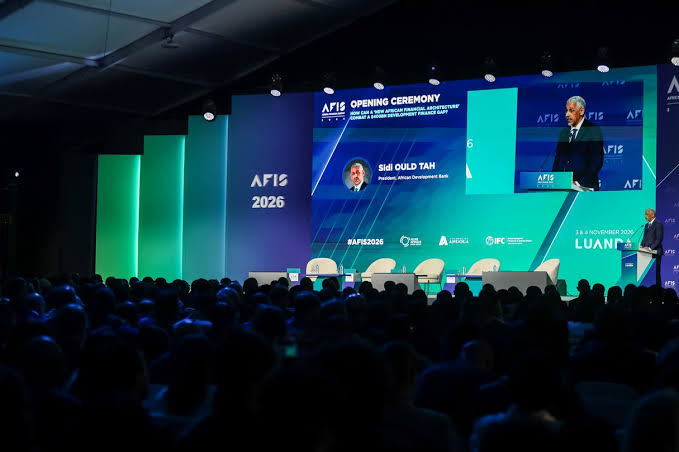
The International Finance Corporation (IFC) is intensifying efforts to close Africa’s estimated $400 billion financing gap for small and medium-sized enterprises (SMEs) and infrastructure, deploying a new investment strategy centred on local-currency lending, risk-sharing platforms and the mobilisation of Africa’s more than $2 trillion in institutional capital.At the Lagos “Road to AFIS” media engagement ahead of the 2026 Africa Financial Summit (AFIS) in Luanda, Angola, IFC officials outlined how the corporation is working with governments, financial institutions, capital-market players and other stakeholders to co-create financing platforms that reduce risk and channel capital into agriculture, infrastructure, manufacturing and other productive sectors. “The idea is how do we create platform solutions so that we can mobilize funding that is out there but not being deployed in those sectors because they are deemed risky,” said IFC’s Dafe Oraka, principal investment officer.
A core pillar of IFC’s African agenda involves expanding local-currency financing to shield borrowers from foreign-exchange shocks, with the corporation currently executing around 75 per cent of its continental lending in local currency, up from 35 per cent of total commitments, as part of its 2030 strategy. IFC is developing a local-currency borrowing framework, including a partnership with Access Bank signed in May, that enables the sourcing of local currency funding across multiple operating markets to provide longer-term financing to SMEs and businesses across the continent.
The shift addresses a structural mismatch in African finance, where firms are forced to finance long-term capital investments with short-term, dollar-denominated bank facilities while their revenues are earned in volatile domestic currencies. IFC Vice President for Africa Ethiopis Tafara has made local capital market development central to IFC’s strategy, precisely because of this gap, arguing that local capital markets are key to closing Africa’s financing deficit.
IFC is also dismantling traditional collateral constraints for MSMEs, shifting from land-title-heavy underwriting toward cash-flow and transaction-data lending that uses fintech platforms and digital telematics to underwrite borrowers based on observable revenue rather than fixed property. “We want to move from lending based on collateral towards lending based on cash flow,” said IFC’s Diop, noting that this approach, supported by new technologies and fintech architecture, will enable the corporation to reach many more MSMEs.
The corporation is expanding its focus on non-bank financial intermediaries, deploying fintech platforms to scale supply-chain finance, including factoring, distributor finance and other forms of working-capital support, while backing the consolidation of African commercial banking under its Local Champions Initiative. This helps indigenous and regional lenders fill the space vacated by multinational European and American banks that have exited the continent over the past decade.
Africa accounts for approximately 25 per cent of IFC’s total global portfolio, with the corporation’s African mobilisation ratio climbing from $0.60 to $1.50 per dollar deployed, and IFC has set a target to scale that ratio to 5-to-1 in the coming years. IFC is targeting $100 billion in annual commitments globally, backed by a 3.4-to-1 mobilisation ratio, along with a $25 billion target for risk-mitigating credit guarantees, while reorganising its institutional footprint across financial capitals including Tokyo, New York and Sydney to channel sovereign wealth funds and offshore pension pools into African private equity and infrastructure.
In fiscal 2026, IFC achieved a record $105.6 billion in investment commitments globally, including over $73.6 billion in private capital mobilised, with Africa accounting for $5.593 billion, or 26 per cent, of its long-term commitments by region. The corporation’s broader strategy is built around four pillars: mobilising private capital, expanding equity investments, revamping support for small- and medium-size businesses, and reinforcing coordination across the World Bank Group.
The 2026 Africa Financial Summit, themed “Making Capital Count — Unlocking Growth through African Finance,” will focus on six strategic priorities, including financing the real economy, scaling with purpose, technology on African terms, turning African savings into African investment, integration that enables scale, and governance and regulation. IFC is collaborating with the African Development Bank under a joint initiative led by Ethiopis Tafara and AfDB President Dr Sidi Ould Tah to coordinate with domestic sovereign wealth funds and institutional asset managers to mobilise internal long-term capital for trade and regional transport corridors.
The strategic direction outlined at the summit signals a shift away from reliance on traditional concessionary aid, with IFC and its institutional partners betting that Africa’s economic future depends on structuring investable, local-currency instruments that convert domestic savings into real-economy employment.
Africa Presents is a Pan-African digital magazine and monthly publication covering politics, business, economy, culture, tech, and the stories shaping Africa and its diaspora. Visit africapresents.com and follow @AfricaPresents for daily coverage and monthly themed magazine editions.







Leave a comment