

Nigeria is positioning itself to become a leading hub for indigenous defence manufacturing in Africa, with plans to locally produce armoured vehicles, counter-drone systems and other military hardware for domestic use and export across the continent.
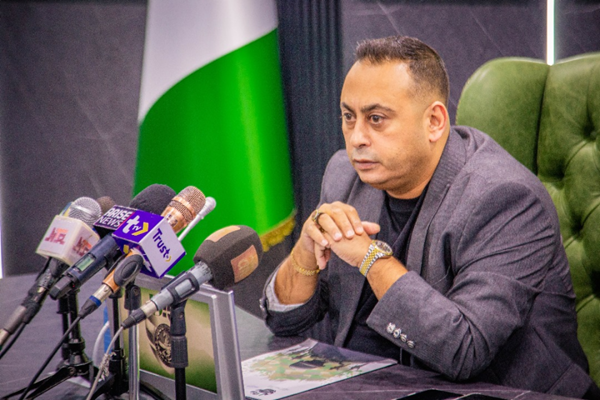
Osman Chennar, Chief Executive Officer of the Defence Industries Corporation of Nigeria–D7G (DICON-D7G), said the joint venture between the state-owned Defence Industries Corporation of Nigeria and private partner D7G Limited is designed to reduce dependence on imported military equipment and strengthen national security. In a statement issued on Saturday, 13th of September, 2026, following Nigeria’s participation in the 2026 El Alamein International Airshow (EIAS 2026) in Egypt, Chennar described the country’s growing defence industry as “a source of pride for Africa” and an emerging production hub for the region.
DICON-D7G is advancing plans to establish local production lines for armoured vehicles, anti-drone platforms and specialised defence equipment. The initiative, developed in collaboration with Eagles International for Defence Systems, follows a two-day inspection tour of Egyptian defence factories by Nigeria’s Minister of State for Defence, Bello Mohammed Matawalle, and his delegation in mid-August.
Chennar said the partnership would facilitate the transfer of advanced military technologies to Nigeria, create jobs for more than 200 workers in the first phase and provide opportunities for about 100 retired military personnel. The company also plans to build a dedicated military jetty in Lagos to serve as a logistics hub for moving raw materials, components and finished equipment within Nigeria and across Africa.
While the immediate focus is on meeting the needs of Nigeria’s armed forces, DICON-D7G’s strategic goal extends to supplying other African countries. Chennar said the joint venture is positioning Nigeria to attain greater heights in defence manufacturing and transform the nation into “a potential hub for the supply of military equipment to Nigeria and other African countries,” thereby reducing the continent’s reliance on imports from outside the region.
He described Nigeria’s presence at international defence exhibitions as evidence of steady progress in indigenous defence manufacturing and the country’s ambition to play a more prominent role in Africa’s defence and security ecosystem.
The move aligns with wider efforts to build a sustainable Nigerian defence manufacturing ecosystem capable of designing, assembling and producing military equipment locally. By expanding domestic capacity and fostering technology transfer, Abuja hopes to cut import bills, create skilled jobs and develop an export-oriented defence industry that can serve regional markets.
For Nigeria, the stakes are both economic and strategic: success could turn the country into Africa’s answer to established defence exporters, while failure would mean continued dependence on foreign suppliers in a region where security challenges are intensifying.
Africa Presents is a Pan-African digital magazine and monthly publication covering politics, business, economy, culture, tech, and the stories shaping Africa and its diaspora. Visit africapresents.com and follow @AfricaPresents for daily coverage and monthly themed magazine editions.







Leave a comment