

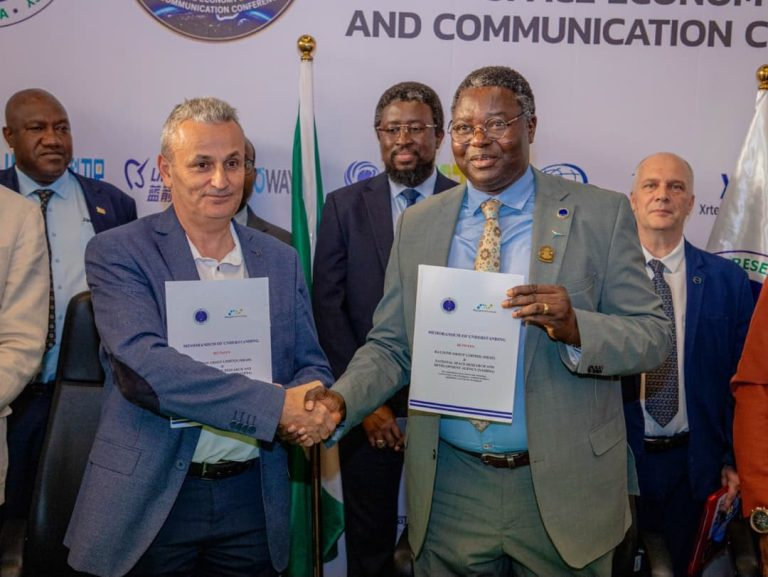
Nigeria’s National Space Research and Development Agency (NASRDA) has signed a series of Memoranda of Understanding (MoUs) with international space agencies, industry experts and key stakeholders across the global space science and technology ecosystem, in a strategic move to translate the Africa Space Economy Innovation and Communication Conference (ASEICC) 2026 from dialogue into tangible economic opportunities.
The agreements, facilitated by NASRDA’s Director-General, Matthew Adepoju, were signed on the sidelines of the African Space Economy Innovation and Communication Conference (ASEICC) 2026 on Thursday in Abuja, with the partnerships aimed at promoting technology transfer, advancing scientific research, strengthening technical capacity and creating economic opportunities through space science and technology. Organisations involved in the engagements include the Brazilian Space Agency, the South African National Space Agency (SANSA), the Zimbabwe National Geospatial and Space Agency, as well as commercial and other space-related entities.
The MoUs cover cooperation on exploring opportunities for establishing a potential Space Laser Ranging Station, alongside other areas of mutual interest aimed at strengthening scientific research, technical capabilities and international collaboration in space technology. The agreements reflect a broader push to strengthen continental collaboration, increase private-sector participation and sustain engagement to accelerate the development of Africa’s space economy and strengthen the continent’s position in the global space industry.
The partnerships are aimed at promoting technology transfer, advancing scientific research, strengthening technical capacity and creating economic opportunities through space science and technology, with the agreements having been signed on the sidelines of the ASEICC 2026 conference in Abuja. The ability of NASRDA to build sustainable partnerships and deliver value for African markets will depend on the ability of the agency to translate its commitments into tangible improvements in the ability of African countries to access space technology and investment opportunities.
A Growing Push for Africa’s Space EconomyThe push to boost Africa’s space economy reflects a broader effort across the continent to build a competitive space sector, with the ability of African countries to access space technology and investment opportunities likely to play a critical role in determining the industry’s growth. The agreements’ focus on technology transfer, scientific research and technical capacity reflects a recognition that Africa’s space sector has the potential to become a major economic force, with the agreements having been designed to create economic opportunities through space science and technology.
The challenge now is to ensure that the agreements deliver measurable improvements in the ability of African countries to access space technology and investment opportunities, with the ability of NASRDA to build sustainable partnerships and deliver value for African markets likely to play a critical role in determining the initiative’s impact. The outcome of the agreements will likely shape the direction of Africa’s space economy in the years ahead, with the ability of NASRDA to build sustainable partnerships and deliver value for African markets likely to play a critical role in determining the initiative’s impact.
Africa Presents is a Pan-African digital magazine and monthly publication covering politics, business, economy, culture, tech, and the stories shaping Africa and its diaspora. Visit africapresents.com and follow @AfricaPresents for daily coverage and monthly themed magazine editions.






Leave a comment