

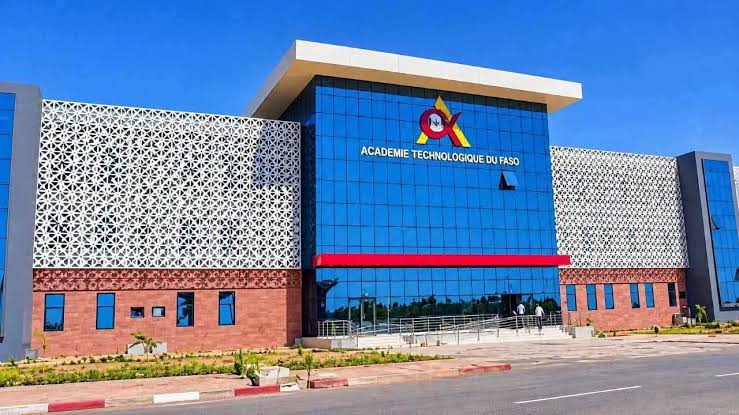
Burkina Faso has inaugurated a technological academy designed to develop scientific expertise, strengthen industry and reduce dependence on imported technology and foreign specialists, with President Ibrahim Traoré opening the Académie Technologique du Faso (ATF) on Monday in Pabré, near Ouagadougou.
The academy, a state-funded project of over 37 billion FCFA, is an elite institution attached to the Presidency and dedicated to science, technology and engineering, with the first phase representing a public investment of more than 37 billion FCFA and the campus sitting at the heart of the country’s industrial sovereignty strategy. Traoré stressed that true sovereignty depends on local innovation, telling the first cohort of students that the nation expects them to design industrial units, saying this achievement is what will truly allow the country to claim independence and sovereignty.
The academy’s focus on training engineers and researchers in strategic sectors including digital technology, energy, agriculture, mining, nuclear technology and aeronautics reflects a broader push for endogenous development, with the facility aiming to bolster national capacity for training engineers and technical professionals in fields deemed priorities for Burkina Faso’s economic development and technological sovereignty. The academy is intended to reduce the country’s technological dependence, noting that Burkina Faso still imports a large share of the equipment used across its health, transport, agriculture, and defence sectors.
Traoré used the inauguration to raise a concern many Africans share, saying that so many African countries have failed to process the mineral resources they hold at home, with the academy being meant to be a lever for scientific and industrial sovereignty. The academy’s focus on locally trained expertise reflects a recognition that Africa’s development depends on the ability of countries to build their own capacity and reduce reliance on imported technology and foreign specialists.
The launch of the academy marks a significant step in Burkina Faso’s efforts to build technological independence, with the country’s focus on scientific and industrial sovereignty reflecting a broader push across Africa to assert control over technology and innovation. The ability of the academy to deliver on its commitments will depend on the ability of Burkina Faso to build sustainable partnerships and deliver value for African markets, with the academy’s focus on locally trained expertise likely to play a critical role in determining the initiative’s impact.
The challenge now is to ensure that the academy delivers measurable improvements in the ability of Burkina Faso to build its own capacity and reduce reliance on imported technology and foreign specialists, with the outcome of the academy likely to shape the direction of technological policy across the continent. The challenge now is to ensure that the academy delivers measurable improvements in the ability of Burkina Faso to build its own capacity and reduce reliance on imported technology and foreign specialists, with the ability of the country to build sustainable partnerships and deliver value for African markets likely to play a critical role in determining the initiative’s impact.
Africa Presents is a Pan-African digital magazine and monthly publication covering politics, business, economy, culture, tech, and the stories shaping Africa and its diaspora. Visit africapresents.com and follow @AfricaPresents for daily coverage and monthly themed magazine editions.





Leave a comment