

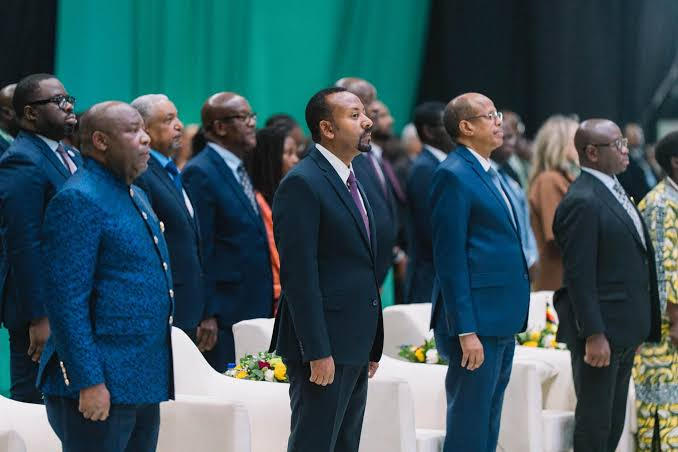
African leaders have called for increased investment in healthcare systems, local production of medicines and vaccines, and stronger cooperation to reduce the continent’s dependence on foreign supplies during health emergencies, with the calls made during the opening of the International Conference on Public Health in Africa (CPHIA) 2026 in Addis Ababa, Ethiopia, on Monday, November 23rd.Uganda’s Vice President Jessica Alupo urged African countries to take greater responsibility for their healthcare systems amid growing uncertainty over external assistance, saying the continent must strengthen cooperation, increase domestic health financing and build local capacity, with discussions at the conference focusing on sustainable domestic health financing, local production of medicines and vaccines, pandemic preparedness, stronger public health institutions and regional cooperation. African Union Commission Chairperson Mahmoud Ali Youssouf also urged member states to increase domestic investment in healthcare, accelerate local manufacturing and strengthen accountability in health expenditure.
The conference, held under the theme “Africa’s Health Security and Sovereignty: Transformation from Health Dependency and Vulnerability to Ownership and Resilience,” seeks to advance an Africa-led approach to building resilient health systems, strengthening local production capacity and securing sustainable financing, with Africa having set a long-term ambition to manufacture 60 per cent of its vaccine needs locally by 2040. The push for health sovereignty reflects a broader recognition that Africa’s dependence on external financing and imported medical supplies has left the continent vulnerable to supply disruptions and funding uncertainty, with public health emergencies having increased by 41 per cent, from 152 in 2022 to 213 in 2024.
The African Union’s Health Security and Sovereignty Agenda, endorsed by Heads of State and Government in February 2026, has made local manufacturing a key pillar of the continent’s efforts to reduce dependence on external financing and imported health products, improve pandemic preparedness and build resilient, self-reliant health systems across the continent. The agenda’s focus on local production reflects a recognition that Africa’s health security depends on the ability of countries to produce their own medicines, vaccines and diagnostics, with the continent’s health systems requiring increased investment in infrastructure, research and talent development.
The challenge of financing local vaccine production remains significant, with the African Vaccine Manufacturing Accelerator (AVMA) designed to mobilise up to $1.2 billion over a decade, while Afreximbank has pledged $2 billion and donor and development-finance commitments reported exceed $3.5 billion, with the funding gap reflecting the significant investment required to establish and expand pharmaceutical production facilities. Kenya’s government launched the Health Products and Technologies Local Manufacturing Strategy 2026–2030 in June 2026, seeking to expand domestic production of medicines, vaccines, diagnostics and medical devices, with the government also exploring financing mechanisms to support manufacturers.
The success of the push for health sovereignty will depend on the ability of African governments and businesses to translate their commitments into tangible investments in local manufacturing and healthcare financing, with the outcome of the CPHIA 2026 conference likely to shape the direction of health policy across the continent. The challenge now is to ensure that the call for health sovereignty delivers measurable improvements in the ability of African countries to finance and produce their own healthcare solutions, with the ability of governments and businesses to build sustainable partnerships and deliver value for African markets likely to play a critical role in determining the initiative’s impact.
Africa Presents is a Pan-African digital magazine and monthly publication covering politics, business, economy, culture, tech, and the stories shaping Africa and its diaspora. Visit africapresents.com and follow @AfricaPresents for daily coverage and monthly themed magazine editions.





Leave a comment