

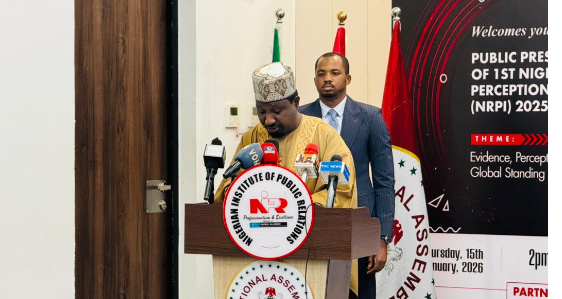
African leaders are facing a growing credibility crisis, with only 46 per cent of citizens expressing trust in their presidents and 37 per cent having confidence in their parliaments, according to the Nigerian Institute of Public Relations (NIPR), which cited an Afrobarometer survey conducted across 39 African countries at the Africa Day activities of the 13th World Public Relations Forum (WPRF) 2026 in Abuja.
NIPR Vice-President, Prof. Emmanuel Dandaura, disclosed the findings on Thursday, November 19th, 2026, warning that the results reflected a deeper crisis of trust and leadership across the continent, with communication professionals urged to look beyond information dissemination to helping institutions rebuild credibility and public confidence. Dandaura described the findings as a wake-up call, arguing that public relations practitioners must move beyond the conventional responsibility of disseminating information to helping institutions establish credibility and sustain public confidence.
The survey’s findings highlight a significant gap in public confidence in political leadership and institutions across Africa, with only 46 per cent of respondents expressing trust in their presidents and 37 per cent having confidence in national parliaments, with the numbers reflecting a broader pattern of declining trust in governance structures across the continent. Dandaura’s remarks came at a session on Ethical Leadership and Trust in a Divided World at the WPRF 2026, where experts warned that public relations cannot rescue bad leadership, with trust unable to be bought through publicity alone.
The credibility crisis is compounded by the rapid advancement of artificial intelligence, alongside the proliferation of misinformation, disinformation and malinformation, which have made it increasingly difficult to establish trust in public communication, with Dandaura noting that visibility and favourable publicity do not necessarily translate into public confidence. “An institution can enjoy visibility without enjoying credibility. It may achieve favourable publicity without public confidence,” Dandaura stated, with the NIPR Vice-President urging organisations to prioritise transparency and public confidence.
The NIPR’s warning reflects a broader recognition that leadership must precede communication if institutions hope to rebuild public confidence, with Chimdi Neliaku, Chair of the NIPR Young Professionals Hub, emphasising that true institutional credibility is forged through genuine relationships, emotional intelligence and strong, transparent systems, not episodic publicity blitzes. The forum, organised by the Global Alliance for Public Relations and Communication Management and the Nigerian Institute of Public Relations, had as its theme “Responsible Communication: The Voice of the World,” with participants examining the consequences of misinformation, weak institutional credibility and declining public confidence.
The challenge now is to ensure that the call for ethical communication and institutional reform translates into tangible improvements in public trust across the continent, with the ability of African governments and institutions to address the root causes of the credibility crisis likely to play a critical role in determining the initiative’s impact. The outcome of the WPRF 2026 will likely shape the direction of public relations practice across Africa, with the ability of communication professionals to help institutions rebuild credibility and public confidence likely to play a critical role in determining the sector’s impact.
Africa Presents is a Pan-African digital magazine and monthly publication covering politics, business, economy, culture, tech, and the stories shaping Africa and its diaspora. Visit africapresents.com and follow @AfricaPresents for daily coverage and monthly themed magazine editions.






Leave a comment