

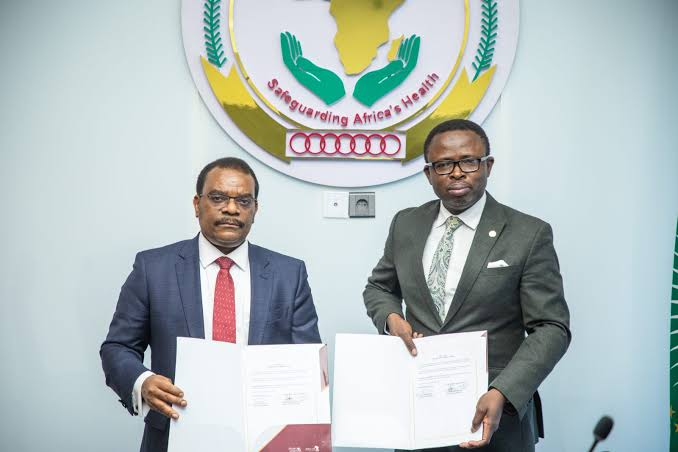
The World Health Organization (WHO) and the European & Developing Countries Clinical Trials Partnership (EDCTP) Association have signed a Memorandum of Understanding (MoU) that establishes a framework for closer cooperation to strengthen research capacity, regulatory systems, and evidence-based policies in the WHO African region.
The MoU, signed on November 19th, 2026, formalises and expands collaboration between the two organisations to advance their shared objectives in health research and regulation in Africa, with the partnership aiming to strengthen national research systems and build technical expertise and infrastructure in clinical trials, safety surveillance, and implementation research across the WHO African Region. By joining forces, WHO and the Association aim to optimise, harmonise and advance regulatory systems for medical products to accelerate market authorisation for new interventions, establish a platform that facilitates collaboration between research institutions and national disease control programmes for effective policy translation and uptake, and strengthen country leadership and ensure country ownership of the clinical research and product development agenda.
The partnership builds on EDCTP’s long-standing work to strengthen Africa’s capacity to conduct clinical research, including training scientists and reinforcing ethics, epidemiological and regulatory systems to build sustainable research and innovation ecosystems across the continent, with EDCTP having supported the creation of the Pan African Clinical Trials Registry, the first WHO-approved primary clinical trials registry in the continent, and the African Vaccine Regulatory Forum, strengthening national regulatory and ethics capacity across 37 African countries. EDCTP is committed to supporting the operationalisation of the African Medicines Agency (AMA) and has formalised strategic partnerships with Africa CDC, WHO AFRO and other key regional actors, with the organisation advancing health partnerships in Africa by aligning research, investments and interventions with the continent’s priorities.
The MoU represents a significant step towards addressing the gap in health research capacity across Africa, with the continent’s ability to conduct clinical trials, monitor safety and translate research into policy being critical to addressing the region’s health challenges, including infectious diseases, climate-related health risks and emerging threats. The partnership’s focus on regulatory harmonisation and market authorisation for new interventions reflects a recognition that Africa’s health security depends on the ability of countries to develop, evaluate and deploy health products that meet international standards.
The MoU extends the Cooperative Agreement for another five years (2026-2030), building on previous achievements to support the effective implementation of the Global Health EDCTP3 until its conclusion in 2031, with the extension reflecting a commitment to sustaining the momentum of the partnership and ensuring that the gains made in health research and regulatory capacity are consolidated over the long term. The Global Health EDCTP3 programme engages with regulatory and public health institutions in Africa and Europe to strengthen the clinical research environment, with the programme’s work including enhancing ethics and regulatory capacity in 37 sub-Saharan African countries.
The success of the partnership will depend on the ability of WHO and EDCTP to translate their commitments into tangible improvements in health research capacity and regulatory systems across the continent, with the outcome of the MoU likely to shape the direction of health research and regulation in Africa in the years ahead. The challenge now is to ensure that the partnership delivers measurable improvements in the ability of African countries to conduct clinical trials, monitor safety and translate research into policy, with the ability of the partnership to build sustainable institutional capabilities likely to play a critical role in determining the initiative’s impact.
Africa Presents is a Pan-African digital magazine and monthly publication covering politics, business, economy, culture, tech, and the stories shaping Africa and its diaspora. Visit africapresents.com and follow @AfricaPresents for daily coverage and monthly themed magazine editions.





Leave a comment