

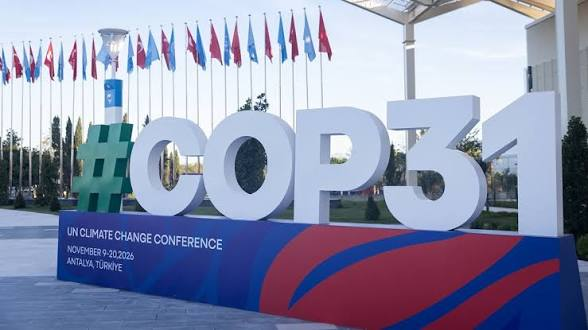
African nations have put forward a common, clear and consistent position at COP31 in Antalya, Türkiye, with the continent’s environment ministers convening on November 15th, 2026, to strengthen political coordination and provide strategic guidance on matters of shared African interest in the climate negotiations.
The African Ministers of Environment, convened by the African Union, met on the margins of the United Nations Climate Change Conference (COP31) to discuss priority issues under negotiation, including climate finance, adaptation, just transition, and climate change and international trade, with the African Group of Negotiators (AGN) briefing ministers on the status of negotiations at COP31, including key agenda items, emerging issues and matters requiring ministerial attention. The meetings, which included the 39th Meeting of the AMCEN Bureau and the AMCEN High-Level Ministerial Meeting, brought together African Ministers of Environment and senior government representatives, alongside leaders and representatives of the African Union, the United Nations system, international and regional organizations, financial institutions and development partners.
At COP31, Africa is advocating for a climate agenda grounded in justice, equity, resilience, and the continent’s development priorities, with African negotiators calling for accessible and predictable climate finance, effective implementation of Loss and Damage arrangements, strengthened adaptation support, a just and equitable energy transition, and fair participation in carbon markets. Despite contributing the least to global greenhouse gas emissions, Africa continues to face disproportionate climate impacts, with the continent showcasing its vast renewable energy resources, critical green minerals, natural carbon sinks, and growing youth-led innovation while calling for meaningful reforms to the global climate finance architecture and governance system.
African negotiators secured the inclusion of key agenda items for discussions at COP31, following negotiations with developed countries, with the agreement allowing parties to discuss the Climate Finance Work Programme, an issue African negotiators consider important to securing the financial support developing countries need to tackle climate change. The African negotiating bloc entered the negotiations with a clear strategy, including efforts to ensure that the climate finance programme was included in the agenda without additional conditions, with the AGN Chair, Nana Dr Antwi-Boasiako Amoah, emphasising the need for “one Africa, a united voice and a shared ambition for development” in the climate process.
Africa has gradually equipped itself with the institutional means to defend its interests in climate negotiations, with the 54 member states of the African Union, which account for about 3 per cent of historical greenhouse gas emissions, building a joint negotiating apparatus that includes a heads-of-state committee created in 2009 to mandate the African Group of Negotiators, technical backing from continental institutions, and a distinct identity within the G77 based on “special African circumstances”. The continent’s approach has evolved from a defensive posture—arguing that Africa’s development cannot be sacrificed to a warming for which it is not responsible—to presenting the continent as a bearer of “solutions” for the decarbonisation of the planet, with increasingly detailed declarations from summits in Nairobi in 2023 and Addis Ababa in 2025 testifying to a strengthening African consensus around joint diplomatic action.
The challenge now is to ensure that Africa’s collective influence in climate negotiations translates into concrete outcomes that respond to the continent’s development aspirations, with the AGN advocating climate action that supports resilient economies, improves livelihoods and promotes sustainable development, backed by the necessary finance, technology and capacity to deliver meaningful results. The decisions taken at COP31 in Antalya will shape the road to COP32 in Addis Ababa in November 2027, with Africa’s engagement seen as crucial to setting a clear course toward a climate-resilient and prosperous future for the African continent.
Africa Presents is a Pan-African digital magazine and monthly publication covering politics, business, economy, culture, tech, and the stories shaping Africa and its diaspora. Visit africapresents.com and follow @AfricaPresents for daily coverage and monthly themed magazine editions.






Leave a comment