

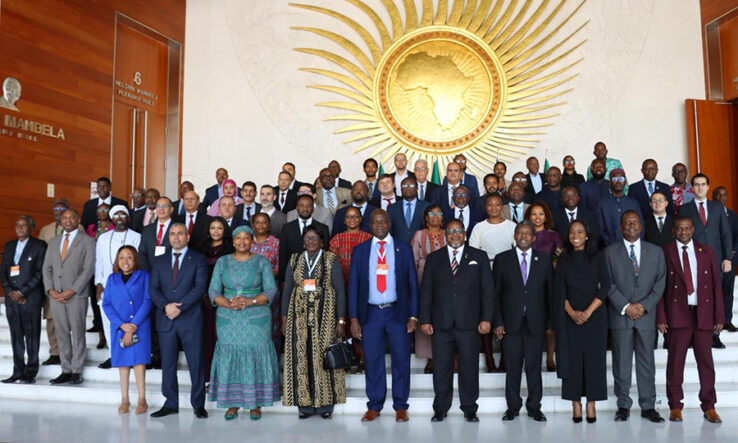
African science and higher education ministers have endorsed a push to strengthen the continent’s sovereignty and leadership in science, with the African Union’s Specialised Technical Committee on Education, Science and Technology (STC-EST 6) backing the Science Granting Councils Initiative (SGCI) as a key mechanism for implementing the 10-year Science, Technology and Innovation Strategy for Africa (STISA-2034).
The ministerial session, held in Addis Ababa, Ethiopia, on November 6th, 2026, brought together 32 African Union Member States, with ministers approving strategic decisions to strengthen African research sovereignty, frontier technologies and green innovation under STISA-2034, while urging Member States to allocate 1 per cent of GDP to research and development and position SGCI bodies as primary execution vehicles. The meeting was held under the theme “Accelerating Africa’s Human Capital and Innovation: Resilient Education, Science, and Technology Systems for the AU Decade of Accelerated Action for Education Transformation and Skills Development (2025–2034)”.
Ministers recommended the adoption of the African Declaration on Transformative Research Collaboration, which seeks to promote equitable partnerships in which African institutions play leading roles in setting research priorities and determining how findings are applied, with the African Union Commissioner for Education, Science, Technology and Innovation, Prof. Gaspard Banyankimbona, calling for Africa to become a leading producer of knowledge, with research partnerships grounded in African leadership, equitable collaboration, shared intellectual ownership and fair benefit-sharing. The Commissioner invited the Committee to support the Africa Charter for Transformative Research Collaborations and advance the African Open Science Platform to strengthen research cooperation and knowledge sharing, emphasising that scientific sovereignty means setting Africa’s own research priorities, developing African solutions and engaging globally on fair and mutually beneficial terms.
The ministers also endorsed the African Declaration on Reversing Brain Drain and Fostering Talent Retention, reflecting a broader effort to retain and develop scientific talent across the continent, while calling for greater parliamentary engagement, digital literacy and youth participation in emerging technologies, with five sectoral publications on artificial intelligence cleared for adaptation by member states. The session’s focus on scientific sovereignty comes amid growing recognition that Africa’s development increasingly depends on its ability to equip young people with relevant skills and translate scientific research into productive economic opportunities.
Ministers also endorsed plans for a continental synchrotron light source facility owned by Africa, alongside an African Beamline at SESAME that would train more than 200 scientists annually, with the proposals representing a significant investment in Africa’s research infrastructure and capacity to conduct advanced scientific research. The STISA-2034 Implementation Plan, welcomed by ministers, provides a framework for strengthening Africa’s scientific and technological capacity through six strategic priorities and a long-term implementation framework, with the plan building on the outcomes of the Africa Research and Scientific Technology Innovation Forum (ARSTIF) held in April 2026, which brought together more than 130 participants from 21 African Member States.
The challenge now is to ensure that the commitments and recommendations emerging from the STC-EST 6 session are translated into concrete policy changes, financing mechanisms and institutional reforms that can strengthen Africa’s scientific capacity and research independence, with the African Union’s emphasis on sustainable domestic financing reflecting a recognition that external funding alone cannot sustain a robust research and innovation ecosystem. The outcome of the session will likely shape the direction of science policy across Africa, with the initiative’s success depending on the ability of Member States to implement the STISA-2034 framework and allocate the necessary resources to research and development.
Africa Presents is a Pan-African digital magazine and monthly publication covering politics, business, economy, culture, tech, and the stories shaping Africa and its diaspora. Visit africapresents.com and follow @AfricaPresents for daily coverage and monthly themed magazine editions.







Leave a comment