

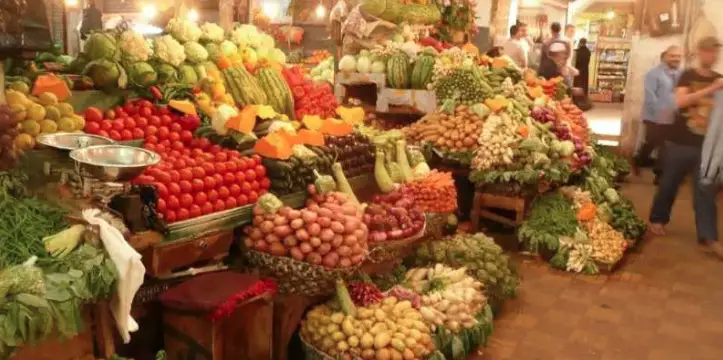
Moroccan exporters are warning that the government’s continued ban on tomato, potato and onion exports to African markets could cost the country long-standing trading partners, with industry representatives calling for a quota-based system rather than a complete suspension to preserve market access.
The suspension, which took effect on November 5th, 2026, remained in place following a meeting between exporters and Agriculture Minister Ahmed El Bouari on November 9, with Mohamed Zemrani, president of the Moroccan Association of Producers and Exporters of Various Products to Africa, confirming that exports of other agricultural products could continue while tomatoes, potatoes and onions remained restricted. Exporters did not challenge the government’s objective of protecting the domestic market but proposed allowing a limited volume of the three products to reach West African markets, arguing that a quota would preserve export volumes and prevent competitors from filling the gap.
The restrictions could affect several West African trading partners, particularly Mauritania and Senegal, with Morocco exporting 34,154 tonnes of fresh tomatoes to Mauritania in 2025, worth approximately $7.77 million, and 11,540 tonnes to Senegal, valued at $2.92 million, while Mauritania and Côte d’Ivoire are also important destinations for Moroccan onions, with Morocco exporting approximately 20,162 tonnes to Mauritania and 13,774 tonnes to Côte d’Ivoire in 2025. The government’s rationale for the ban is to avoid shortages and skyrocketing prices on the local market, with the minister explaining that there are real production constraints, particularly for potatoes, where the local market relies on stocks until the next harvest at the end of November.
The government initially suspended all agricultural exports to African markets before allowing shipments of other fruit and vegetable varieties to resume under tighter controls, with the three restricted products remaining excluded, and any resumption dependent on domestic supply and price conditions. The government has also introduced a monthly field-monitoring mechanism to assess supply conditions, with restrictions potentially imposed on any product experiencing supply disruptions or lifted when market conditions allow, while authorities are preparing a specific regulatory framework for agricultural exports destined for African markets to prevent disruptions to domestic supply.
The current ban is not an isolated incident, with Morocco having imposed similar restrictions on exports of staple crops such as potatoes, onions, tomatoes and carrots in 2025 to stabilize domestic supply and protect consumers from soaring prices, with exports of fruits and vegetables to Africa falling by nearly 70 per cent as a result. Mohamed Zemrani warned that Morocco is increasingly seen as an “unreliable supplier” by several African countries, with African partners reducing their reliance on Moroccan produce and increasing their own local production, while Mauritania, once a top importer of Moroccan produce, now imposes customs duties of more than 30,000 dirhams ($3,000) per truck, a move seen by exporters as a reaction to Morocco’s restrictions.
The cumulative effect of repeated restrictions has pushed many Moroccan farmers to relocate operations to other African markets, with a growing number establishing production bases in Mauritania and Senegal, and possible expansion to other African markets if the situation persists, while logistical challenges at the Guerguerat border crossing and rising input costs have compounded the losses. Zemrani warned that if things continue this way, on top of drought pressures, Morocco could shift from being a supplier of vegetables to Africa to becoming an importer, highlighting the long-term structural risks of relying on export bans as a tool for domestic price management.
The tension between domestic food security and export market preservation highlights a broader challenge for Moroccan agricultural policy, with consumer advocates welcoming the measures as necessary to preserve purchasing power while exporters argue that the domestic market alone cannot cover high production costs, leaving Morocco at risk of losing key African markets it has served for more than two decades. The government’s decision to exempt European-bound premium tomatoes from the November restriction, while restricting African-bound shipments, has also raised questions about the policy’s consistency, with critics noting that the differential treatment effectively transfers part of Morocco’s domestic food-price pressure to African importers that depend on its produce.
The challenge now is to find a balance that protects domestic consumers without sacrificing the long-term competitiveness of Moroccan exporters in African markets, with the proposed quota system offering a potential middle ground that could preserve market access while allowing the government to manage supply constraints. The outcome of ongoing discussions between the government and industry stakeholders will likely determine whether Morocco can maintain its position as a reliable supplier of vegetables to West African markets or whether repeated restrictions will continue to erode trust and push production capacity to alternative locations.
Africa Presents is a Pan-African digital magazine and monthly publication covering politics, business, economy, culture, tech, and the stories shaping Africa and its diaspora. Visit africapresents.com and follow @AfricaPresents for daily coverage and monthly themed magazine editions.







Leave a comment