

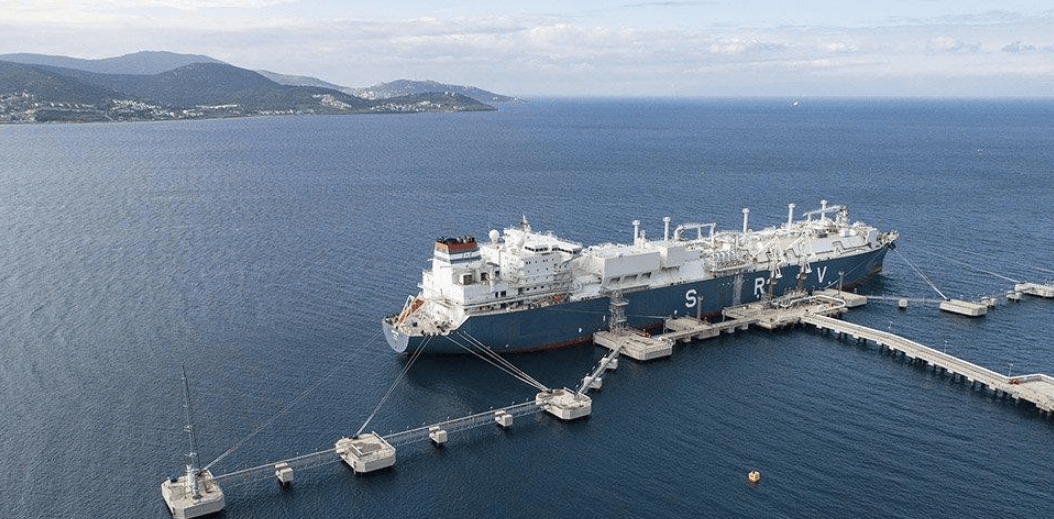
Mozambique’s state-owned energy company, Empresa Nacional de Hidrocarbonetos (ENH), is seeking investments from chemicals giant Sasol and pipeline operator ROMPCO for a $250 million infrastructure project to supply gas to South Africa from LNG megaprojects operated by international majors in the deepwater Rovuma Basin, offering a potential solution to South Africa’s looming gas shortage.
The project envisions two floating storage and regasification units (FSRUs), one at the Port of Beira in Sofala Province and another at Inhassoro in Inhambane Province, near the South African border and the start of the ROMPCO transit network, with a new 140-km coastal pipeline proposed to transmit regasified LNG into the ROMPCO system. The plan was unveiled at African Energy Week in Cape Town on October 19, with ENH CEO and Chairman Rudêncio Morais saying that for Mozambique to become East Africa’s “power hub,” it needs its “infrastructure by 2030 or 2031 (to be) in step with Mozambique LNG (TotalEnergies), Rovuma LNG (ExxonMobil), and Coral North FLNG (Eni).”
The proposal was made possible by legislation passed by Mozambique’s Parliament in June that added LNG to requirements mandating that 25 per cent of the country’s oil and gas production be supplied to the domestic market, with LNG from the Afungi megaprojects to be shuttled by tanker to FSRUs along Mozambique’s southern coast and regasified for delivery into the ROMPCO system. Because the gas would be sourced from Mozambique’s domestic allocation, it could be supplied at prices below those tied to international spot markets, addressing the cost concerns that stalled the earlier Matola project, which had the backing of TotalEnergies and South Africa’s Gigajoule Group but has yet to reach a final investment decision.
Sasol CEO Simon Baloyi had previously warned that LNG imported from international spot markets would cost end users three to five times more than the subsidised gas currently supplied from Mozambique, a warning that helped stall the Matola project, with the new proposal offering a potentially more affordable alternative. The plan’s success will depend on the commercial arrangements, transport costs, infrastructure and the price at which the gas is made available, with Sasol saying it would be premature to speculate on the nature or scale of any potential investments as it evaluates alternative gas supplies.
As the Pande and Temane fields near depletion, gas deliveries to third-party networks supplied by ROMPCO are at risk because Sasol has moved to prioritise feedstock supplies for its chemical facilities at the Secunda industrial complex, with the Industrial Gas Users Association of Southern Africa noting in its 2023 annual report that the fields “have produced at a plateau since 2015, and as of July 2022, available gas resources are ±433 PJ, or 2.5 years of production at current supply levels.” Sasol later extended the deadline for third-party supply agreements to June 2027, with the company indicating that production from infill wells would sustain the supply plateau long enough to finalize plans to import LNG through an FSRU at the Port of Matola, a suburb of Mozambique’s capital Maputo, located near existing ROMPCO infrastructure.
The shortage is not simply an energy-sector problem, with natural gas an important input for the production of chemicals, steel, glass, food and beverages, fertiliser and other industrial products, and Sasol’s Secunda complex particularly exposed because of its dependence on gas as a feedstock, with hundreds of industrial customers relying on the existing supply system. The implications extend beyond Sasol, with disruptions potentially affecting production, employment and the cost of doing business across several sectors, making the proposal’s timing a critical concern.
ENH is targeting infrastructure readiness around 2030 or 2031, which is potentially too late to prevent the supply pressure expected from 2028, with the project still needing investment commitments, commercial agreements and construction before it can deliver gas. The proposal therefore remains an option under consideration, not a confirmed supply solution, with South Africa needing to avoid replacing one supply dependency with another without building greater flexibility into its energy system.
The proposal deserves serious consideration but should not become an excuse for South Africa to postpone decisions on its wider gas infrastructure, with the country needing a coordinated plan that brings together regional pipeline supplies, LNG imports, domestic exploration and investment in alternative energy sources, alongside clear regulatory rules and credible long-term purchasing commitments to make infrastructure projects financially viable.
Africa Presents is a Pan-African digital magazine and monthly publication covering politics, business, economy, culture, tech, and the stories shaping Africa and its diaspora. Visit africapresents.com and follow @AfricaPresents for daily coverage and monthly themed magazine editions.







Leave a comment