

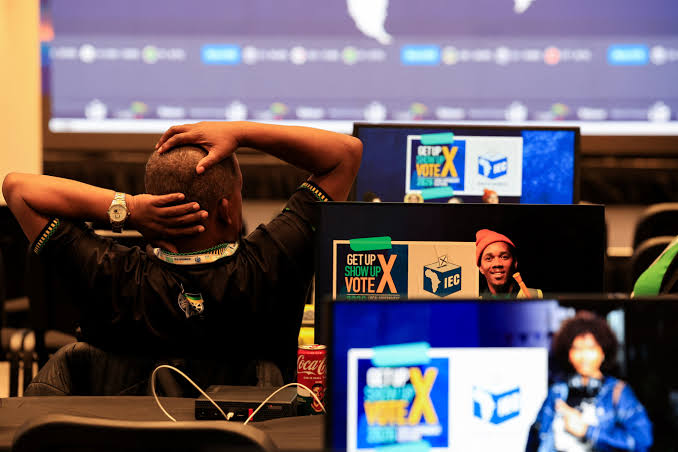
South Africa’s African National Congress (ANC) has recorded its worst-ever showing in local elections since Nelson Mandela led the country out of apartheid and into democracy more than 30 years ago, with the party winning 30.76 per cent of the overall vote, down from 45.59 per cent in 2021.The result, described by ANC Secretary-General Fikile Mbalula as “catastrophic”, marks a further erosion of the political monopoly the ANC has largely enjoyed since South Africa’s first democratic elections in 1994, with the party falling below 50 per cent of the vote for the first time in the 2021 municipal elections and suffering further losses at the 2024 national vote. The ANC won a majority in just one of the country’s nine provinces, Limpopo, down from six in 2021, and won the most votes in just two of the eight cities, compared with six at the last local elections.
The Democratic Alliance (DA) came second in the overall vote with 24.64 per cent, retaining majority control of the city of Cape Town with 56.42 per cent of the vote, while former president Jacob Zuma’s uMkhonto weSizwe (MK) party came third overall with 9.76 per cent, unseating the ANC as winner in the city of Durban. The Economic Freedom Fighters (EFF), led by Julius Malema, once seen as a serious challenge to the ANC, came fourth with 6.22 per cent, with the rest of the vote split between hundreds of smaller parties.
The ANC failed to win an outright majority in any of the eight metropolitan municipalities, with the DA leading in five metros (Cape Town, Ekurhuleni, Johannesburg, Nelson Mandela Bay and Tshwane), while the ANC led in Buffalo City and Mangaung, and MK led in eThekwini. The number of municipalities requiring coalition agreements has more than doubled compared with the previous local elections, with hung councils increasing from 66 in 2021 to 127 this year, reflecting a more fragmented political landscape.
With no party winning more than 50 per cent of votes in many cities including South Africa’s commercial hub Johannesburg, the ANC and DA will have to team up, or hash it out with smaller parties to form majority municipal governments, with parties having 14 days to negotiate before city councils are formed. The ANC’s national leadership will meet this week to determine its approach to coalition negotiations, with the party facing the prospect of negotiating its way into administrations in municipalities it previously governed outright.
ANC President Cyril Ramaphosa described the decline as concerning, acknowledging the need to take the message from voters seriously, while the party’s internal meetings will be among the first major tests of how it intends to exercise its diminished electoral mandate. The outcome marks a painful setback for the ANC, which has seen its vote share fall steadily in local elections over the last 15 years due largely to failures in basic services such as water and electricity.
The results will offer a key measure of voter sentiment ahead of the 2029 general election, with the ANC’s decline from nearly 70 per cent of the national vote in 2004 to 40.2 per cent in 2024 showing a consistent downward trend over two decades, and the party’s reduced support leaving it with a weaker negotiating position in several municipalities. The challenge now for the ANC is to arrest the decline before the 2029 general election, with the party’s internal dynamics and governance failures likely to remain central to the political debate.
The coalition talks will be a critical test of the ANC’s ability to adapt to a more fragmented political landscape, with the party needing to secure alliances with smaller parties to govern in municipalities where no party has an outright majority.
Africa Presents is a Pan-African digital magazine and monthly publication covering politics, business, economy, culture, tech, and the stories shaping Africa and its diaspora. Visit africapresents.com and follow @AfricaPresents for daily coverage and monthly themed magazine editions.







Leave a comment