

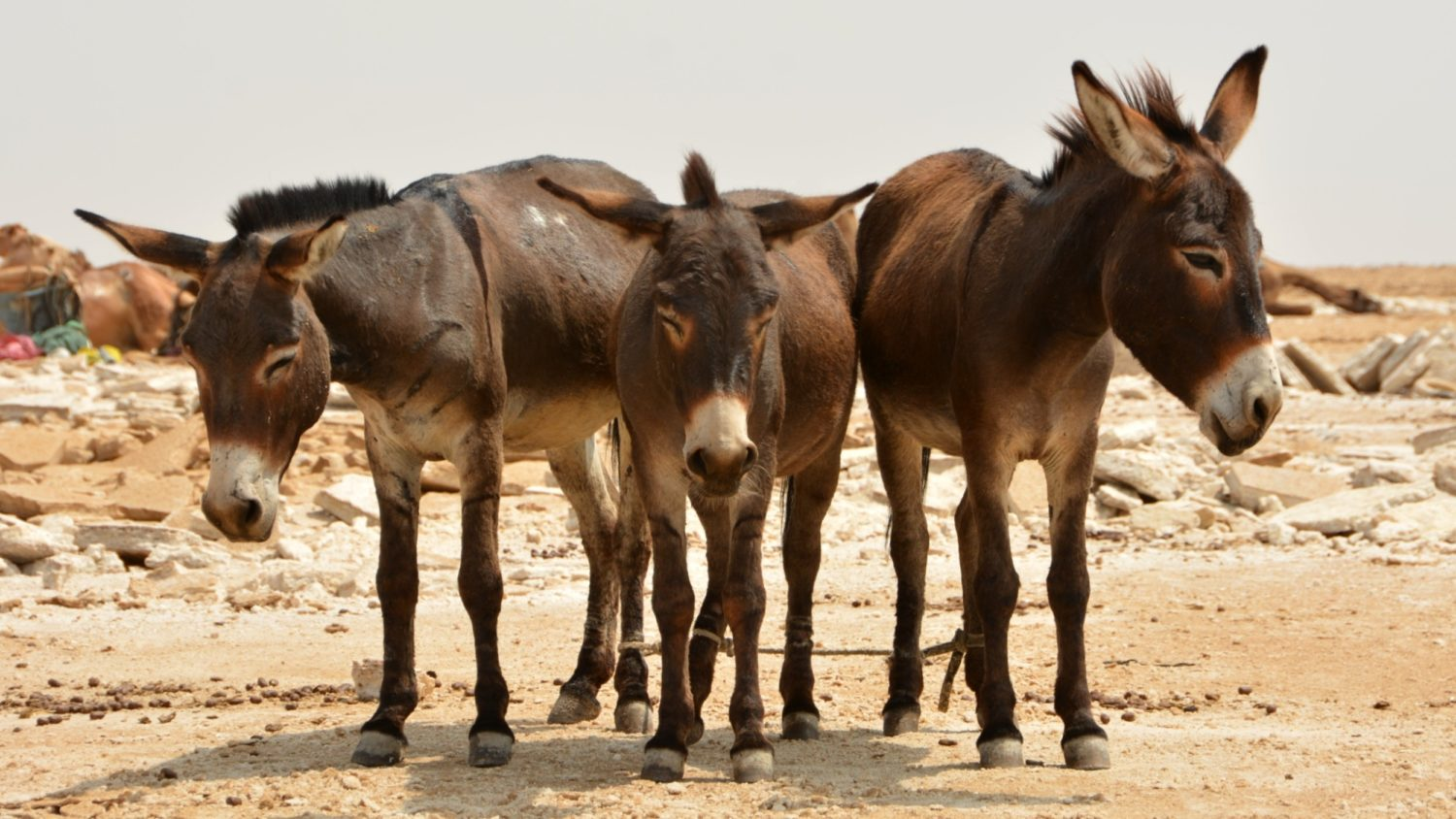
China imports millions of donkey hides from Africa every year, driven almost exclusively by demand for ejiao, a traditional Chinese medicine made from donkey hide gelatin that has been transformed from an imperial elixir into a mass-market wellness product.
Lauren Johnston, a specialist on China trade with Africa at the University of Adelaide, has spent several years investigating the donkey trade and has just published a book, China, Africa and the Market for Donkeys, which traces the drivers and impact of a trade that has grown exponentially over the past 15 years. The book details how ejiao, once handmade and consumed by a small circle of imperial elites, is now industrially scaled and sold as cakes, drinks, cosmetics and wellness products, with demand extending to Hong Kong, Taiwan, the US, Europe, Australia and Southeast Asia.
Africa is home to the world’s largest donkey population, holding about two-thirds of the world’s donkeys, and as the ejiao industry began running short of hides from around 2010, the continent became a target of the supply chain, both legal and illicit. Ethiopia, Kenya and Tanzania were among earlier targets, but demand for donkey hides grew so great that essentially no donkey in Africa was safe, with one hide fetching over $400 in China.
The Donkey Sanctuary estimates that China imports more than three million donkey hides annually, of which 25–35 per cent are from stolen animals, with current demand for ejiao requiring 4–5 million hides a year, far more than China’s donkey stock can supply. Donkeys are notoriously slow breeders, and the gap has been filled by a poorly regulated trade that deprives rural households of animals essential to their livelihoods.
Donkeys have been working animals in Africa for eons, carrying water, firewood and farm produce across arid and remote geographies, with owning one saving women some five hours of labour a week and children about ten. When a donkey is stolen or priced out of reach, household income, food security and schooling suffer, with donkey prices climbing beyond what poor families can afford, as in South Africa where a donkey that fetched about $30 in the late 2010s sold for $125 by 2022.
The trade also breeds fear, suspicion and conflict within communities, and has been linked to organised crime, inhumane slaughter and biosecurity risks. Porous and remote borders, different regulations and patchy application of regulation have made stemming the trade almost impossible, with Tanzania giving up trying to secure a continent-wide formal agreement to halt the trade after frustrations with smuggling across the Kenyan border.
The first Pan-African Donkey Conference in 2022 produced the Dar es Salaam Declaration, calling for a 15-year continental moratorium on the slaughter of donkeys for their hides, which the African Union Summit backed in February 2024. However, implementation has been imperfect, as it requires each member country’s laws to be changed and those laws to be implemented consistently, with progress underway but far from enough to save the donkey or the communities who rely on their work.
Banning trade can send it underground and across borders, as South Africa’s limits sent supply through Lesotho, where abattoir standards are lower. The challenge now is to enforce the moratorium effectively and build the legal and institutional capacity needed to protect African donkeys and the rural poor who depend on them.
Africa Presents is a Pan-African digital magazine and monthly publication covering politics, business, economy, culture, tech, and the stories shaping Africa and its diaspora. Visit africapresents.com and follow @AfricaPresents for daily coverage and monthly themed magazine editions.







Leave a comment