

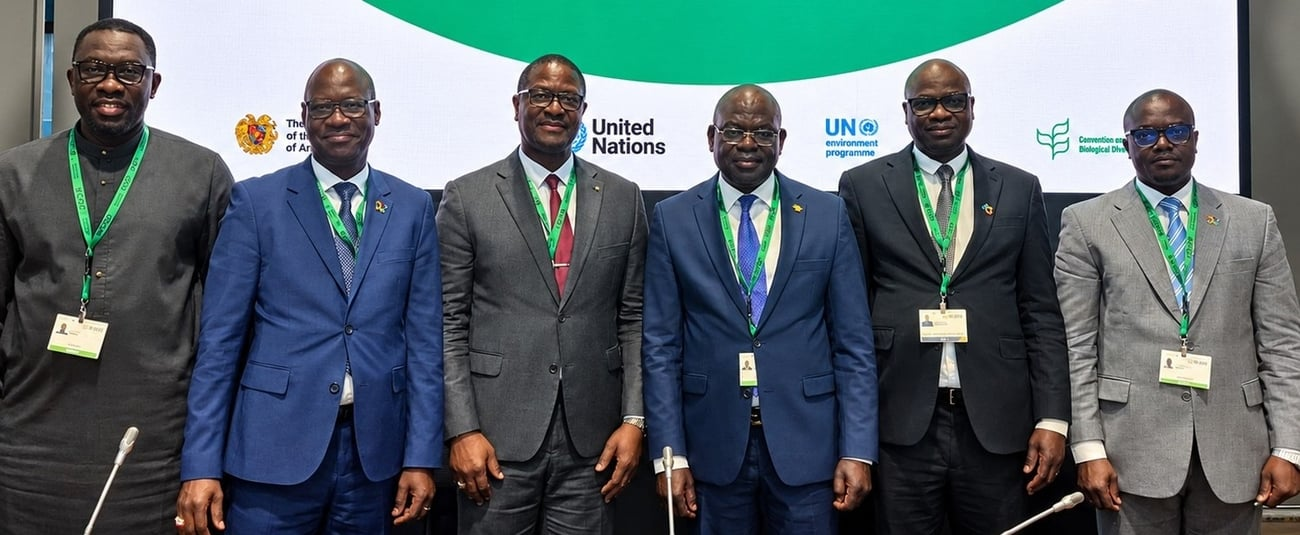
African governments must demonstrate stronger commitment to biodiversity conservation by integrating it into national investment priorities and allocating resources for implementation, an official of the African Development Bank (AfDB) has said.
Arona Soumare, the bank’s Chief Climate Change and Green Growth Officer, made the call during a panel discussion on the sidelines of the ongoing 17th Conference of the Parties to the Convention on Biological Diversity (CBD COP17) in Yerevan, Armenia. He said many governments approach development financiers for other priorities, often treating biodiversity as an additional consideration rather than a central investment objective.
“Most of the time, African countries are not pushing the bank. There’s a big pool of projects we have met so far coming from the outsiders. You barely see an African country coming to us with a good and sound proposal on biodiversity,” Soumare said. He explained that the bank works with countries through Country Strategy Papers, which guide discussions on national development priorities and determine the investments included in its portfolios.
Soumare identified the fragmentation of funding across development sectors as one of the major obstacles to biodiversity financing in Africa, arguing that biodiversity conservation should be integrated into these priorities rather than treated separately from infrastructure development, food security and livelihoods. He also called for more flexible financing mechanisms to support both large-scale conservation programmes and smaller, community-led projects.
The Kunming-Montreal Global Biodiversity Framework sets a target of mobilising $200 billion a year from all sources by 2030, including $30 billion in international financing for developing countries. African countries face particular pressure because their exposure to nature-related risks is high while access to biodiversity finance remains limited, with chronic underfinancing, weak institutions and competing short-term priorities making implementation difficult.
Soumare advocated blended finance, which combines domestic resources with international funding, alongside green banks, green lines of credit and other financial intermediaries to channel investments into biodiversity conservation. He also highlighted the potential of nature-related bonds to mobilise capital from financial markets, stressing the need for governments and development partners to strengthen the economic case for investing in ecosystems.
At COP17, the AfDB and West African partners launched a protected-area-indexed bond, or “Park Bond,” aiming to mobilise around €300 million from capital markets and other sources to provide sustainable support for biodiversity conservation in West Africa and beyond. “Public budgets and donations remain essential as funding tools, but they will not be enough. We must mobilise additional resources and develop innovative instruments capable of attracting long-term private and institutional capital,” said Al Hamndou Dorsouma, Head of the Bank Group’s Climate and Green Growth Division.
For Africa, the challenge now is to transform biodiversity strategies into investment frameworks capable of influencing sectoral investments, budget decisions and resource mobilisation, turning the continent’s extraordinary natural wealth into a foundation for resilient, nature-positive growth.
Africa Presents is a Pan-African digital magazine and monthly publication covering politics, business, economy, culture, tech, and the stories shaping Africa and its diaspora. Visit africapresents.com and follow @AfricaPresents for daily coverage and monthly themed magazine editions.






Leave a comment