

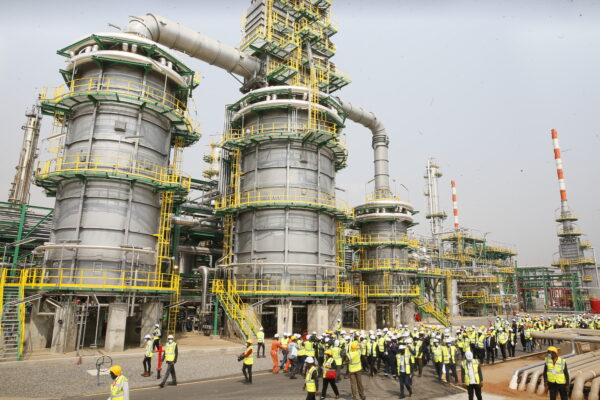
African countries have been urged to invest in gas-based industries and local technologies to create jobs and drive industrial growth from the continent’s vast natural gas resources.Speaking at the third Emogas International Natural Gas-Based Industry Conference and Exhibition (EINGICE 2026) in Abuja, convener Emeka Okafor said Africa would continue to lose the benefits of its natural resources without adequate investment in domestic industries, infrastructure and technological development. “We have no business being poor in Africa,” he said, urging governments, investors, industry leaders and researchers to work together to transform the continent’s gas wealth into economic prosperity.
Africa holds around 7 per cent of the world’s known natural gas reserves, with major discoveries across Senegal and Mauritania’s Grand Tortue Ahmeyim field, Mozambique’s Rovuma basin and Egypt’s Zohr deposits. Yet the continent accounts for less than 6 per cent of global energy use, with more than 5,000 billion cubic metres of natural gas resources still not approved for development.
The challenge, according to experts, is moving beyond extraction to build the infrastructure, institutions and local capabilities that allow countries to capture more of the energy chain, from production and processing to power generation, distribution and end-user consumption. The Greater Tortue Ahmeyim project has already created more than 3,000 jobs and involved over 300 local companies, demonstrating how gas projects can develop local suppliers, build industrial capacity and create skilled employment.
Natural gas is seen as a critical enabler for Africa’s industrialisation, offering reliable, high-density baseload power with materially lower emissions than coal or oil, and providing the stable energy supply needed for manufacturing, beneficiation and job creation. Ghana’s second gas processing plant, for example, is expected to meet more than 40 per cent of the country’s domestic gas needs, cutting import dependency, lowering energy costs and supporting industrial growth.
Professor Charles Esimone, Vice-Chancellor of the European University of Nigeria, argued that Africa must move beyond the question of how much gas it possesses to focus on developing the resources responsibly, attracting investment and expanding its participation in global energy markets. He called for greater investment in human capital and stronger partnerships between universities, research institutions, governments and industry to give African engineers, scientists and entrepreneurs a more meaningful role in the energy value chain.
The path to turning gas wealth into prosperity requires addressing poor infrastructure, dependence on imported technologies and institutional weaknesses, with calls for reliable energy supplies, predictable investment policies and stronger local value chains. At the West Africa Gas Summit in Accra, leaders stressed that Africa’s gas potential and its impact on national growth, infrastructure development, energy access, job creation and improved livelihoods had not yet been fully achieved.
The consensus is that gas expansion is not an end in itself but a way to drive socioeconomic transformation, with the future of Africa’s energy lying in an interconnected market rather than isolated systems and pipelines. The challenge now is to build the political will, regional partnerships and bankable projects needed to move Africa from being a continent of stranded gas resources to one of integrated energy and prosperity.
Africa Presents is a Pan-African digital magazine and monthly publication covering politics, business, economy, culture, tech, and the stories shaping Africa and its diaspora. Visit africapresents.com and follow @AfricaPresents for daily coverage and monthly themed magazine editions.







Leave a comment