

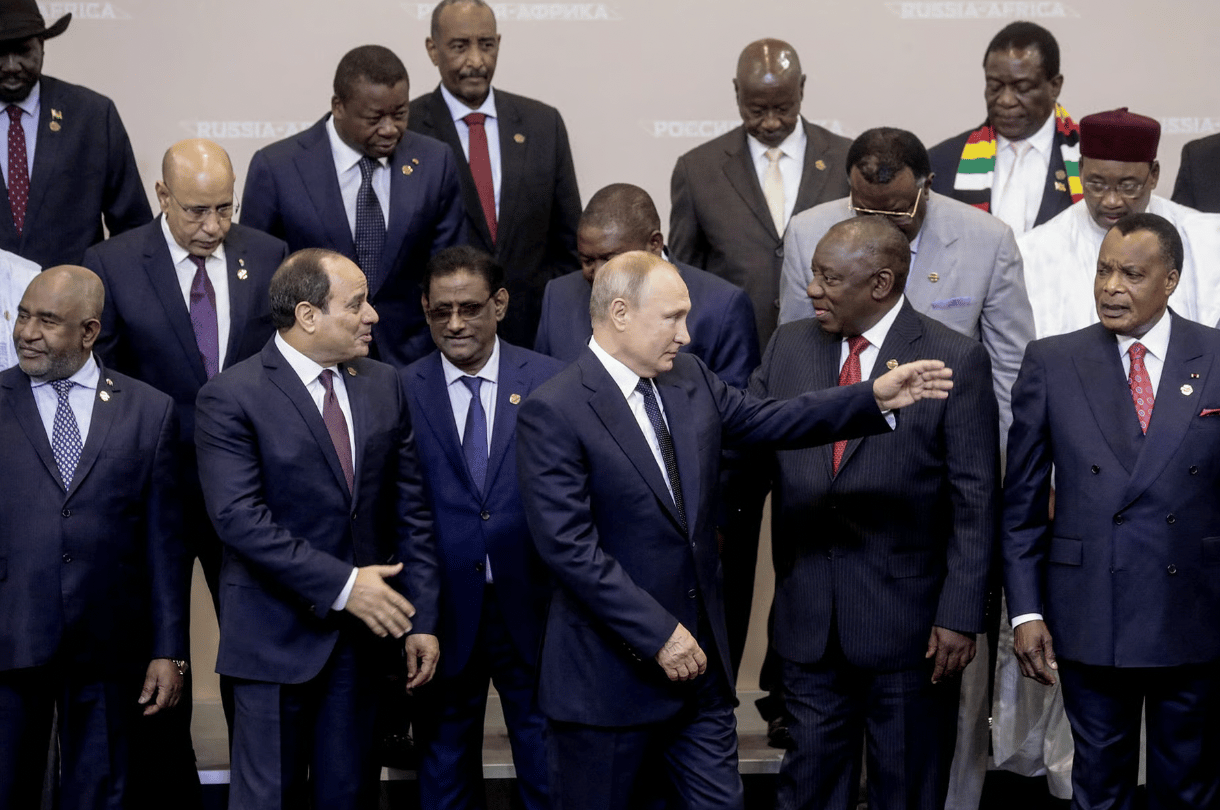
Russia has pledged to strengthen its partnership with African countries through joint investments, technology transfer and capacity building in strategic sectors including energy, agriculture, artificial intelligence and food security.Deputy Chief of Staff of the Russian Presidential Executive Office, Maxim Oreshkin, made the pledge at the Russia-Africa Forum Partners Hub meeting in Moscow, ahead of the third Russia-Africa Summit scheduled for October 28th and 29th. He said Russia’s long-term strategic interest lies in a strong, sovereign Africa that leads the world economy, describing the continent as the future of global growth.
Oreshkin outlined three critical sectors for the partnership: food security, energy and digital technology. On food security, Russia offered fertiliser solutions, crop and livestock technologies, logistics support and access to its $43 billion food import market, with a commitment to buy more from African producers.
On energy, Russia said it would help develop long-term strategies tailored to each country’s resources, covering hydrocarbons, LNG, renewables and nuclear, citing the $25 billion nuclear complex in Egypt as a model. The partnership would go beyond infrastructure development to include workforce training, local manufacturing, knowledge transfer and the participation of domestic companies in strategic projects.
The third Russia-Africa Summit, co-chaired by President Vladimir Putin and Burundian President Évariste Ndayishimiye in his capacity as AU Chairperson, is expected to adopt a final declaration, a new Russia-Africa Partnership Forum Action Plan for 2027–2029, and a Declaration of Cooperation in the Civilian Application of Artificial Intelligence Technologies. Representatives of almost 50 African countries, including heads of state and government and leaders of continental integration bodies, are expected to attend.
The summit follows high-level consultations between AU Commission Chairperson Mahmoud Ali Youssouf and Russian Foreign Minister Sergey Lavrov in Addis Ababa in July, where both sides agreed to hold regular annual political consultations to establish a long-term, predictable framework for cooperation. The two sides reviewed progress on the 2019 Memorandum of Understanding and the 2023–2026 action plans, identifying gaps and areas for deeper cooperation.
Oreshkin warned African countries against what he called “platform colonialism,” arguing that Russia’s approach is to work with African partners to develop solutions that reflect their economic priorities, cultural realities and development needs. “We always want our partners to become stronger. Russia’s interests lie in a strong Africa and a sovereign Africa – an Africa that leads in the world,” he said.
The summit’s business programme is structured around four tracks: “Sovereignty – The Foundation of Sustainable Development,” “The Economy of a Sovereign World Order,” “Social and Humanitarian Cooperation and Human Capital,” and “Technologies and Innovations for Improving Quality of Life.” The challenge now is to translate the summit’s commitments into concrete projects and investments that deliver tangible outcomes for African economies.
Africa Presents is a Pan-African digital magazine and monthly publication covering politics, business, economy, culture, tech, and the stories shaping Africa and its diaspora. Visit africapresents.com and follow @AfricaPresents for daily coverage and monthly themed magazine editions.






Leave a comment