

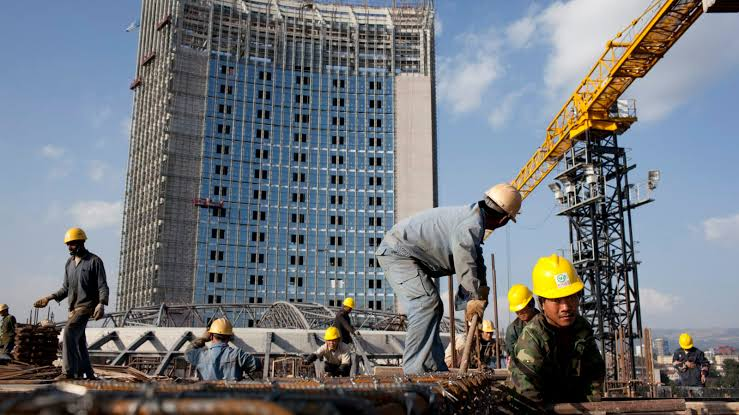
Chinese manufacturers are expanding their investment in East Africa, moving beyond traditional infrastructure projects into factories, assembly lines and value-added production as they seek new markets and African economies push for industrialisation.
Chinese Belt and Road Initiative investment announcements in Africa surged 254 per cent year on year to a record $33.5 billion in the first half of 2026, driven overwhelmingly by megaprojects in Ethiopia and Egypt. The shift reflects a broader pattern where Beijing has moved from simple infrastructure contracting toward longer-term industrial engagement, with Chinese companies increasingly favouring direct investment in energy, manufacturing and processing.
Kenya has emerged as a key destination for Chinese manufacturing investment, with companies establishing operations in electric vehicles, commercial vehicles and industrial equipment. Chinese-owned electric vehicle dealer Rideence Africa announced a KSh320 million investment in an assembly line at Associated Vehicle Assemblers in Mombasa, planning to assemble electric hatchbacks from completely knocked-down kits supplied by Beijing Henrey, as well as electric vans from Jiangsu Joylong.
Chinese automakers including BYD, Chery, Geely, Foton, Great Wall Motor, Haval and Sinotruk have established strong footholds in Kenya, which has emerged as a key regional hub for electric mobility and commercial vehicles. Kenya is also courting Chinese investors to boost manufacturing, with the government calling on Chinese manufacturers to expand their operations in the country.
Tanzania has become a growing hub for Chinese manufacturing in East Africa, particularly in textiles, steel production, plastics and agro-processing. Chinese firms such as Sichuan Hongda Steel and Jiangsu Jiangnan Textile were among the first to establish operations, investing between $30 million and $60 million per facility.
China’s accumulated investments in Tanzania have reached $3.14 billion, according to official figures, as Dar es Salaam moves ahead with an expanding pipeline of industrial projects aimed at reshaping the East African economy. Chinese capital has flowed into sectors including manufacturing, energy, transportation and agro-processing, reflecting the broader shift toward longer-term industrial engagement.
The push to turn Kenya’s China trade into factories and jobs reflects a growing recognition that East African economies need to attract Chinese investment into manufacturing, assembly and value addition rather than relying mainly on imports. Chinese companies are being encouraged to look beyond supplying the Kenyan market and consider establishing production and assembly operations locally.
For East Africa, the expansion of Chinese manufacturing offers an opportunity to build industrial capacity and create jobs. The challenge now is to ensure that the investment translates into local value addition, skills transfer and sustainable industrial development.
Africa Presents is a Pan-African digital magazine and monthly publication covering politics, business, economy, culture, tech, and the stories shaping Africa and its diaspora. Visit africapresents.com and follow @AfricaPresents for daily coverage and monthly themed magazine editions.







Leave a comment