

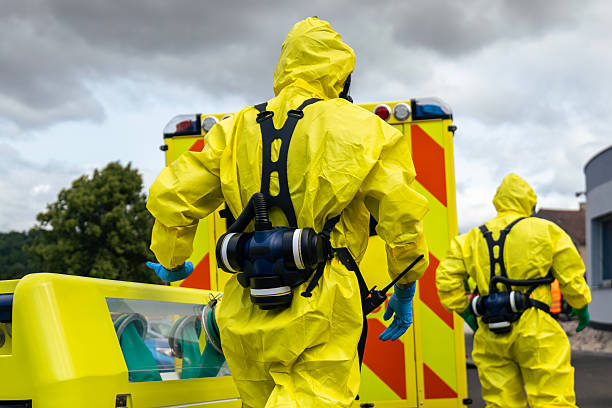
Nigeria has confirmed its first Ebola case of the current outbreak, with a woman who recently travelled from Uganda testing positive for Ebola Bundibugyo virus disease in the Federal Capital Territory, Abuja.The case, confirmed on the 20th of October, makes Nigeria the fifth country to detect the virus since the outbreak was declared in the Democratic Republic of the Congo on the 15th of May, 2026. The patient began showing symptoms on the 7th of October, four days after arriving in Nigeria, and sought care at a private health facility in Abuja on the 11th of October before laboratory tests confirmed Bundibugyo virus on the 20th of October.
The outbreak, which originated in the DRC, has now spread to Kenya, with nine confirmed cases recorded this month, and has prompted concern about further continental spread. The World Health Organization has described the Bundibugyo Ebola outbreak as the most geographically extensive in history, affecting countries across three regions of Africa.
The Nigerian patient is currently in isolation and receiving medical care, with contact tracing already underway. Health Minister Muhammad Ali Pate confirmed that 44 contacts have been identified and are being tracked as part of the response.
This is Nigeria’s first registered Ebola case since 2014, when the country contained a previous outbreak through rapid contact tracing and isolation. The current case underscores the ongoing risk of cross-border transmission in a highly mobile region.
For Nigeria, the response will test the country’s preparedness and its ability to contain the virus before it spreads further. The challenge is to move quickly on contact tracing, isolation and community engagement to prevent a wider outbreak.
The outbreak has prompted a coordinated regional response, with the World Health Organization and Africa Centres for Disease Control and Prevention working alongside national health authorities. The EU and WHO have also scaled up joint action to support the response, including the delivery of medical supplies and expert teams to affected areas.
For West Africa, the arrival of Ebola in Nigeria raises the stakes for regional preparedness. The challenge now is to ensure that surveillance, contact tracing and community engagement are strengthened across borders to prevent further spread.
Africa Presents is a Pan-African digital magazine and monthly publication covering politics, business, economy, culture, tech, and the stories shaping Africa and its diaspora. Visit africapresents.com and follow @AfricaPresents for daily coverage and monthly themed magazine editions.







Leave a comment