

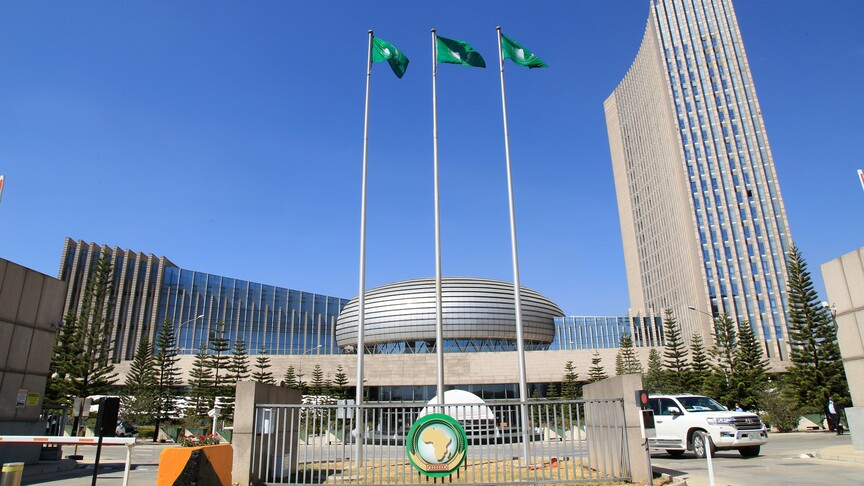
The African Union (AU) has urged Ethiopia, Eritrea and Egypt to exercise maximum restraint and avoid any actions or statements that could further escalate tensions and undermine peace and stability in the Horn of Africa and the wider region.
In a statement issued on the 1st of October, 2026, the AU Commission said it was “closely following with concern” the heightened tensions among the three member states. It called on them to preserve channels of communication and to address their differences through established diplomatic channels and peaceful dialogue, in line with the principles of the AU’s Constitutive Act. The Commission added that it stands ready, in consultation with the countries concerned, to support efforts towards de-escalation and the peaceful resolution of differences.
The AU’s appeal comes amid a rapid deterioration in relations. On the 1st of October, Ethiopia ordered the closure of its embassy in Eritrea and declared 10 Eritrean diplomats persona non grata, prompting Asmara to sever all diplomatic ties with its neighbour. Addis Ababa also declared an Egyptian diplomat persona non grata and ordered him to leave the country within 48 hours. Cairo responded in kind by expelling an Ethiopian embassy counsellor under the principle of reciprocity.
These moves follow weeks of escalating rhetoric and mutual accusations. Ethiopian authorities have accused Eritrea, Sudan and Egypt of supporting an opposition alliance led by the Tigray People’s Liberation Front (TPLF), which has renewed fighting against federal forces in northern Ethiopia. Eritrea and Egypt have denied the allegations, but the diplomatic fallout has been swift and severe.
The tensions sit atop long-standing disputes over regional seaport access, water resources and shifting military alliances in the Horn of Africa. Ethiopia’s push for guaranteed access to Red Sea ports has strained relations with neighbours, while disagreements over the Grand Ethiopian Renaissance Dam (GERD) have long complicated ties with Egypt, which depends heavily on the Nile for water and agriculture.
At the same time, evolving security partnerships and proxy dynamics in the region have added another layer of complexity. The AU’s statement underscores the risk that bilateral disputes, if left unchecked, could spiral into a broader regional confrontation involving multiple states and armed groups.
The Commission’s message is clear: differences must be managed through dialogue, not diplomatic ruptures or hostile rhetoric. By urging the three countries to keep communication channels open, the AU is seeking to prevent a complete breakdown in relations that could make crisis management and confidence-building far more difficult.
The AU’s offer to support de-escalation efforts positions the continental body as a potential mediator, although its leverage will depend on the willingness of Addis Ababa, Asmara and Cairo to engage. Past AU-led initiatives in the Horn have had mixed results, often constrained by the strategic interests of external powers and the entrenched positions of regional actors.
For the Horn of Africa, already grappling with internal conflicts, displacement and economic stress, the prospect of heightened tensions among Ethiopia, Eritrea and Egypt is deeply worrying. A prolonged diplomatic freeze or further escalatory steps could disrupt trade routes, complicate peace processes in Ethiopia and Sudan, and create openings for armed groups to exploit divisions.
The AU’s intervention places emphasis on maintaining diplomatic engagement and preventing these disputes from developing into a wider regional crisis. Whether this call for restraint translates into concrete de-escalation will depend on the next moves by the three capitals—and on the ability of regional and international partners to back diplomatic solutions over confrontation.
Africa Presents is a Pan-African digital magazine and monthly publication covering politics, business, economy, culture, tech, and the stories shaping Africa and its diaspora. Visit africapresents.com and follow @AfricaPresents for daily coverage and monthly themed magazine editions.







Leave a comment